
Russian Knapweed
Rhaponticum repens
Class C
Widespread in the state. Management decisions for these species should be determined at the local level, based on feasibility of control and level of infestation.
Agricultural Threat
This plant threatens our state’s food security and economy by reducing agriculture yields and/or degrading soil resources.
Toxic to Horses
This plant has been documented to sicken or injure horses.
Local Ecosystems
This plant is detrimental to native ecosystems, negatively impacting the quality of forage for wildlife and reducing biodiversity in plant communities.
QUICK FACTS
- Russian knapweed is allelopathic, meaning it can secrete chemicals into the soil that affect surrounding plants. In this case, it produces a chemical that reduces the number of viable seeds of other plant species, giving it an edge over native species.
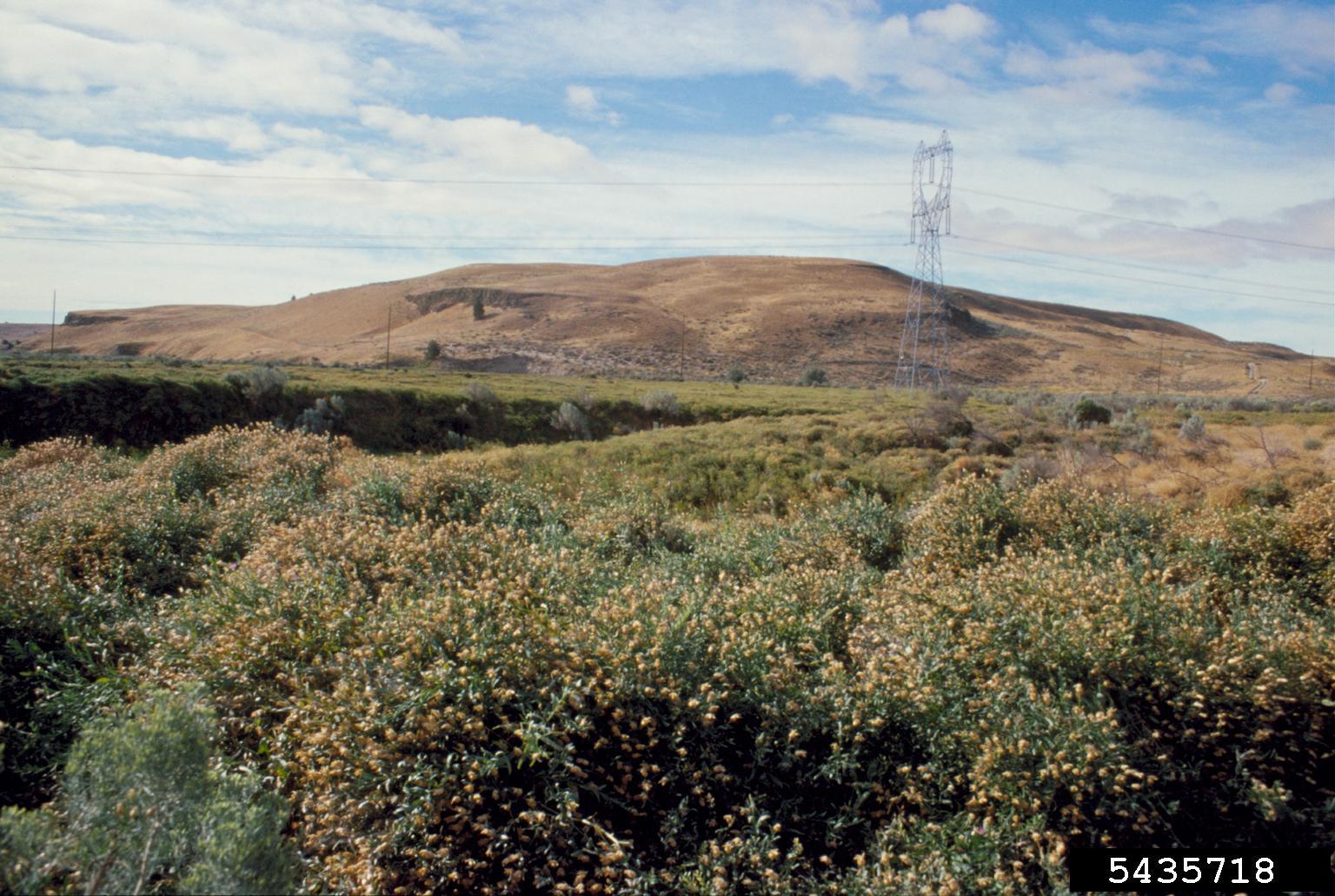
- Russian knapweed has infested approximately 1,400,000 acres in the western United States.
- The urn-shaped seed head usually fails to open, leaving the seeds trapped inside. While they could traverse long distances if caught in a water stream, the main method of growth and expansion seems to be through root growth.
1. Overview
Difficult to eradicate, this non-native plant can spread both from seed and from its roots. A root only needs to be one inch long to grow into a new plant and restart an infestation.
Russian knapweed is widespread in the US, but it is especially common in the more arid places of the western states. It is widespread in New Mexico and can be found in many areas of high disturbance (areas that have experienced both man-made and natural events that significantly alter conditions in a relatively short time), but has trouble establishing itself in areas with healthy native plant populations. [2]
History of Russian Knapweed
Originally from southern Ukraine, southeastern Russia, Iran, Kazakhstan, and Mongolia, Russian knapweed first entered the US in the early 1900s, likely via a contaminated shipment of alfalfa. It has continued to spread through contaminated hay and other vectors, becoming a serious problem in Canada since 1928. By 1998, it was considered a noxious weed in most of the western US. [1] [2] [6]
2. Identification
What does it look like?
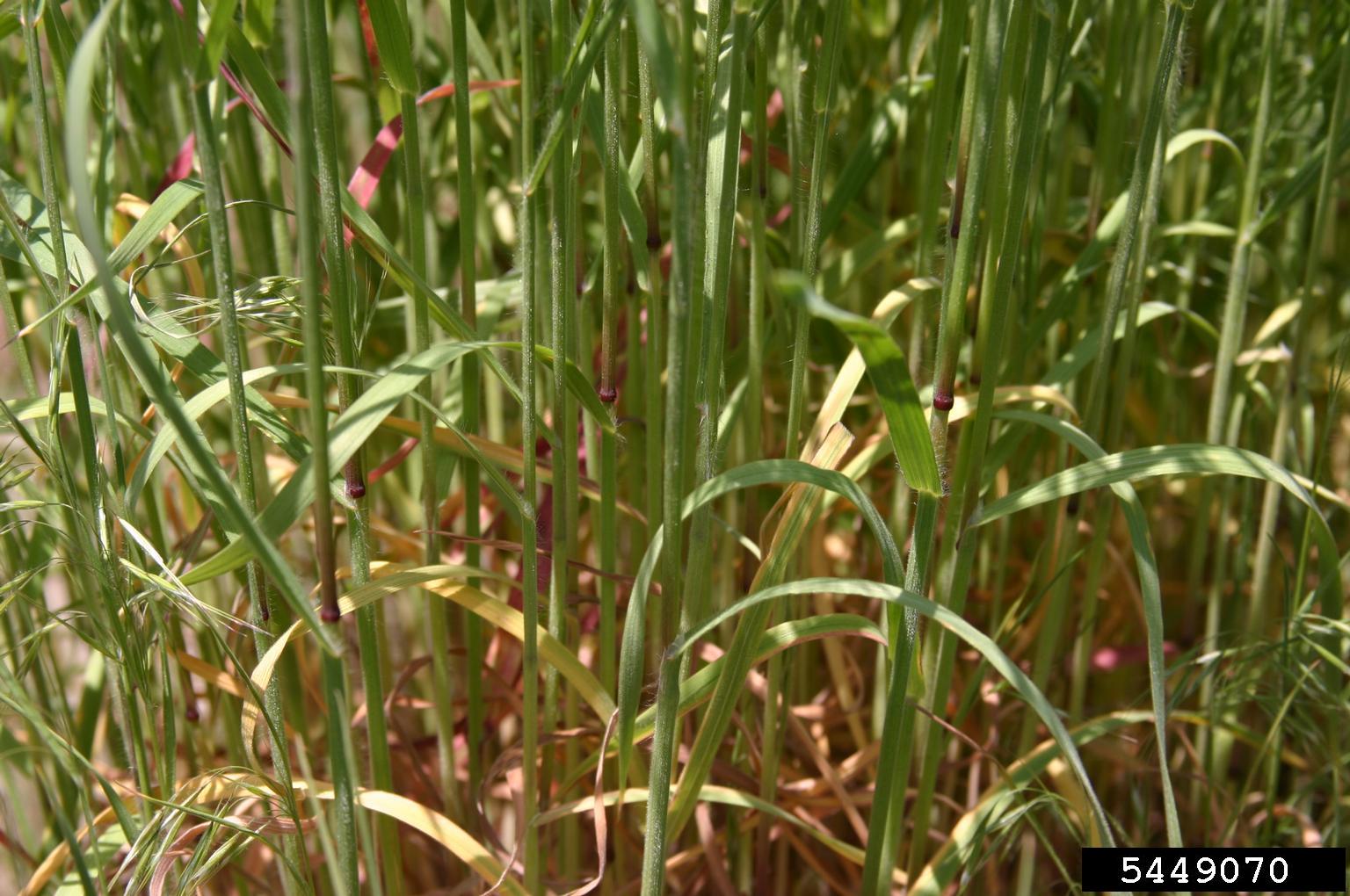
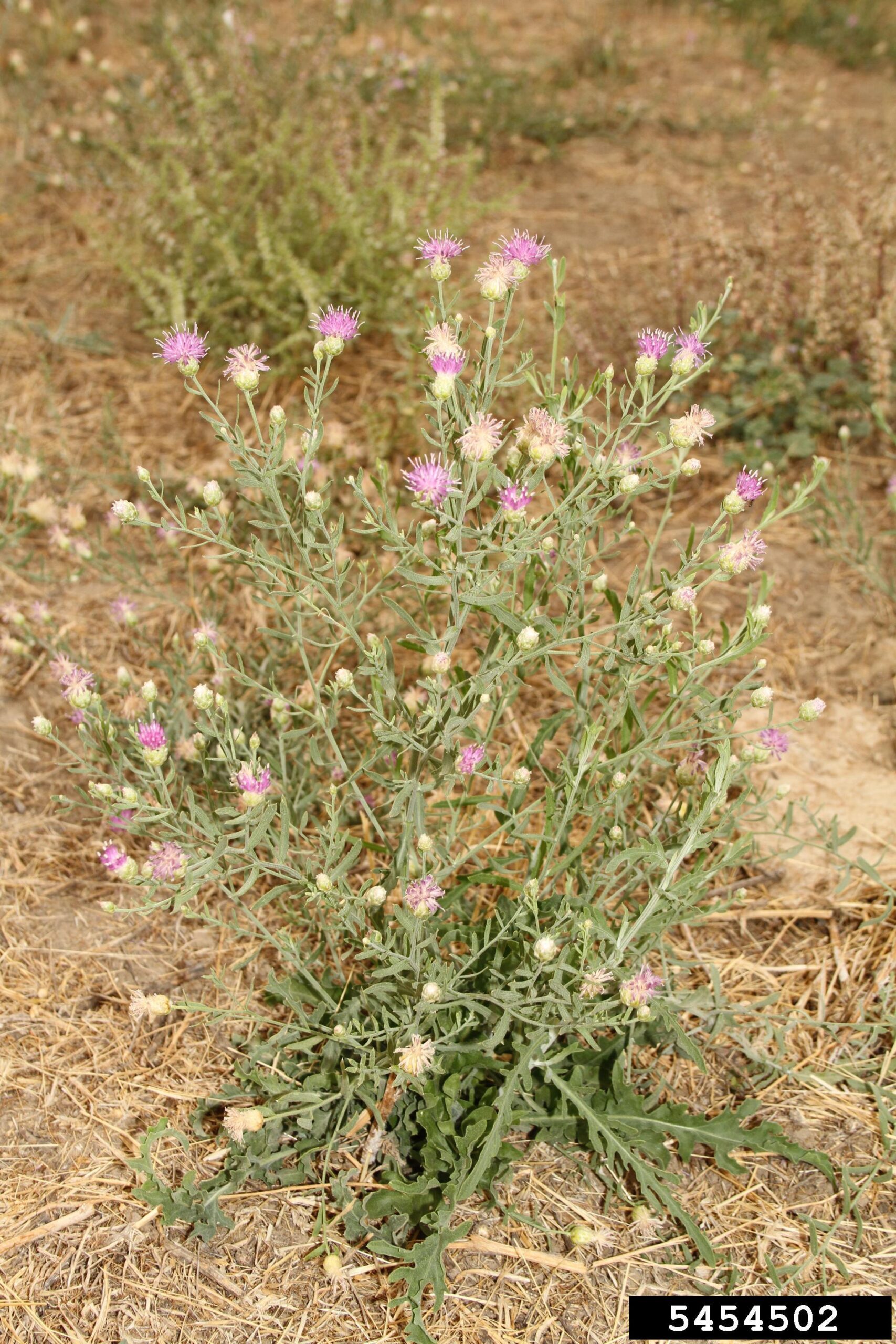
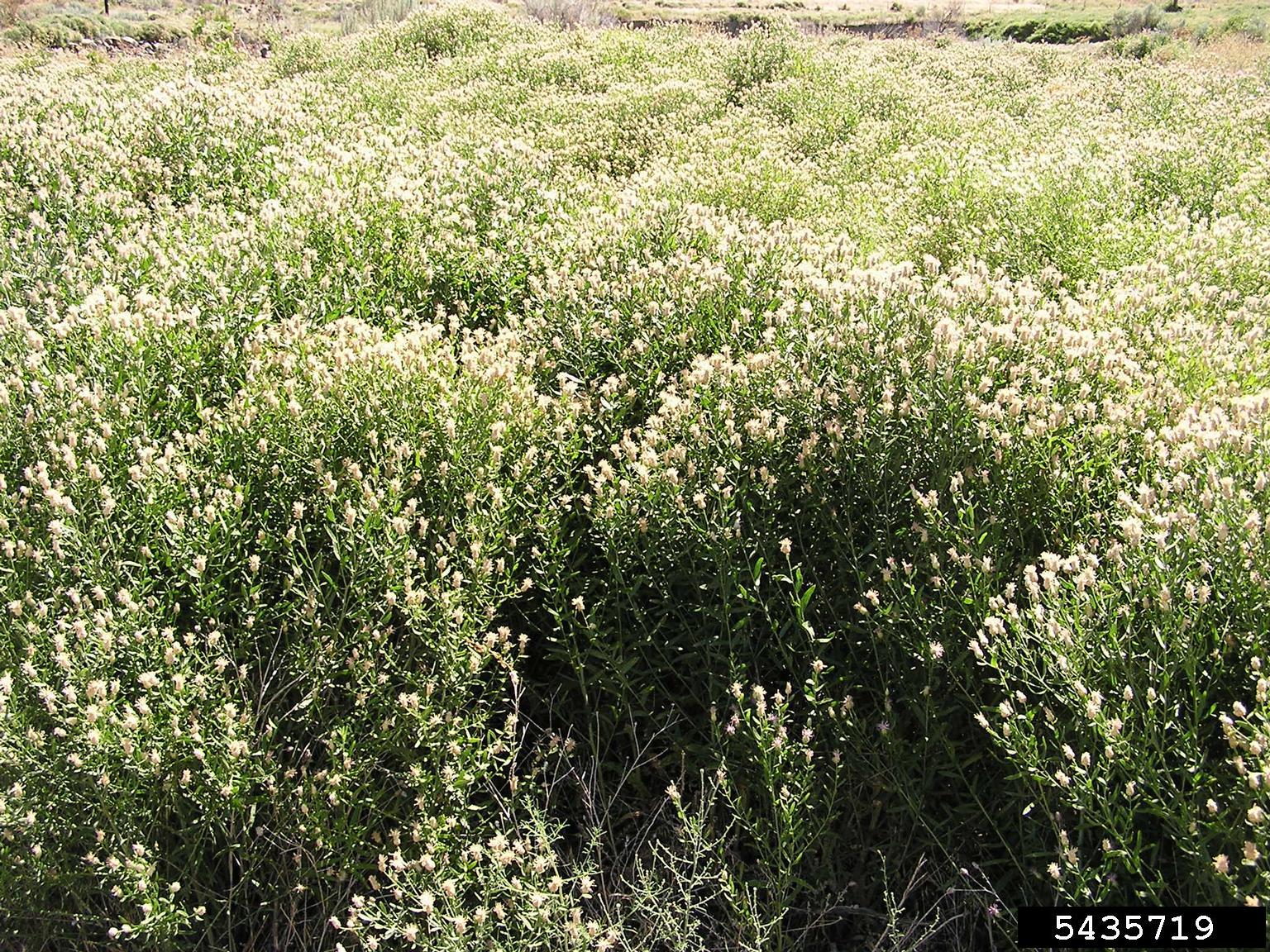
Russian knapweed can reach up to 3 feet tall, with multiple branching stems. The stems are covered with fine white hairs that give it a blue-green color. The leaves at the base of the plant are about 2 to 4 inches long and up to 1 inch wide, but the leaves get progressively smaller and thinner the higher they are on the plant, and the wider leaves at the base can disappear with maturity. Flower heads, about ¼ to ½ inches and pink or lavender, are always found on the tip of the plant’s leafy branches. The bracts, or the area directly behind the flower, feel smooth and papery; this sets the plant apart from other, spikier knapweeds. [6][11]
Having trouble identifying a weed?
Contact your local conservation district or county extension agent.
Key Features
- Plant: Up to 3 feet tall, multiple branching stems.
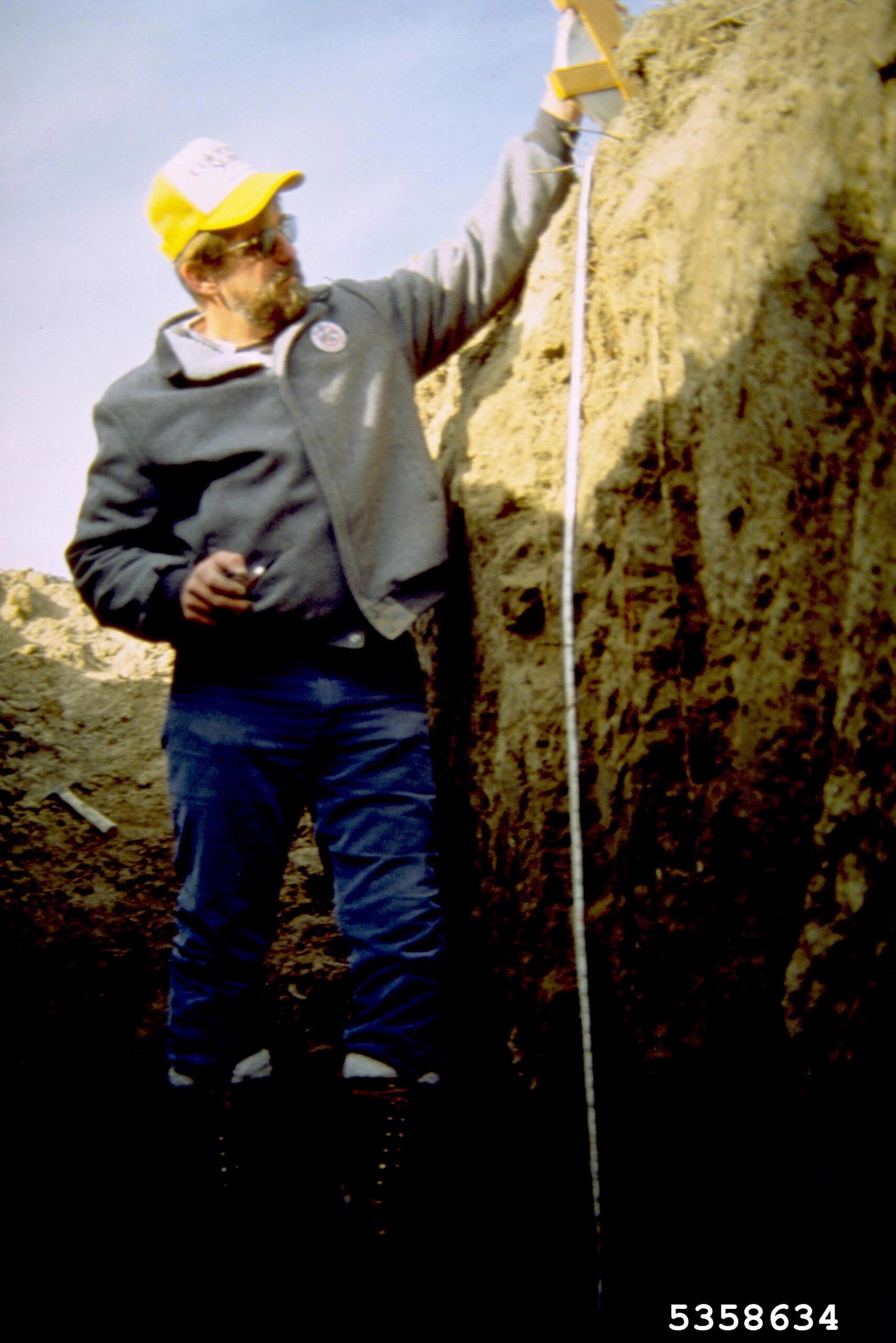
- Roots: Roots are scaly and dark brown to black, and can extend up to 14 feet wide and 23 feet deep. New growth grows directly from the roots, making this plant difficult to remove once it becomes established. They can release a chemical that can inhibit the growth of other plants. [7][8]
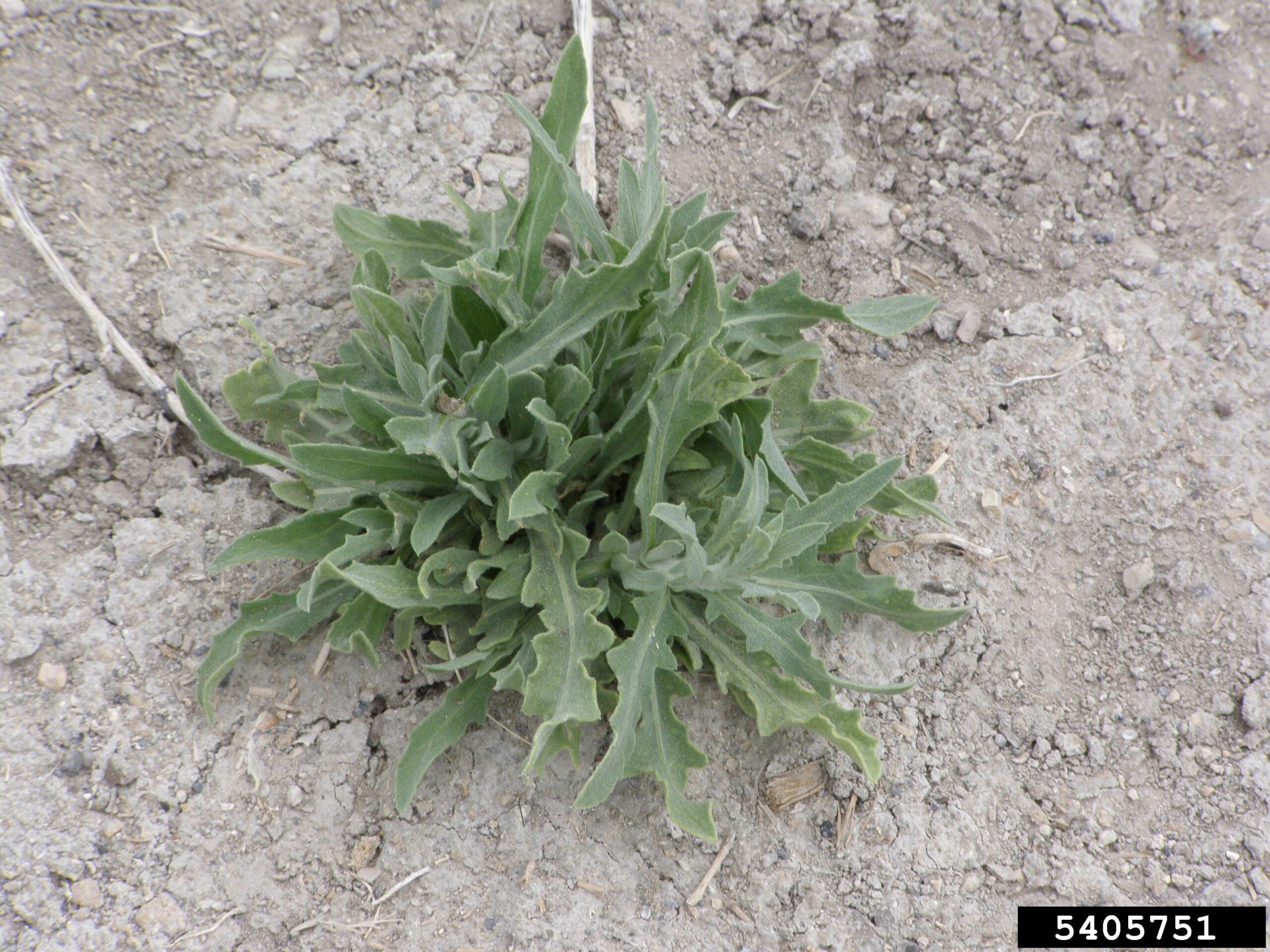
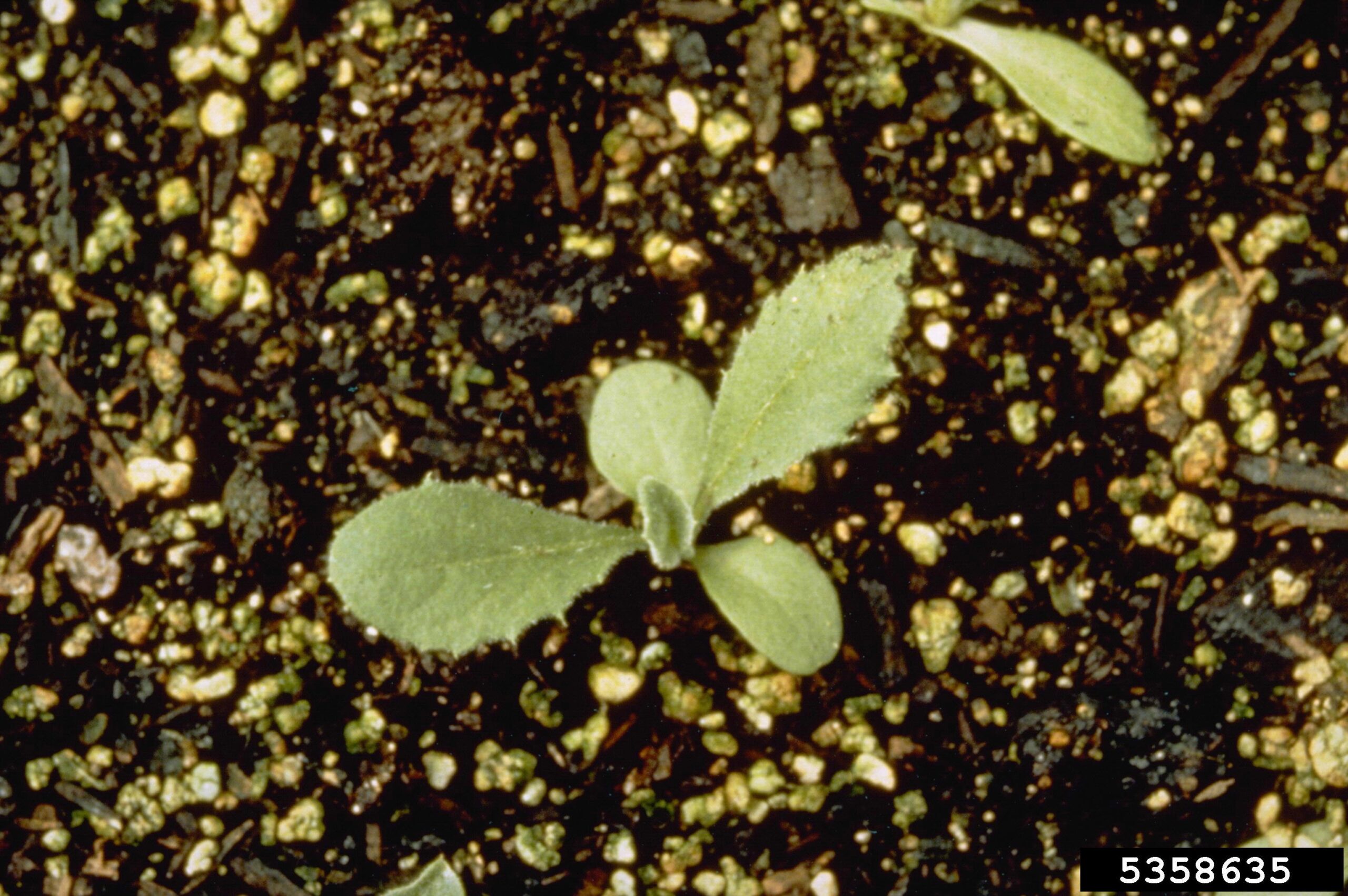
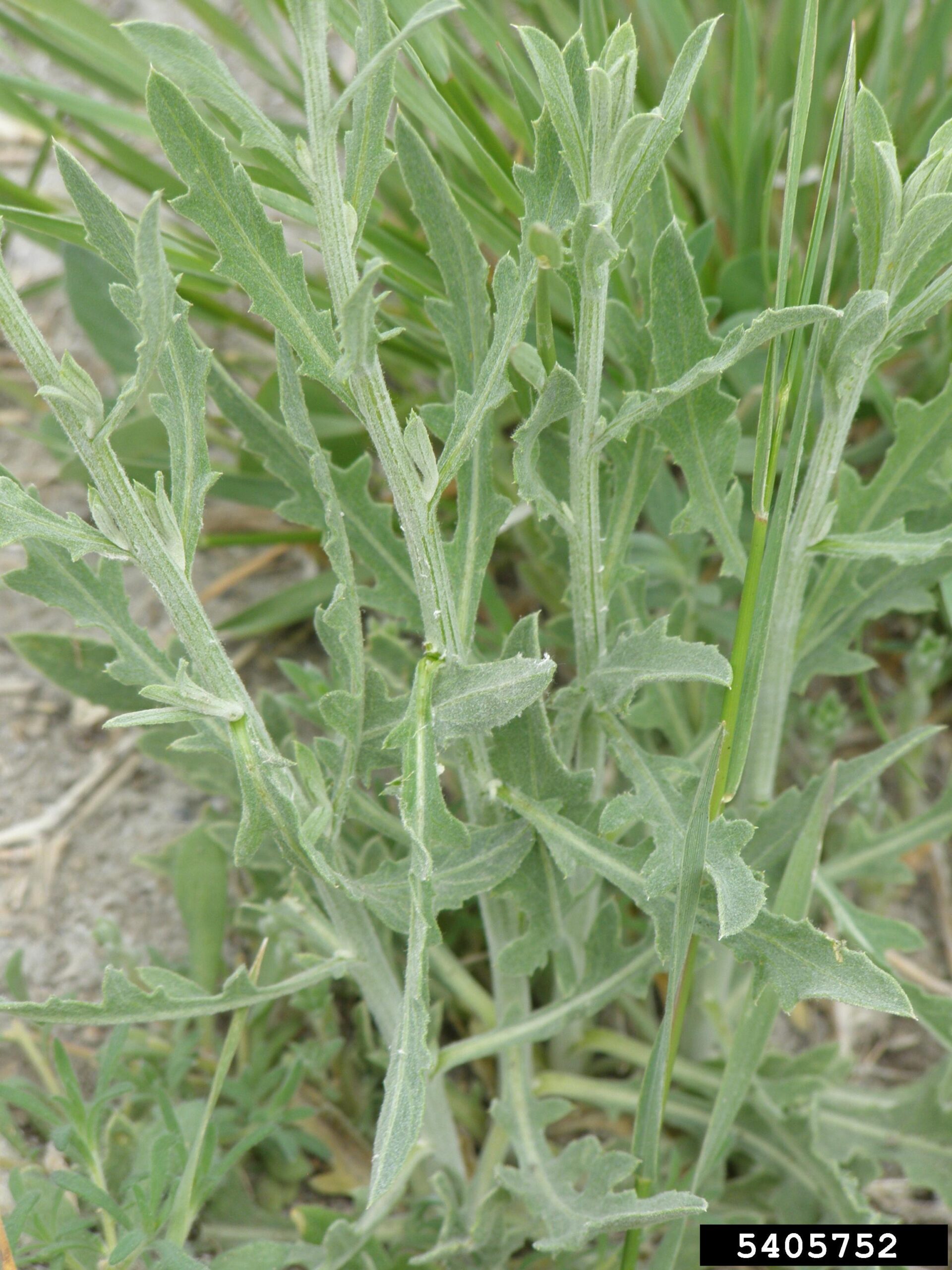
- Leaves: The leaves at the base that form the rosette are wider than the rest and can disappear as the plant matures. The leaves on the lower stem are pointy (linear-lanceolate), deeply lobed, and larger than those on the upper stem, which are less pointy (oblong) and toothed. [1]
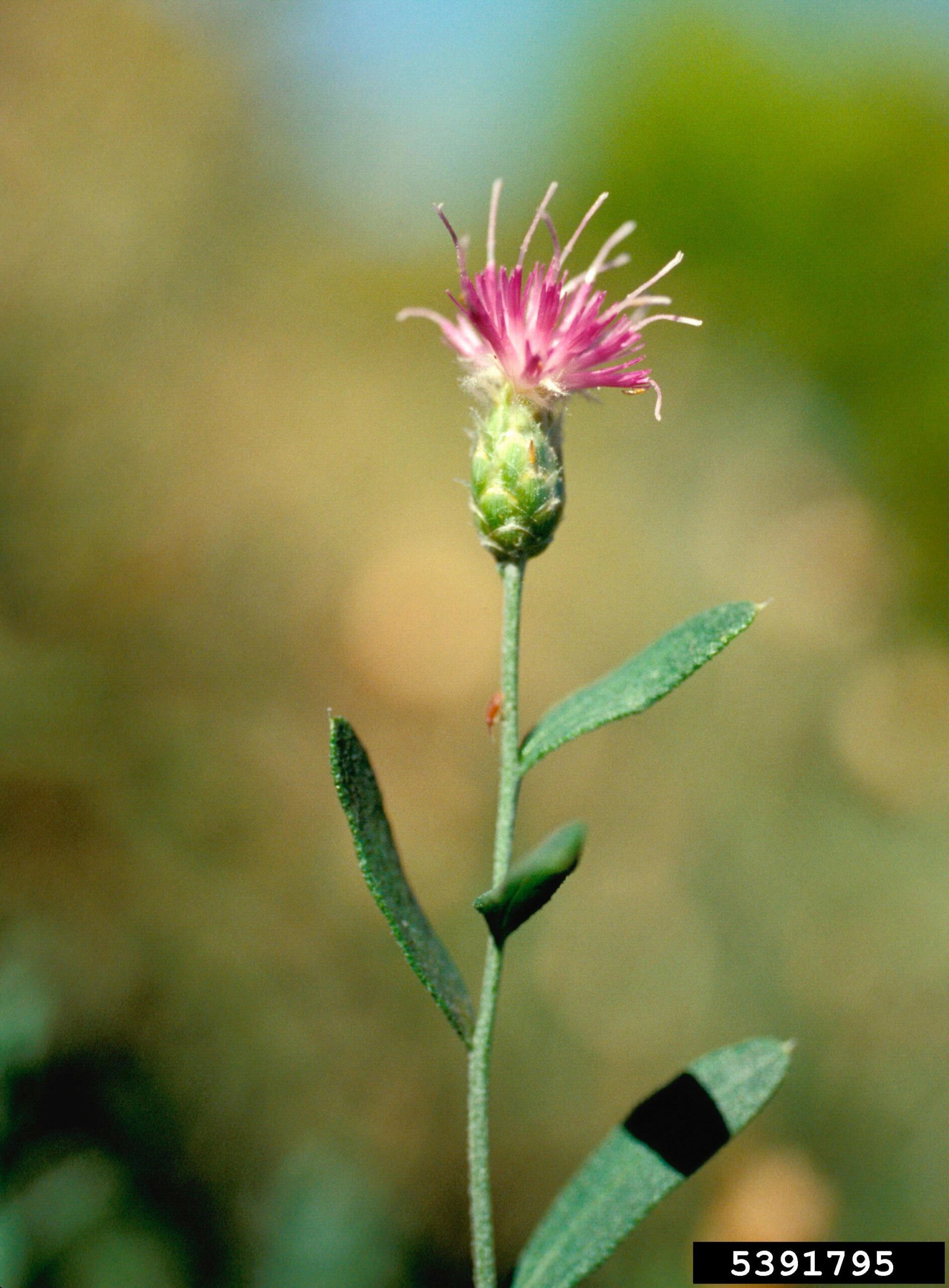
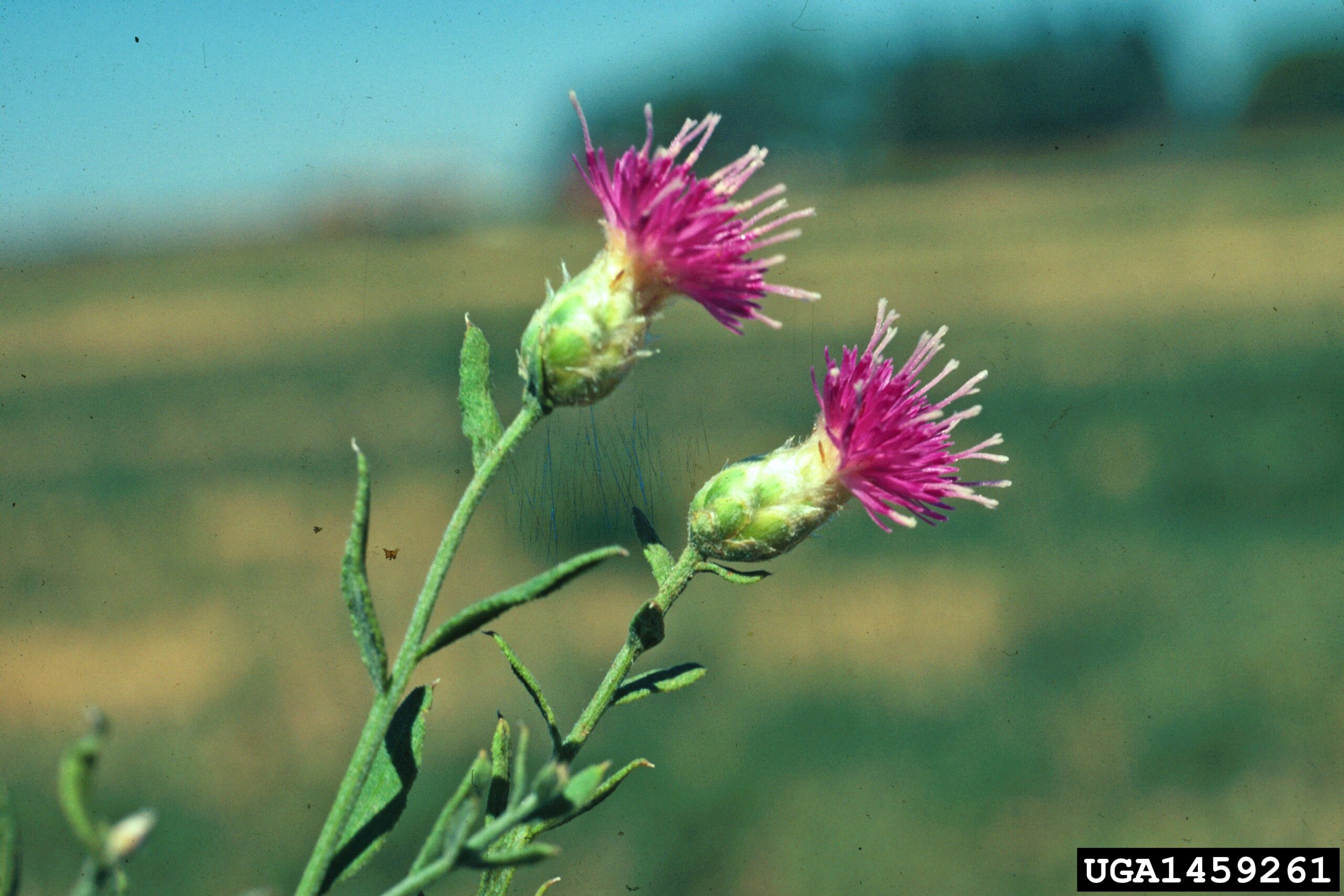
- Flowers: The flowers are ¼ to ½ inches in diameter, pink to lavender in color, and are always found at the tip of the plant’s leafy branches. They flower between June and September. [6]
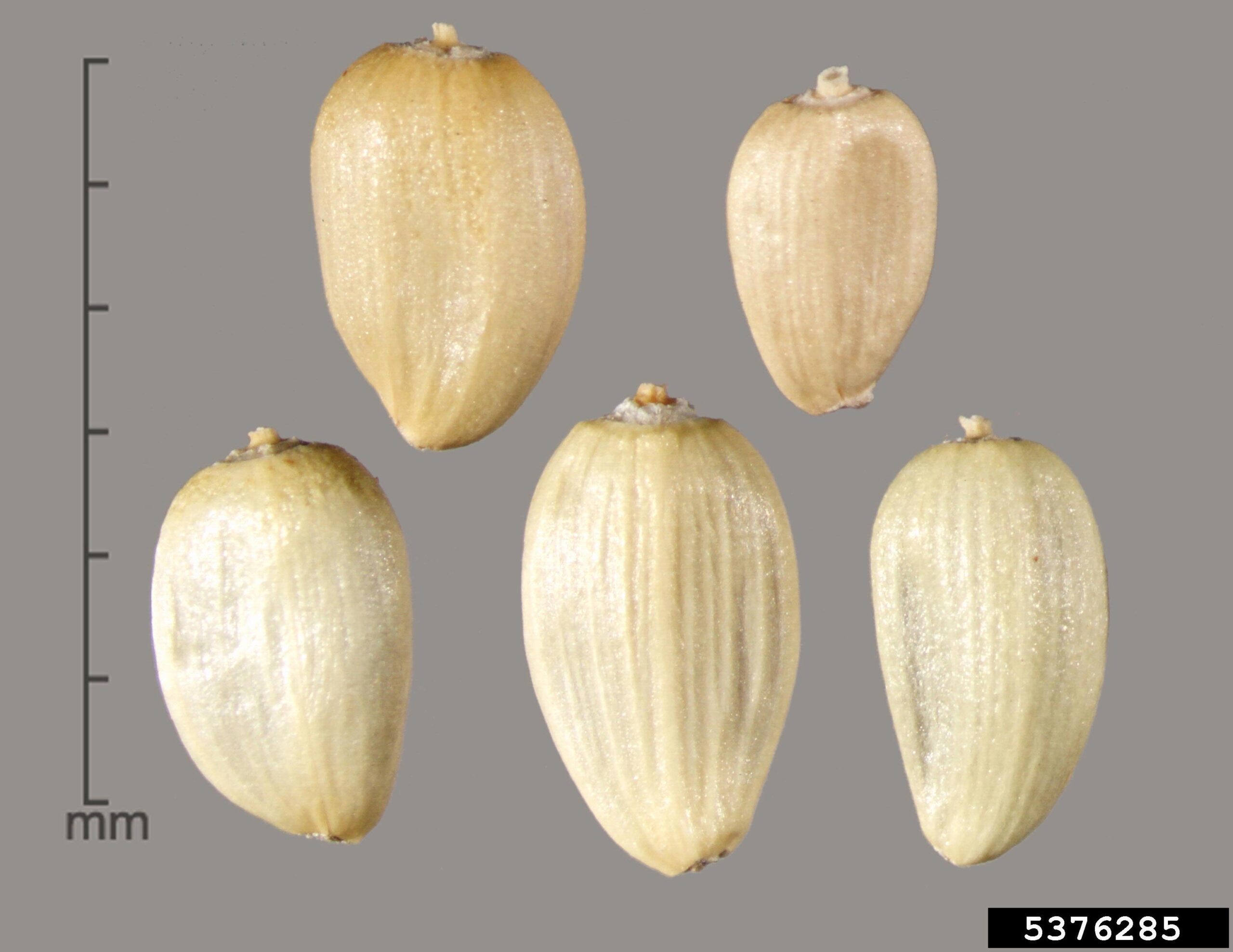
- Seeds: Seeds are oblong, grey-brown in color, and are slightly less than an inch in length and ⅕ of an inch in width. The seeds are covered in fine white hairs and can survive in the ground for up to 5 years. The main method of expansion for this plant is producing new growth from existing roots, as the seeds cannot leave the seed pod once it dries. It’s proposed that a main source of new infestation is contaminated hay bales carrying seeds. [6]
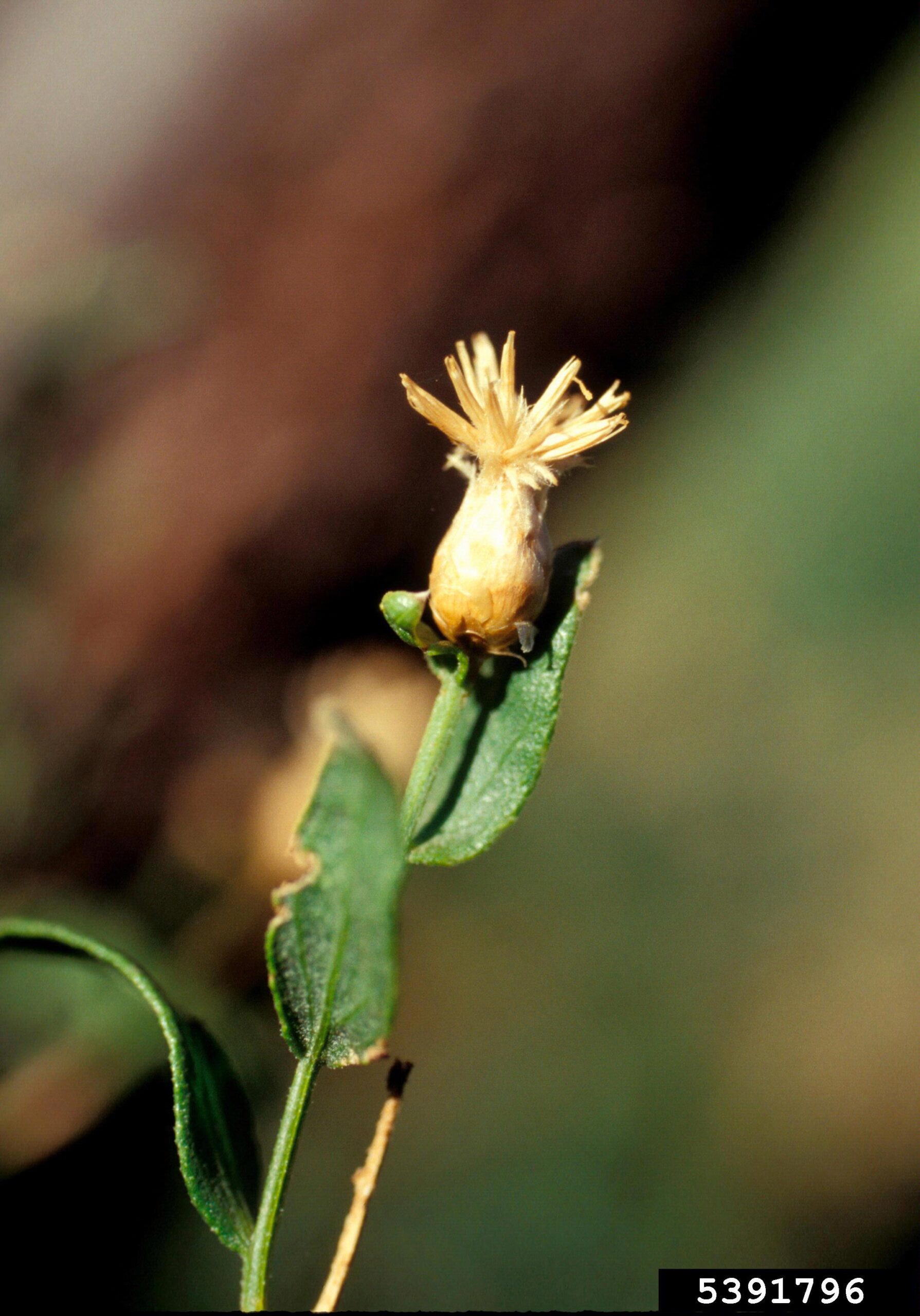
John M. Randall, The Nature Conservancy, Bugwood.org
The flowers are ¼ to ½ inches in diameter, and pink to lavender in color.
L.L. Berry, Bugwood.org
The leaves at the base that form the rosette are wider than the rest and can disappear as the plant matures.
L.L. Berry, Bugwood.org
Roots can extend up to 14 feet wide and 23 feet deep.
Bonnie Million, Bureau of Land Management, Bugwood.org
The leaves on the lower stem are pointy (linear-lanceolate), deeply lobed, and larger than those on the upper stem, which are less pointy (oblong) and toothed.
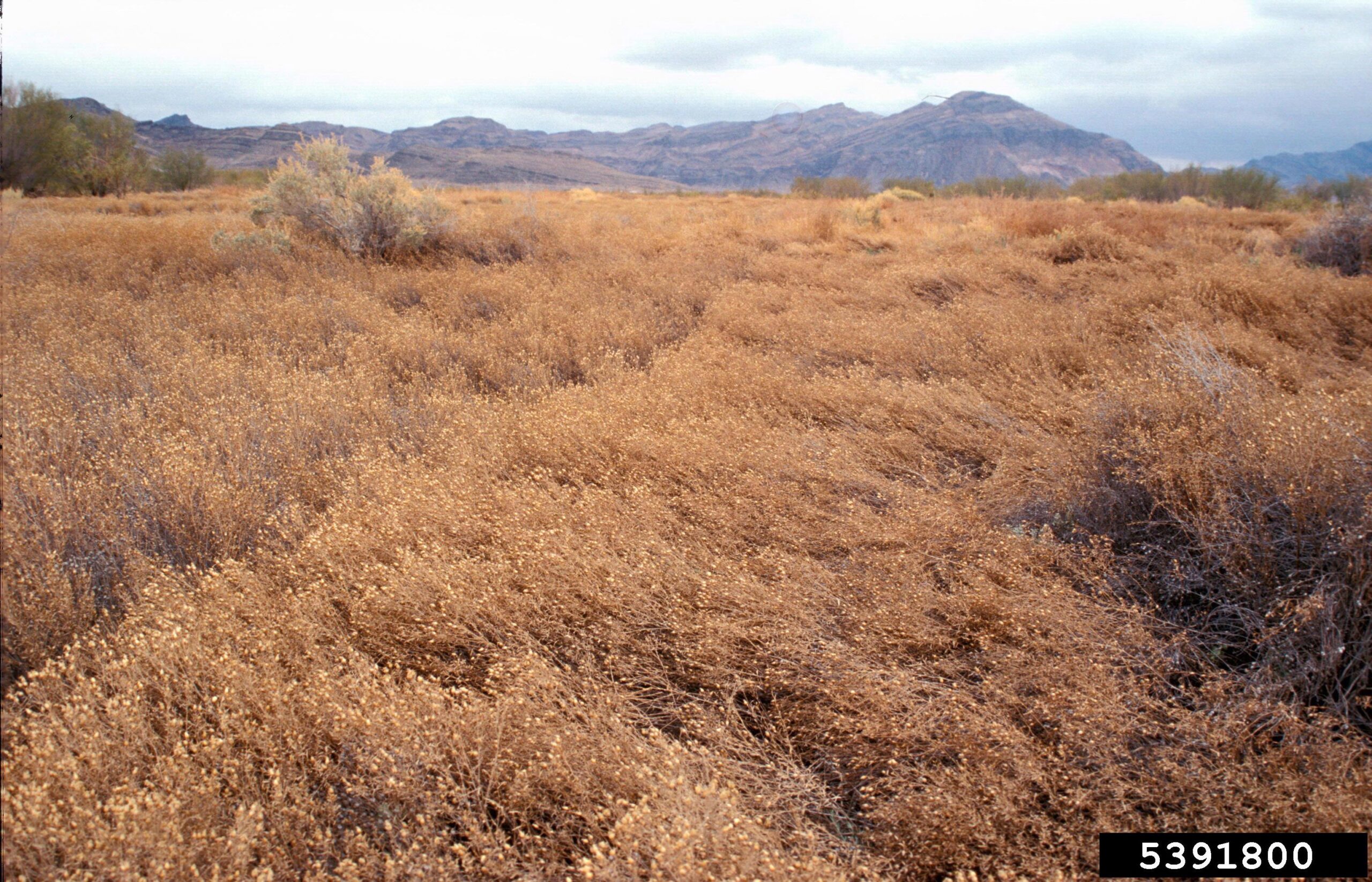
Eric Coombs, Oregon Department of Agriculture, Bugwood.org
Russian knapweed can reach up to 3 feet tall, with multiple branching stems.
Julia Scher, USDA APHIS PPQ, Bugwood.org
Seeds are oblong, grey-brown in color, and are slightly less than an inch in length and ⅕ of an inch in width.
3. Infestation Basics
“Russian knapweed might be referred to as a “steam roller” on the noxious list because it has the ability to completely overrun an area if not contained.”
– Fremont County Weeds and Pests
Where does it grow, and how does it spread?
If not caught early, Russian knapweed will dig in its heels and make you work to get it all out.
Russian knapweed can spread both from seed and from roots. The seeds seem to have difficulty dispersing on their own, so the primary mode of growth is through roots, resulting in thick, root-connected colonies that are difficult to remove. There is also a risk of spread through hay contaminated with their seeds, which is how they likely entered North America in the first place. The best way to deal with this plant is to catch it early, as it is extremely difficult to manage an established colony and will require removal of the entire root structure, with care to ensure no section is left in the ground. Herbicides that target broadleaf plants will give native grasses a competitive advantage, but herbicides alone will not be effective in managing the plant. [2][4]
Key takeaway: Russian knapweed spreads mainly through its persistent root system, making early detection and complete root removal essential for control.
Why is it so invasive?
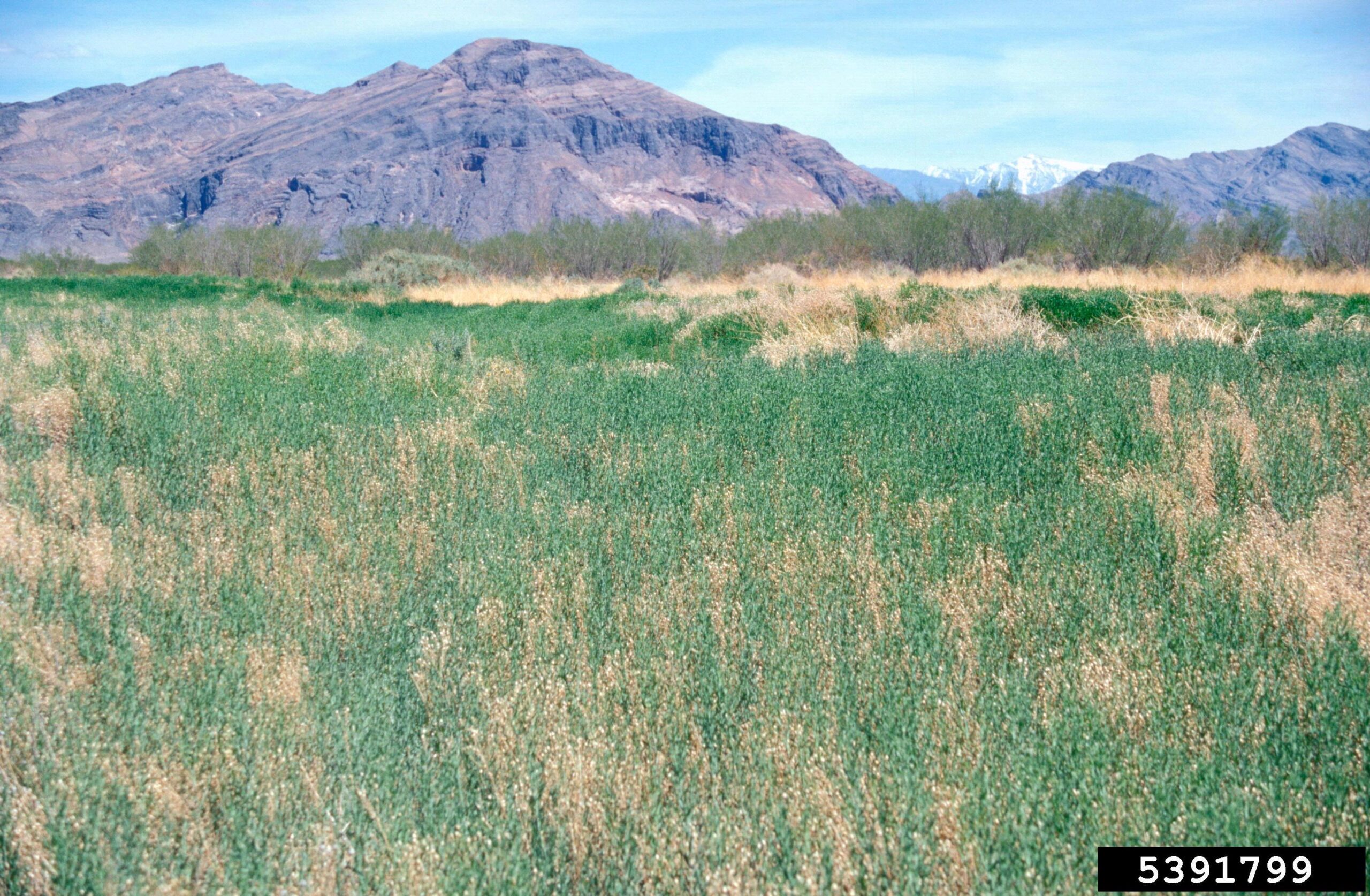
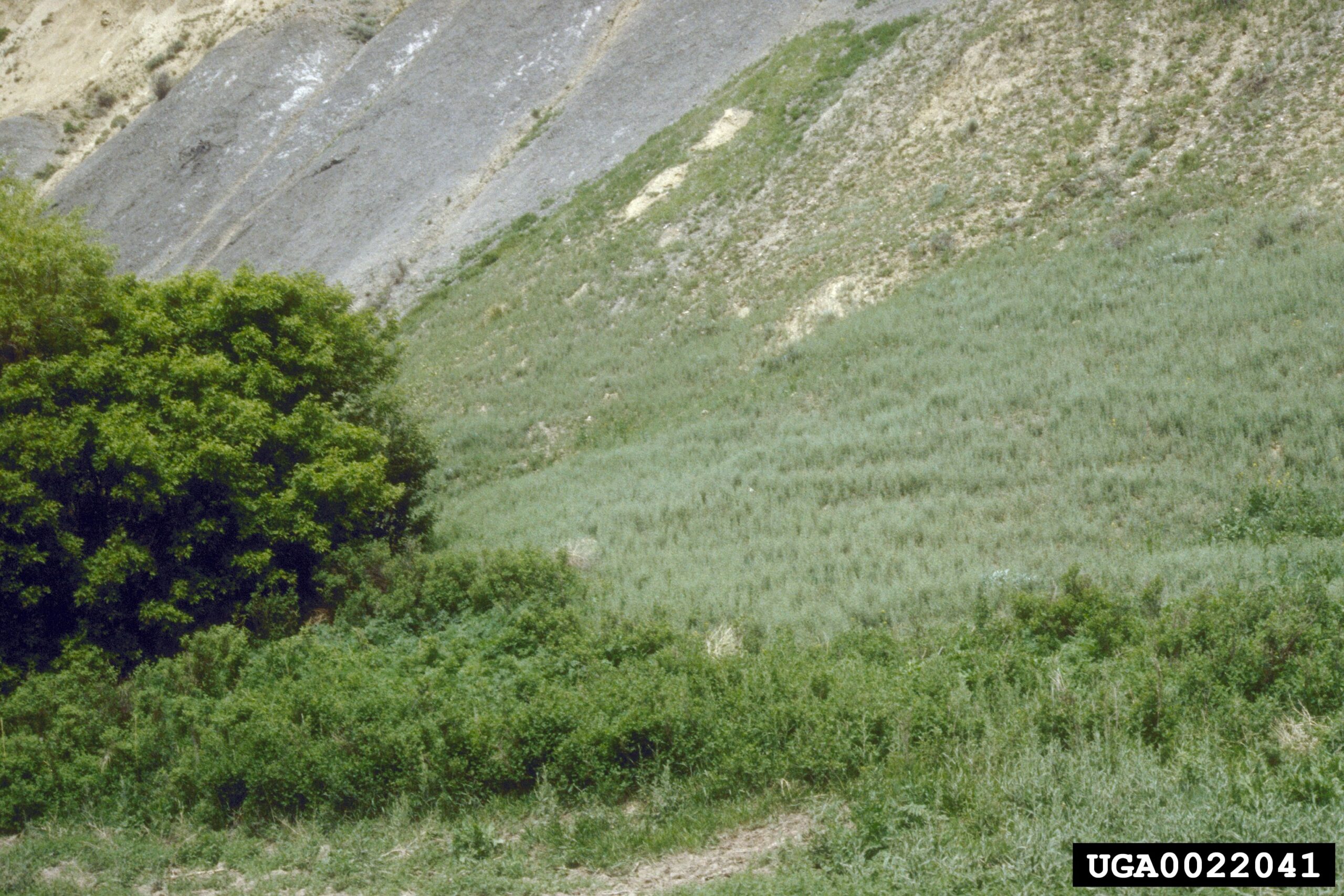
Hitchhiking on the backs of hay shipments, this weed thrives in the western states, where it pushes out native plants and forms vast monocultures that are difficult to eradicate.
Russian knapweed is highly invasive because it can outcompete native plants when land has been disturbed and it has access to sunlight. Moreover, this plant is allelopathic, meaning it secretes a chemical compound that makes it harder for other plants to grow and for their seeds to germinate, making it difficult for native perennial grasses to compete without intervention. [2][6]
Key takeaway: Russian knapweed is highly competitive through allelopathy, aggressively crowding out more desirable plants.
Common risk factors for invasion
- Soil disturbance: Russian knapweed does not compete well with perennial grasses in undisturbed soil. When there is a disturbance and an opportunity presents itself, a Russian knapweed that becomes established will begin secreting chemicals in the ground that hamper the growth of other plants. It will store energy in its vast root structure, allowing it to exploit conditions and push out native plants.
- Open spaces: Russian knapweed prefers open fields with access to sunlight and would not be able to become established if the area is already saturated with vegetation that blocks light.
- Human activity: The weed tends to thrive in areas that have been disturbed by human activity and in areas with existing irrigation or constant water flow. [2]
- Moisture availability: To become established, Russian knapweed requires some moisture. Having moisture in the soil also allows for roots to penetrate deeper and become better established.
- Overgrazing: Cattle tend to avoid this plant because of its bitter taste. Goats and sheep have been shown to eat its flowers.
- Riparian Areas: Seeds are easily carried by streams and may be subsequently deposited on river terraces. While the weed does not tolerate frequent flooding, proximity to streams or rivers allows its roots to reach the water table easily.
Impacts
Economic
This weed will become a monoculture through aggressive vegetative growth and by secreting chemicals that reduce nearby plants’ growth. It can reduce available forage for domestic livestock, as they will avoid it due to its bitter taste, and can cause serious neurological harm to horses if consumed for over a month.
Wildlife Habitat
Russian Knapweed is highly aggressive and, if left unchecked, can form localized monocultures, which reduce biodiversity and lower the availability of food for wildlife. It secretes a chemical from its roots that reduces the growth of nearby plants. That chemical can linger in the soil after the plant is removed, further degrading the environment. [2]
Agriculture and Food Security
Russian Knapweed that has been established can prove to be extremely difficult to control, and appears to spread in the western US by means of infested hay. Herbicides that target broadleaf plants have been shown to be effective while leaving non-broadleaf desired plants unharmed. [11]
Horses
Reduces overall forage for livestock, is toxic to horses, and can cause a neurological disorder called “chewing disease” if fed on for over a month. [6][11]
4. Management Strategies
Russian knapweed is difficult to eradicate once it has been established in the environment, so the most effective management strategy is to prevent it from being established in the first place and remove seedlings early before they can become established. While small-scale infestations may be pulled by hand, the use of machinery is discouraged as it might carry root fragments and expand the infestation. Animals tend to avoid grazing on this plant due to its bitter taste. Herbicides were shown to be effective if applied after the emergence of leaves. An integrated control method, such as selective application of herbicide after weekly disk mowing and planting competitive perennial grasses, seems to be the only effective way to control this plant, according to the USDA. Still, it will take years of effort to truly remove it from a given area, which is why it is so important to remain vigilant and take action before an infestation gets out of hand.
DO’s
- Plant native perennial grasses to outcompete knapweed.
- Target the root structure.
- Clean vehicles, boots, livestock, and equipment after visiting infested sites to prevent the spread of seeds to new areas.
DON’Ts
- Burn the plant, as it will likely leave the root structure unharmed.
- Leave roots in the ground, as they will regrow to full plants.
- Feed to horses, as it can cause chewing disease.
** The following information is provided courtesy of the UC Weed Research and Information Center. nmweeds.taosswcd-nm.gov does not endorse the use of any particular product, brand, or application thereof. **
Non‑chemical management of Russian knapweed relies on repeatedly removing or suppressing its vegetative shoots to exhaust the deep, spreading root system, which is the plant’s primary mode of reproduction. Consistent mechanical removal of new shoots, combined with maintaining dense competitive vegetation, helps limit regrowth and prevents the plant from forming long‑lived colonies.
Mowing(pulling, cutting, |
Seedlings are easily controlled by hand-pulling or digging, but these techniques do not control established plants because shoots quickly resprout from vast root reserves. Multiple mowing passes during a season can suppress Russian knapweed, but mowing alone will not eliminate an infestation, and can even stimulate an increase in shoot density the following year. Removal of top vegetation stimulates shoot sprouting from roots. Cutting or mowing three times a year depletes nutrients in the roots, but unless mowing is continued, plants will recover. Mowing may not be possible in environmentally sensitive areas. Summer mowing followed by herbicide in fall can be effective. Root fragments resprout following tillage. Clean equipment after tillage to prevent spreading root fragments. Repeated tillage to 1 ft deep over a period of about 3 years can kill much of the root system. |
Livestock usually avoid grazing Russian knapweed because of its bitter taste. Russian knapweed is toxic to horses. Goats have been used to graze Russian knapweed. Burning is not effective at controlling Russian knapweed, but it is helpful at removing accumulated thatch. Thatch burns best in winter or spring under dry conditions before initiation of spring growth. Russian knapweed is sensitive to light competition, and crops that produce dense shade can be used to suppress it. Cultivation of dense competitive crops such as cereal grains, alfalfa, or perennial grasses can reduce Russian knapweed in crop fields. Reseeding with perennial grasses following control with herbicides can be effective at suppressing reinfestation in dryland areas.
Subanguina picridis (Russian knapweed gall nematode) and Aceria acroptiloni (Russian knapweed mite) have been introduced and are established in several western states. These agents may help to stress the plant but will not eliminate it.
Information regarding chemical management strategies for this plant has been provided by the UC Weed Research and Information Center.
“The following specific use information is based on published papers and reports by researchers and land managers. Other trade names may be available, and other compounds also are labeled for this weed. Directions for use may vary between brands; see label before use. Herbicides are listed by mode of action and then alphabetically. The order of herbicide listing is not reflective of the order of efficacy or preference.”
Aminocyclopyrachlor +
|
|
Aminopyralid
|
|
Clopyralid
|
|
Clopyralid + 2,4-D
|
|
Picloram
|
|
Glyphosate
|
|
Chlorsulfuron
|
Rate: 1 to 2.6 oz product/acre (0.75 to 1.95 oz a.i./acre) Timing: Postemergence at flower bud to flowering stage, or fall rosette stage, or winter. Remarks: Always use a surfactant. Included with aminocyclopyrachlor in Perspective. |
Imazapic
|
Rate: 12 oz product/acre (3 oz a.e./acre) Timing: Late postemergence in fall when the top 25% of the plant is necrotic, but before a hard frost. Application should be made when some green stem and foliage remains on plant. Timing should correspond to fall basal growth. Remarks: Some trials show this treatment to provide no or only partial control, but Russian knapweed is included on the Plateau label. Selective to most native grasses. Higher rates may suppress seedings of some cool-season grasses. Add ammonium sulfate and a methylated seed oil. Imazapic is not registered for use in California. |
Metsulfuron
|
Rate: 1 to 2 oz product/acre (0.6 to 1.2 oz a.i./acre) Timing: Postemergence at flower bud to flowering stage or to fall rosettes. Remarks: Always use a surfactant. Other premix formulations of metsulfuron can be used at similar application timing. These include Cimarron Max (metsulfuron + dicamba + 2,4-D), Opensight (metsulfuron + aminopyralid), and Cimarron X-tra (metsulfuron + chlorsulfuron). Metsulfuron is not registered for use in California. |
5. References
References
[1] “Plant Details – Tennessee Invasive Plant Council,” Tnipc.org, 2026. https://www.tnipc.org/invasive-plants/plant-details/?id=67 (accessed Aug. 26, 2026).
[2] “Acroptilon repens,” www.fs.usda.gov. https://www.fs.usda.gov/database/feis/plants/forb/acrrep/all.html (accessed Aug. 26, 2026).
[3] MTNHP, “Russian Knapweed – MONTANA FIELD GUIDETM,” Mt.gov, 2026. https://fieldguide.mt.gov/speciesDetail.aspx?elcode=PDASTD2010 (accessed Aug. 26, 2026).
[4] RUSSIAN KNAPWEED(Acroptilon repens), https://www.library.nd.gov/statedocs/AgDept/Russianknapweed20070905.pdf
[5] Russian knapweed (Rhaponticum repens L., formerly Acroptilon repens L. Sunflower family (Asteraceae), United States Department of Agriculture, 2017 https://www.fs.usda.gov/sites/nfs/files/legacy-media/r03/Russian%20Knapweed%20Field%20Guide%202017.pdf
[6] Sheley, Roger L., and Janet K. Petroff. Biology and Management of Noxious Rangeland Weeds. Oregon State University Press, 1999.
[7] ”Russian knapweed, Rhapontocum repens (L.)“, colorado state university agricultural experimental station, https://agsci.colostate.edu/agbio/ipm-pests/russian-knapweed/
[8] N. Quintana, T. L. Weir, J. Du, C. D. Broeckling, J. P. Rieder, F. R. Stermitz ,M. W. Paschke, J. M. Vivanco, ”Phytotoxic polyacetylenes from roots of Russian knapweed (Acroptilon repens (L.) DC.)”, Elsevier, 2008
[9]Russian Knapweed (State designated weed), Fremont County Weed and Pest District, https://fcwp.org/russian-knapweed-state-designated-weed/
[10]J. Jacobs, K. Denny,Ecology and Management of Russian Knapweed [Acroptilon repens (L.) DC],United States Department of Agriculture NATURAL RESOURCES CONSERVATION SERVICE Invasive Species Technical Note No. MT-7, 2006. https://www.nrcs.usda.gov/plantmaterials/mtpmctn13104.pdf
[11] A. J. Detweiler, “Identification and control of knapweed species in Central and Eastern Oregon,” OSU Extension Service, Dec. 18, 2014. https://extension.oregonstate.edu/catalog/ec-1559-identification-control-knapweed-species-central-eastern-oregon (accessed Aug. 26, 2026).
[12] D. Hyder et al., “Analysis of Floral Sources of a Local Honey Used in Clinical Treatment of Topical Community Acquired Methicillin Resistant Staphylococcus Aureus,” New Mexico journal of science, vol. 57, p. 50, 2023, Accessed: Aug. 26, 2026. [Online]. Available: https://pmc.ncbi.nlm.nih.gov/articles/PMC11695059/
Norman E. Rees, USDA Agricultural Research Service – Retired, Bugwood.org
Steve Dewey, Utah State University, Bugwood.org
Fun Fact:
Russian knapweed mostly expands through its roots, which can be long-lived. A root system in Canada was found to be over 75 years old. [2]
Eric Coombs, Oregon Department of Agriculture, Bugwood.org
Eric Coombs, Oregon Department of Agriculture, Bugwood.org
Fun Fact:
Russian knapweed appears to be a significant source of pollen to bees when it is available, making up almost 40 percent of the pollen that was collected. [12]