

Eurasian Watermilfoil
Myriophyllum spicatum
Class C
Widespread in the state. Management decisions for these species should be determined at the local level, based on feasibility of control and level of infestation.
Purchasable
Despite being classified as a noxious weed, this plant is still widely sold in stores! Keep an eye out, and remember that it is illegal to plant and transport noxious weeds in the state of New Mexico.
Riparian Threat
This plant is known to invade riparian areas or otherwise damage the health and abundance of our water resources.
Local Ecosystems
This plant is detrimental to native ecosystems, negatively impacting the quality of forage for wildlife and reducing biodiversity in plant communities.
QUICK FACTS
- Eurasian watermilfoil is an invasive aquatic perennial that has adapted to grow in a variety of conditions. It grows underwater and has green, feather-like leaves whorled around a thin stem about 10 feet long.
- Native to Eurasia and Northern Africa, this weed is also considered invasive in its native range because it prevents other aquatic vegetation from growing. Although some small aquatic creatures use this as cover, it is hardly ever eaten or used by fish.
- Eurasian watermilfoil can spread by seed, rhizomes, and root or stem fragments. This plant can regrow from small plant debris that is usually spread by human recreational activities. It creates thick root mats and a dense canopy that shades out other plants and prevents them from establishing in infected areas.
1. Overview
An invasive aquatic plant worldwide in nearly all bodies of water.
Eurasian watermilfoil was spread throughout the U.S. by contaminated boating equipment, the aquarium trade, and waterfowl. It was initially discovered in New Mexico in 1966 in the Gila National Forest and has since been reported in several lakes and waterways, with the most recent report in 2023 in Sierra County. Once introduced to an area, this weed is nearly impossible to eradicate. It threatens native aquatic plants, provides inadequate cover for animals, and often creates habitat for disease-carrying insects. [7,8]
History of Eurasian Watermilfoil
Eurasian watermilfoil is native to Eurasia and North Africa in fresh and brackish waters. In its native range, it provides habitat for freshwater crustaceans and cover for bass, but is still considered invasive because it prevents other species from growing. It was likely introduced to the U.S. via the Chesapeake Bay in the 1880s in shipping ballast, but was first reported in the early 1900s. It may also have been intentionally introduced through aquarium and aquatic nursery trade. It has now been reported in 47 states and is noxious or restricted in 17 states. It was first reported in New Mexico in 1966 and has since been found in new water bodies. [1,2,6,7]
This weed was likely spread through the transport of boating equipment. Other risks of infection include waterfowl, nursery trade, fisheries, and connected waterways. It is very difficult to eradicate this weed once it infects an area, and most methods focus on controlling populations rather than eliminating it. [2,3]
2. ID Guide
What does it look like?
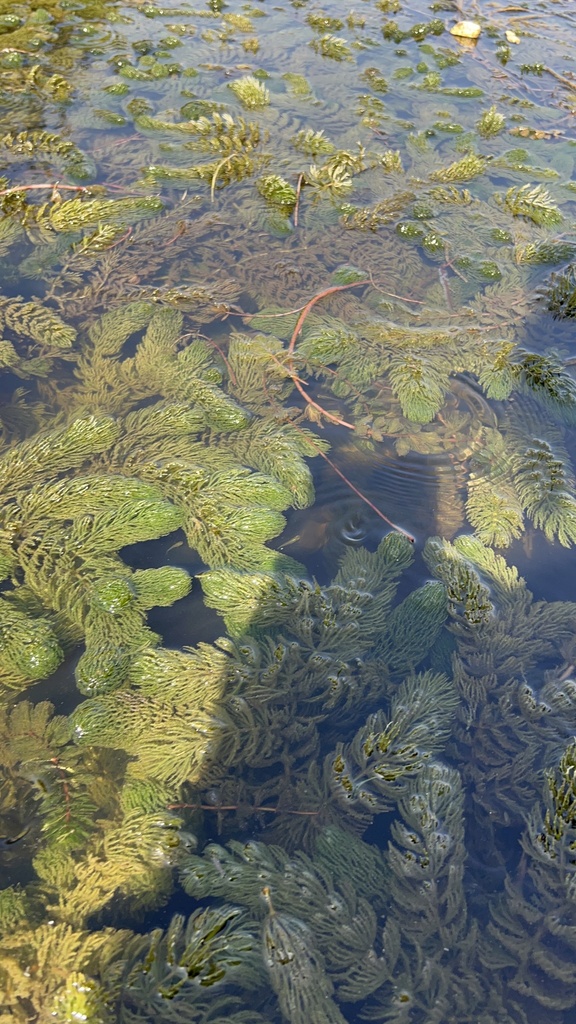
Eurasian watermilfoil grows entirely underwater. It has thin stems that can be green, brown, or pinkish white. The stems grow up to 20 feet tall and get thinner the farther they are from the main stem. Leaves grow in a whorled pattern in groups of 4 or 5 with 28-48 thread-like leaflets. They can usually be found in fresh, calm waters around 3-20 feet deep, but can also be found in other aquatic locations. This weed can be confused with several other watermilfoils, but can be identified by the number of leaflets. Native species typically have fewer than 20 leaflets, while Eurasian watermilfoil often has more. [1,3]
Having trouble identifying a weed?
Contact your local conservation district or county extension agent.
Key Features
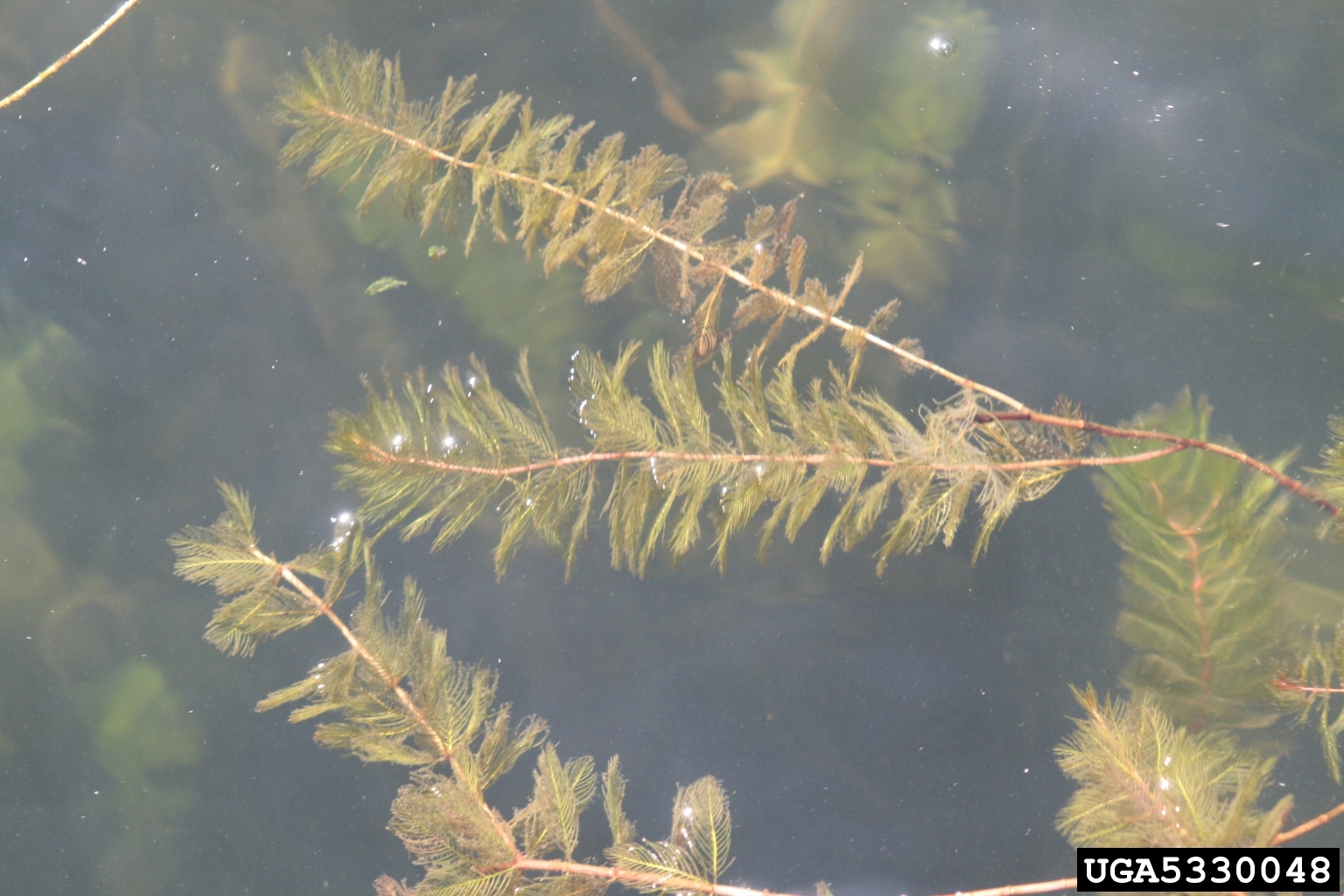
- Plant: Eurasian watermilfoil grows underwater, usually at depths of 3-10 feet, but can be found in waters as deep as 20 feet. Its stems are smooth, thin, and green, brown, or pinkish-white. Leaves usually float directly underneath the surface and create thick cover. The tops of leaves and stems can sometimes turn reddish. [2,4,5]
- Roots: Roots are rhizomatous, thin and white, forming dense clumps beneath plants. Roots are usually fragile and easily break, but plants can regrow from root fragments. [7]
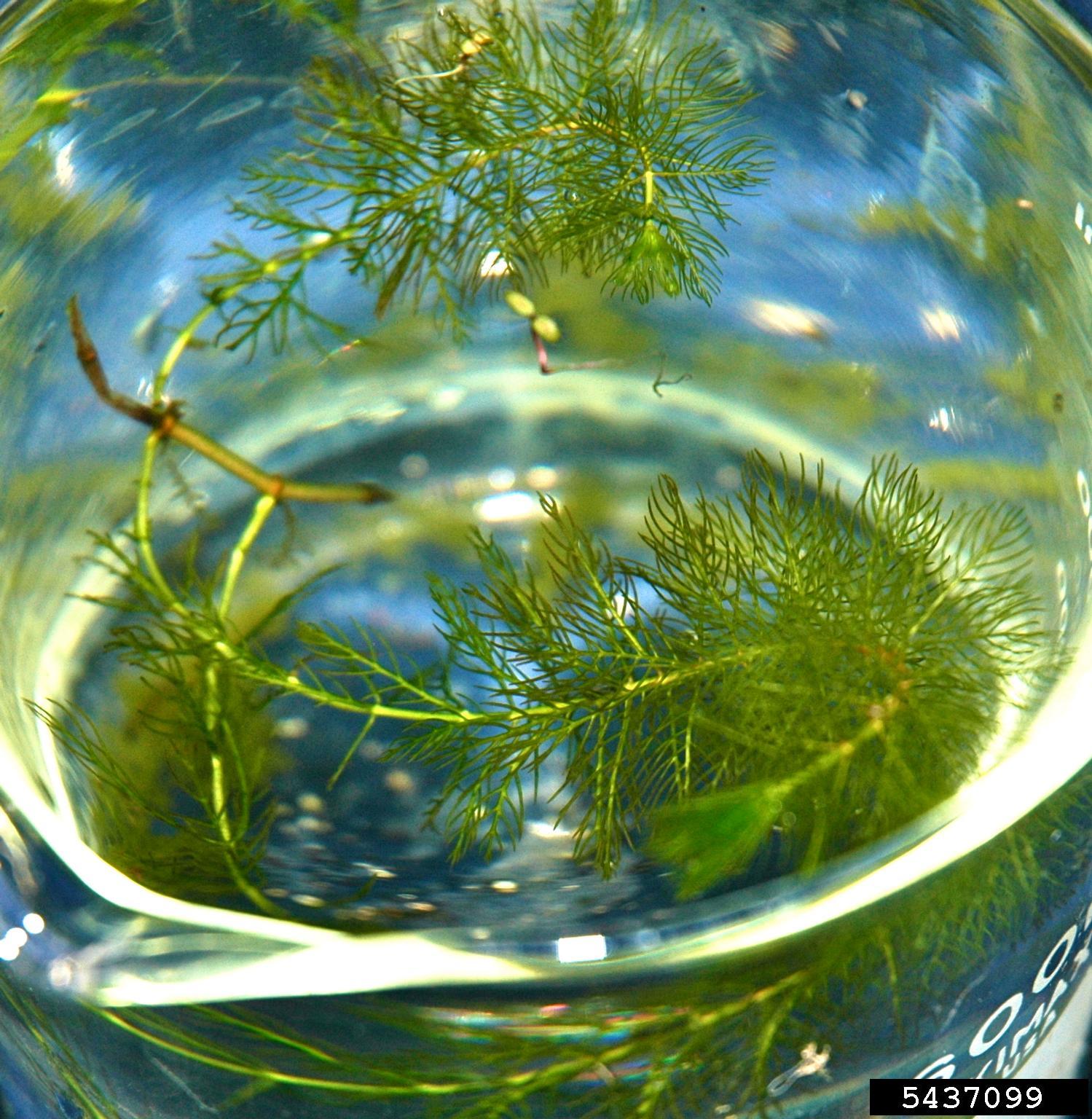
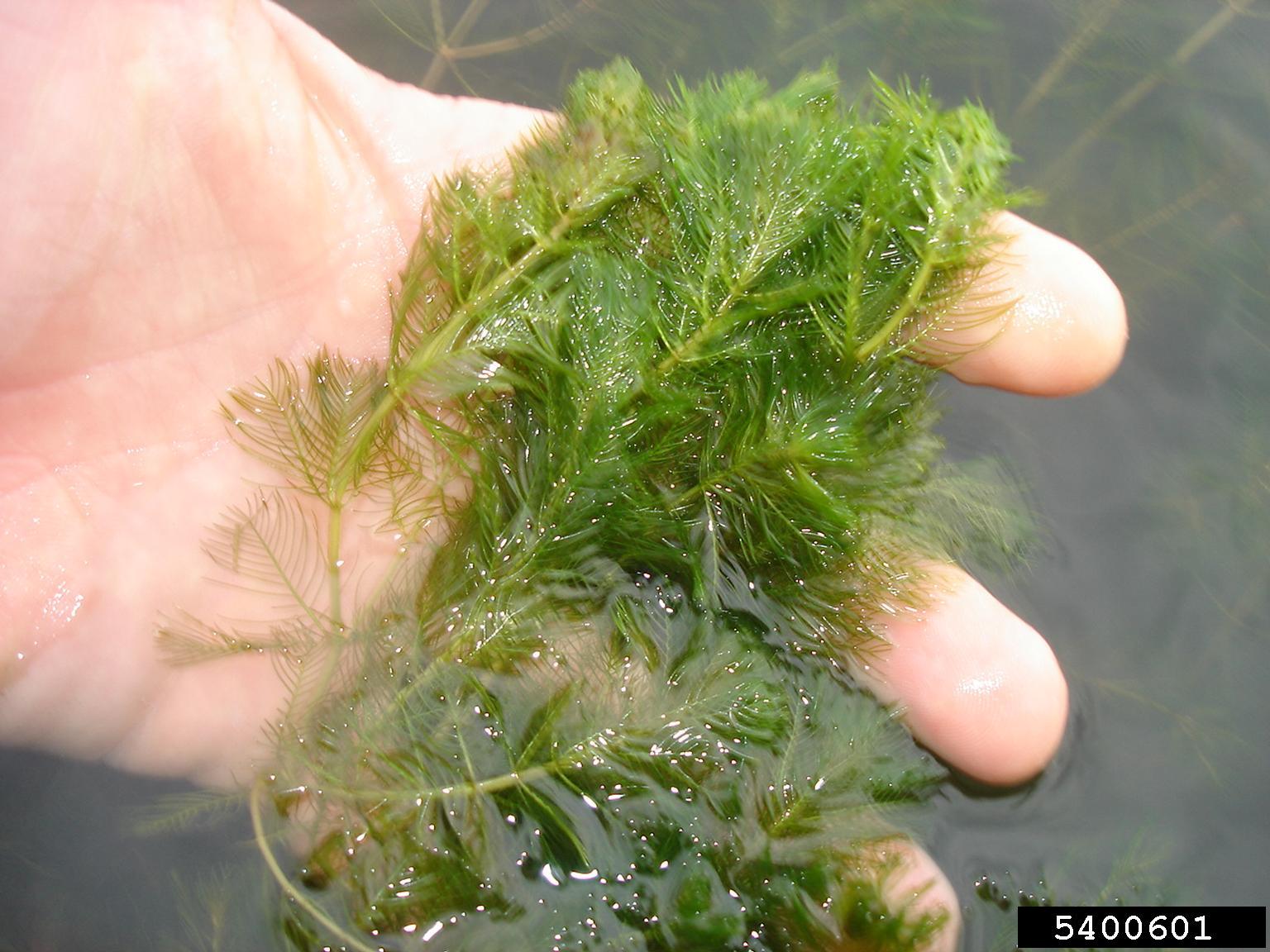
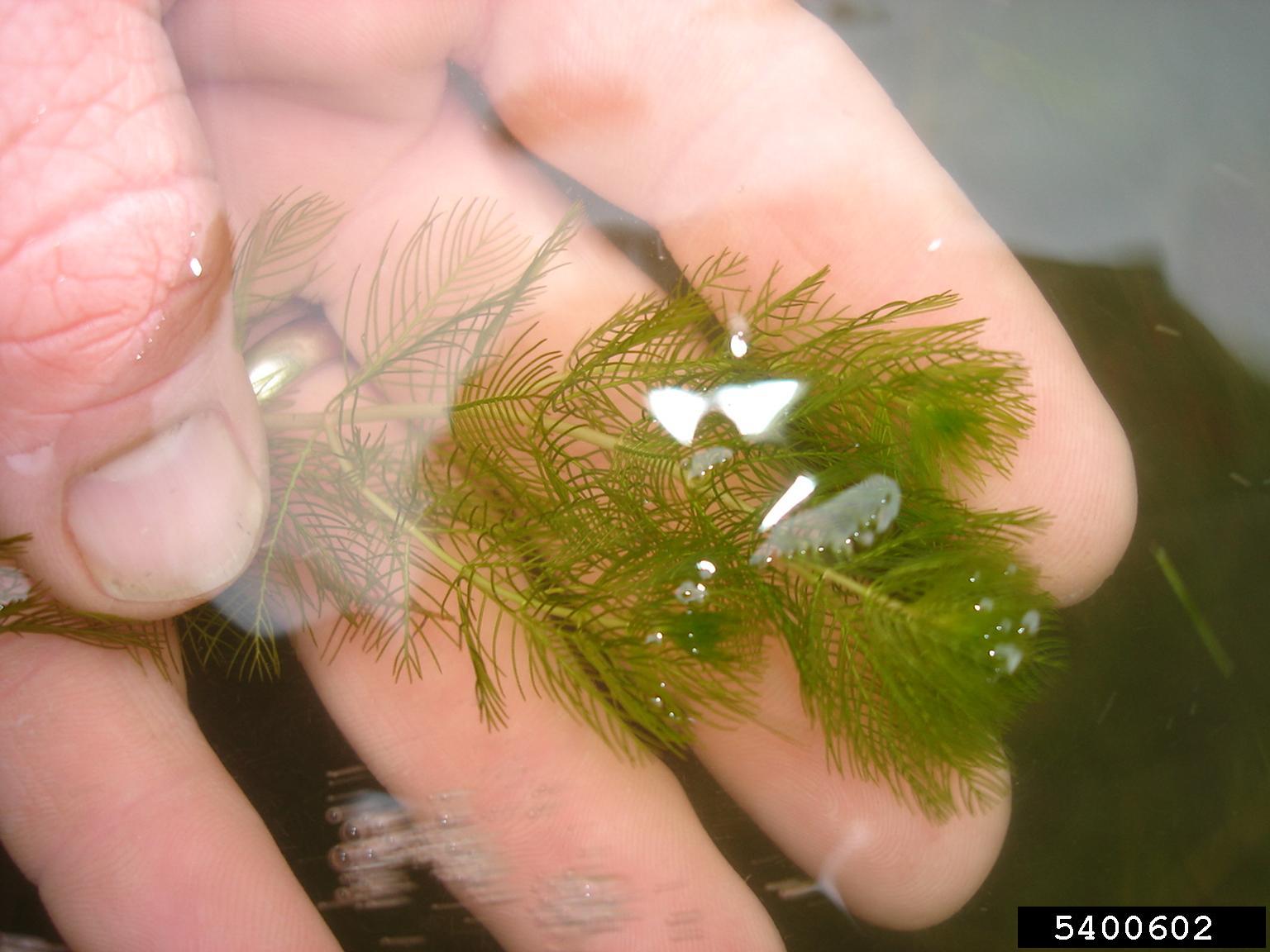
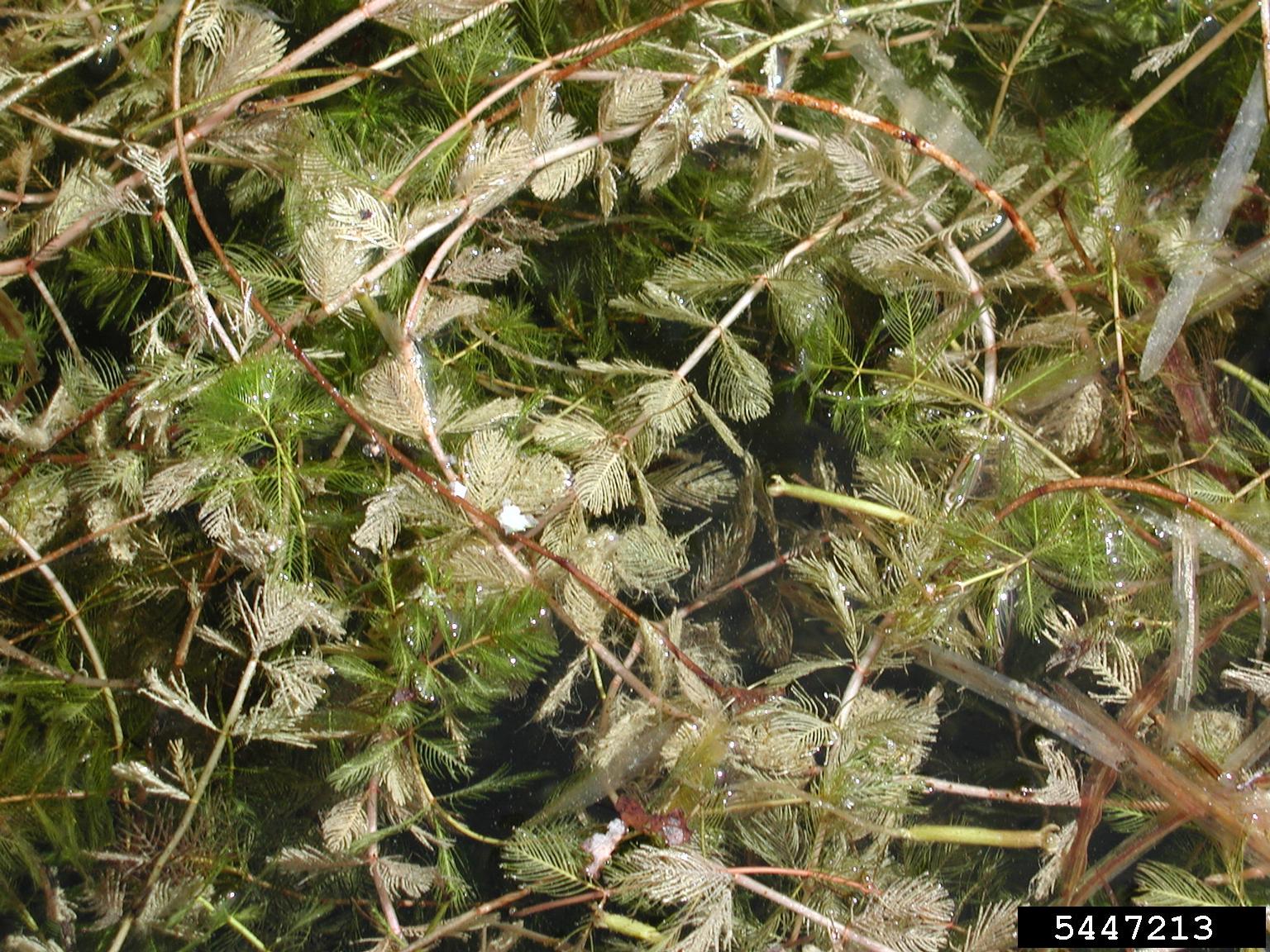
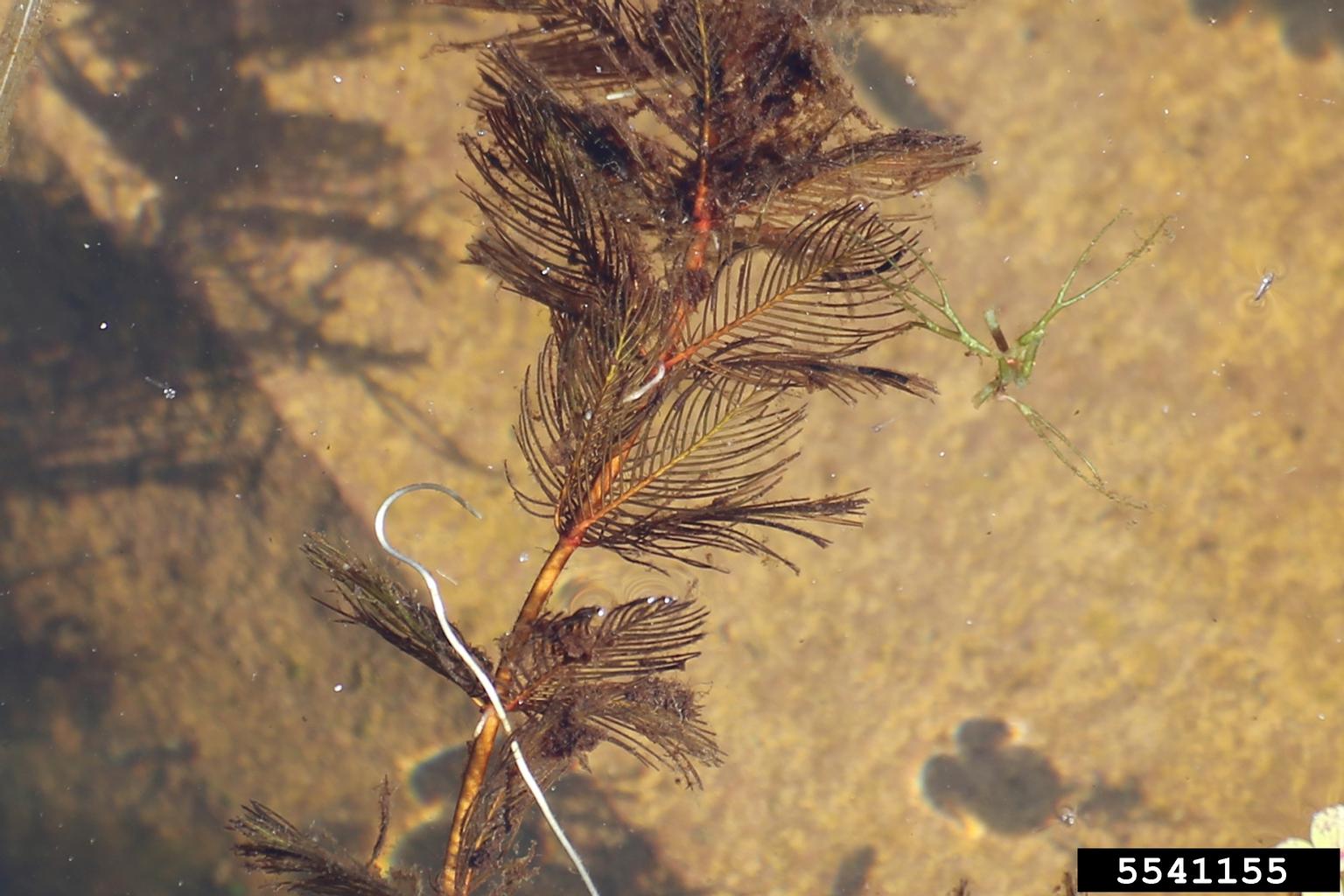
- Leaves: Leaves are green, feather-like, and grow in a whorled pattern around stems in groups of 4-5. Each leaf is about an inch long and has 28-48 leaflets that become limp when removed from water. [2,3]
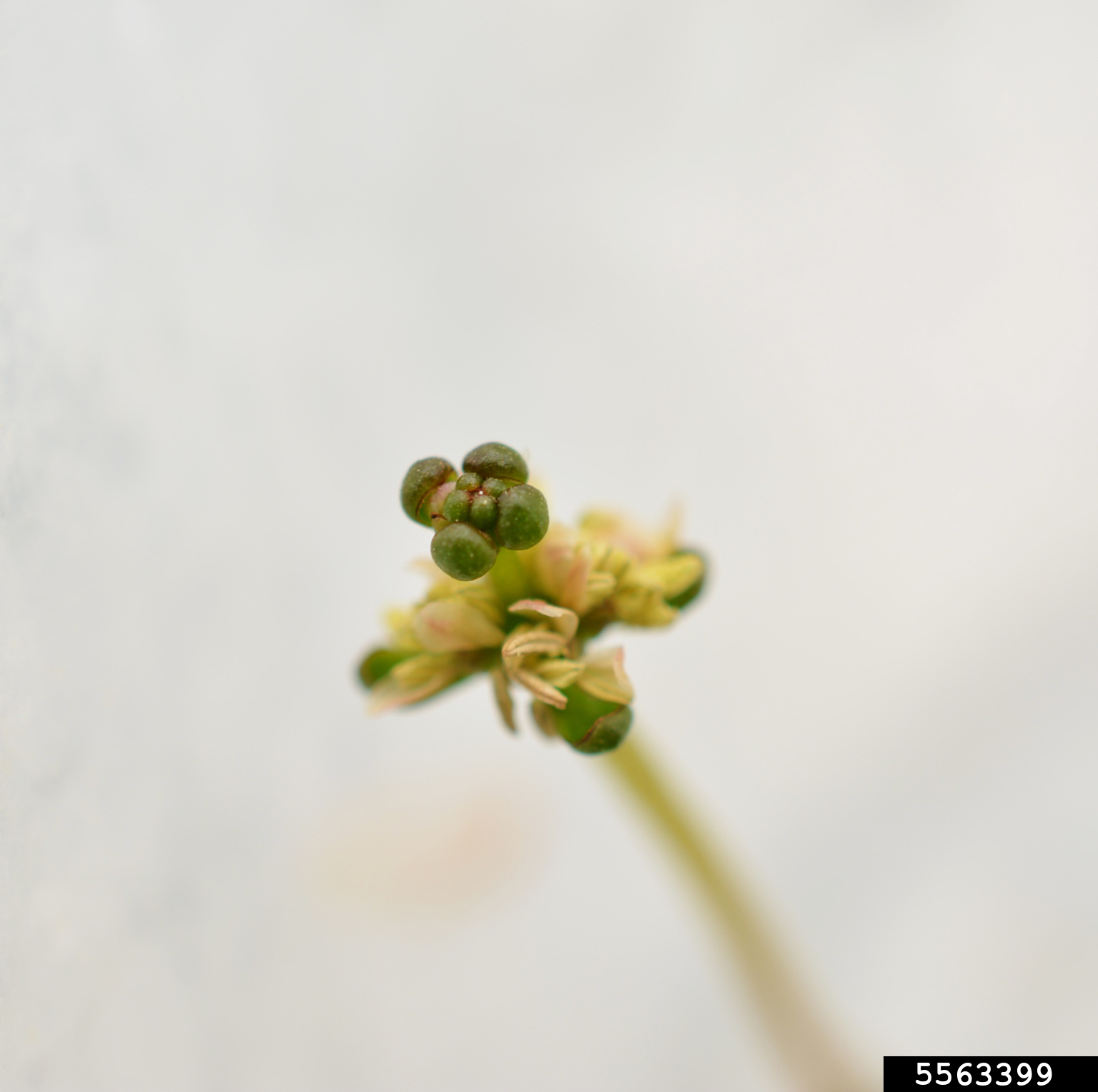
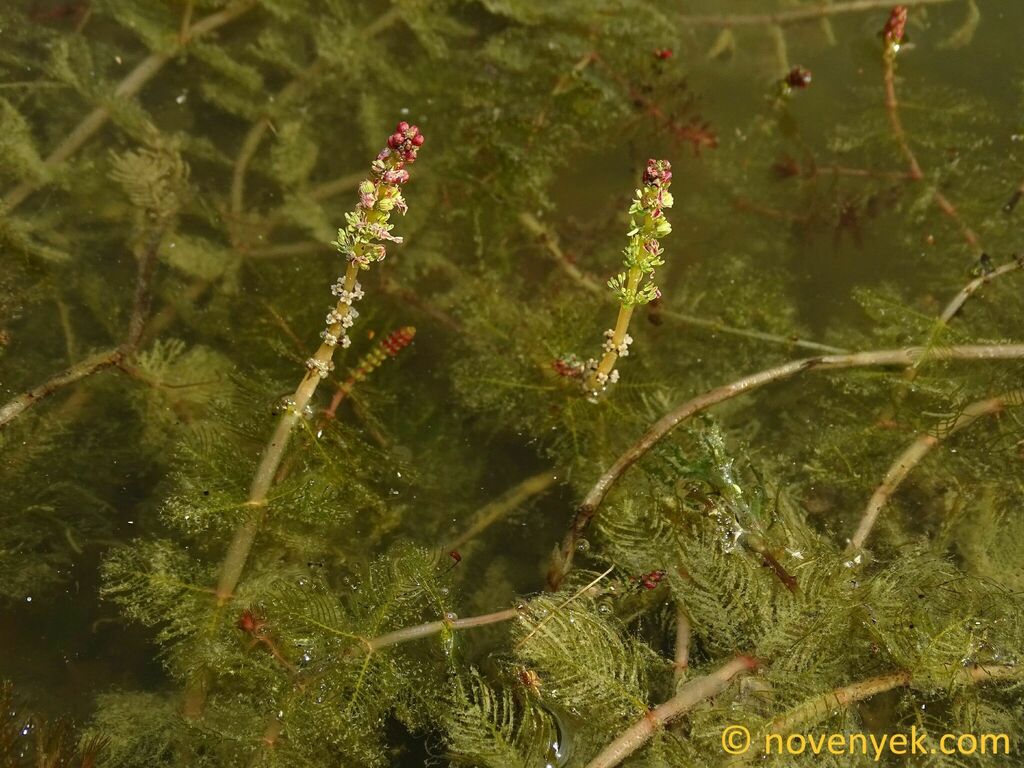
- Flowers: Flowers are small, pink, wind-pollinated, and emerge from water on a spike 2-6 inches long. Flowers grow in whorls of 4. There are basal whorls of female flowers and a clump of dull red male flowers on top. There are usually 6-7 flowers per spike. Flowering occurs from June to September. Once pollinated, flower spikes usually sink back into the water. [2,6]
- Seeds: The plant produces small fruits with 4 seeds each, yielding over 100 seeds per plant each season. Although Eurasian watermilfoil makes great efforts to flower and fruit, its seeds seem unimportant to its spread. [2.4]
Shaun Winterton, California Department of Food and Agriculture, Bugwood.org
Flowers are small, pink, wind-pollinated, and emerge from water on a spike 2-6 inches long
Bruce Ackley, The Ohio State University, Bugwood.org
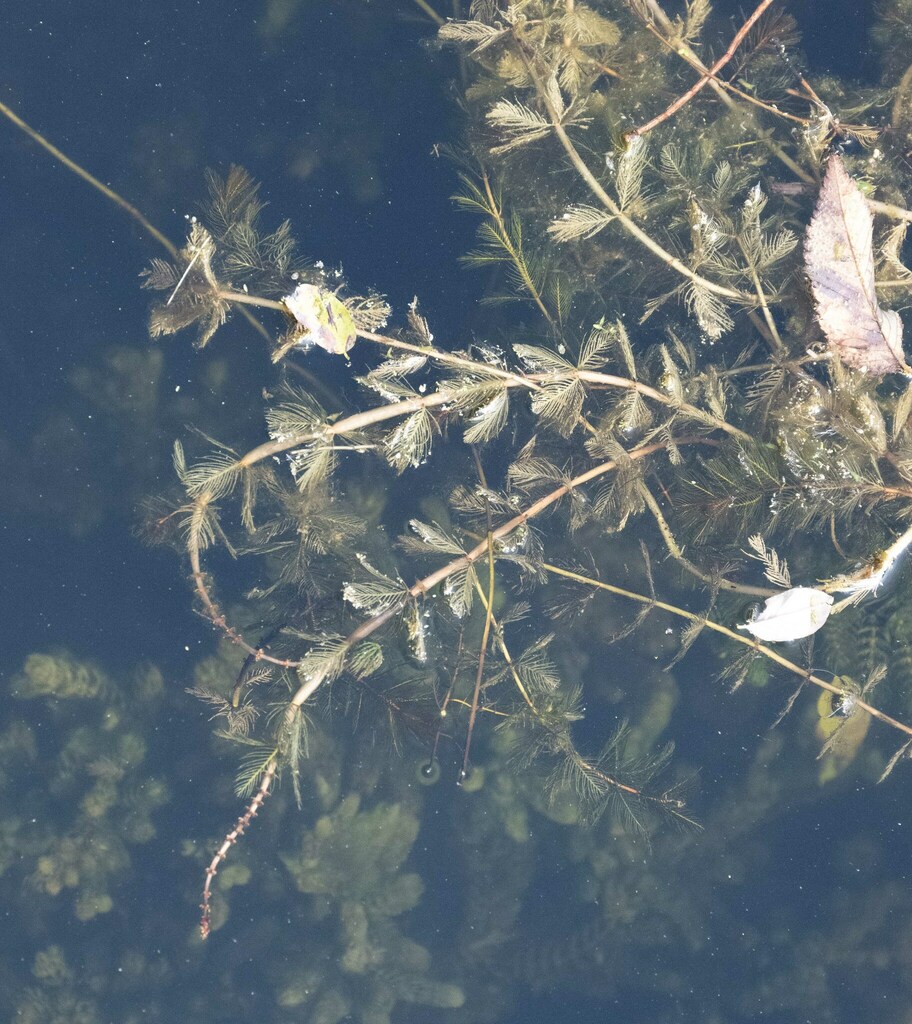
Plants can grow from root and stem fragments that humans usually spread to new bodies of water.
Erika Mitchell, Inaturalist.org
Roots are rhizomatous, thin and white, forming dense clumps beneath plants.
Graves Lovell, Alabama Department of Conservation and Natural Resources, Bugwood.org
Leaves are green, feather-like, and grow in a whorled pattern around stems in groups of 4-5.
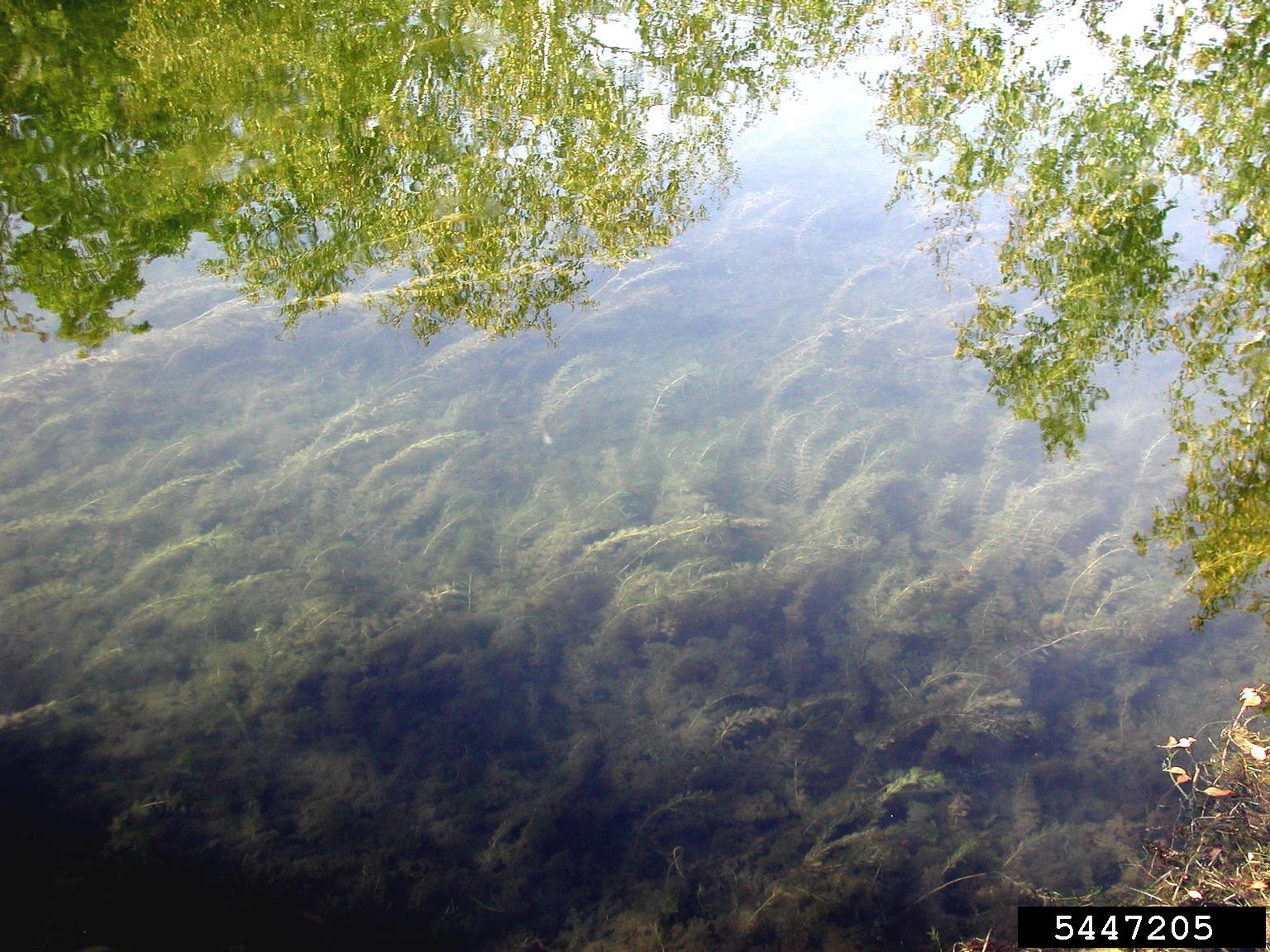
Leslie J. Mehrhoff, University of Connecticut, Bugwood.org
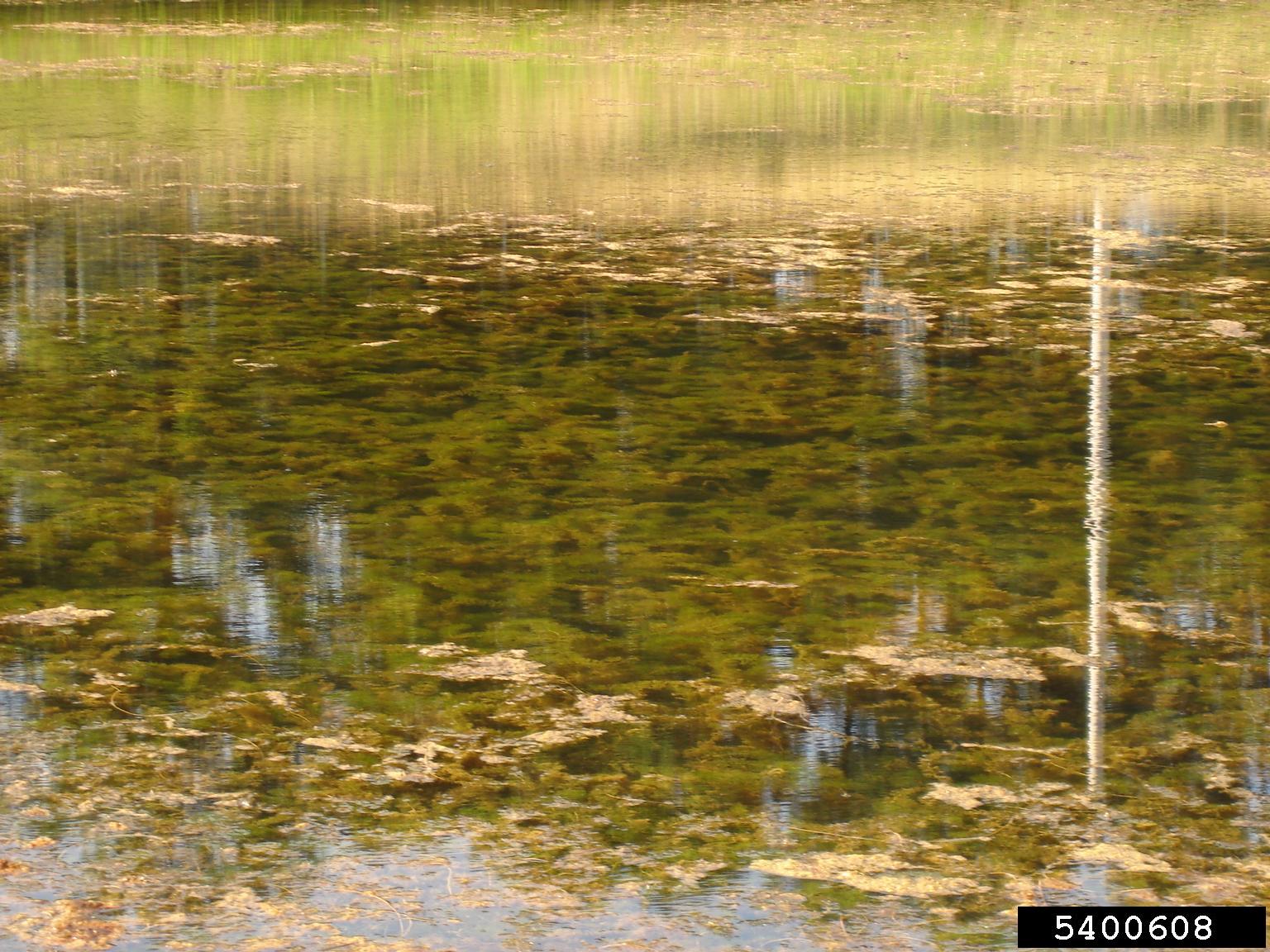
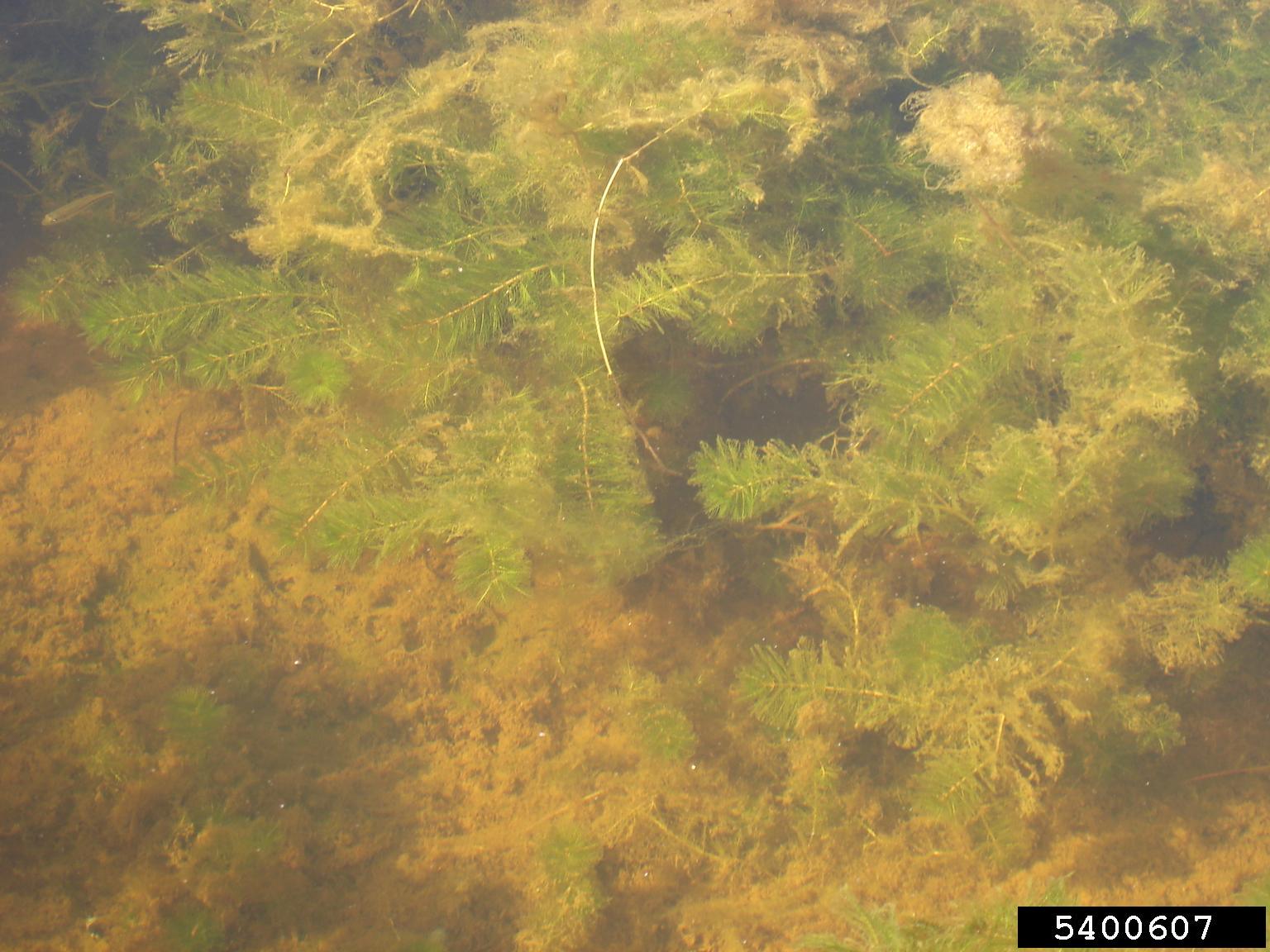
Eurasian watermilfoil grows underwater, usually at depths of 3-10 feet, but can be found in waters as deep as 20 feet.
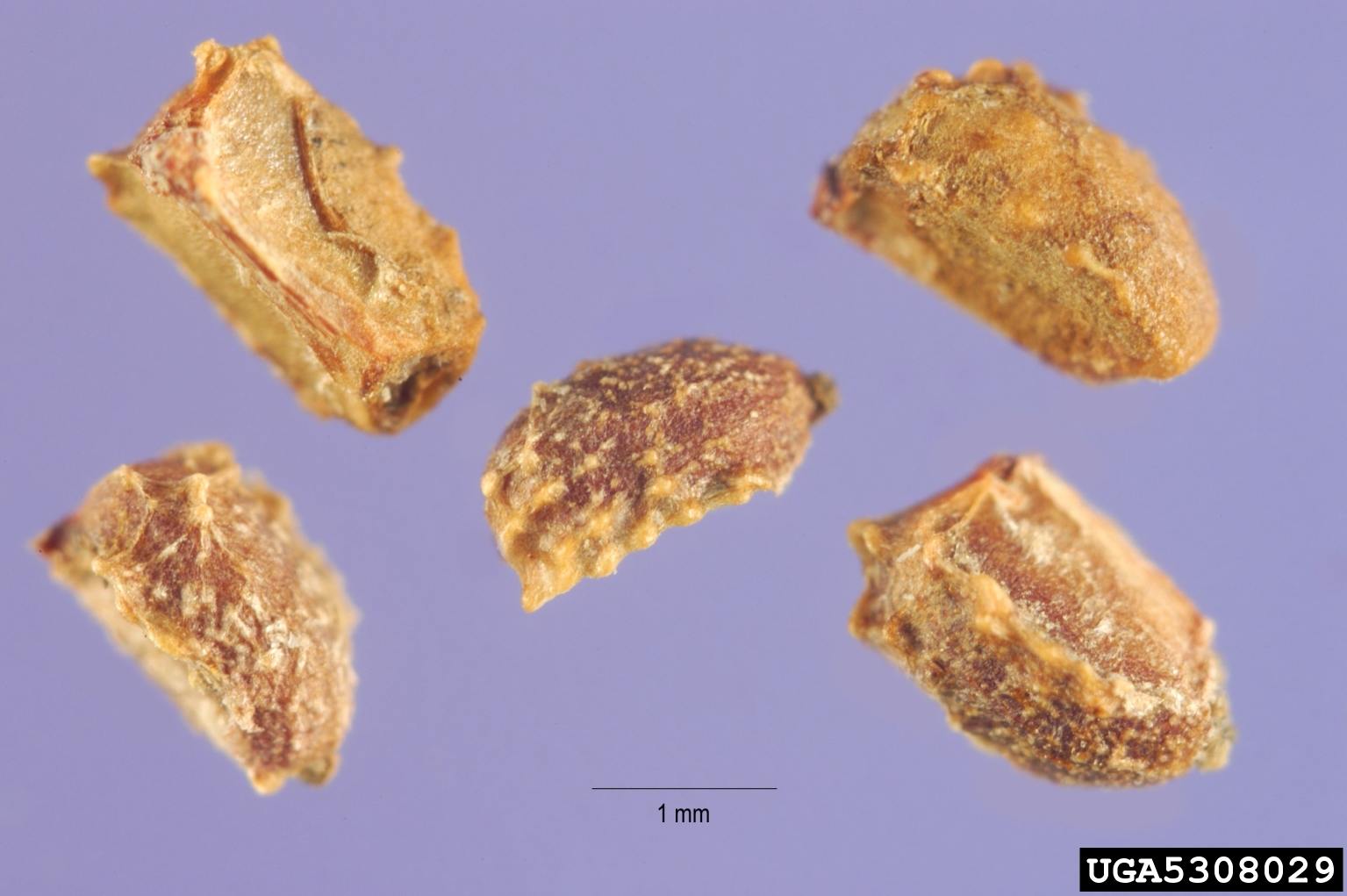
Steve Hurst, USDA NRCS PLANTS Database, Bugwood.org
The plant produces small fruits with 4 seeds each, yielding over 100 seeds per plant each season.
3. Infestation Basics
“Once Eurasian watermilfoil becomes well established within a body of water, it is very difficult or impossible to remove.”
– H. Klein, 2011
Where does it grow, and how does it spread?
Eurasian watermilfoil can grow in fresh or brackish waters. It can be found in lakes, rivers, streams, ponds, irrigated channels, and lagoons. This weed mainly spreads on uncleaned equipment like boats or fishing nets, but can also be transferred through connected waterways, animal migration, and the aquarium trade. [2]
Eurasian watermilfoil mainly grows in calm freshwater, but has adapted to brackish waters and mild water flow. It grows best in cool-to-warm temperatures and prefers clean water, high light, and fine-textured inorganic material. However, this plant can tolerate a wide range of temperatures, grow beneath ice, tolerate pH levels from 5.4 to 11, and germinate in any soil texture. [2,3]
This weed is an aquatic perennial herb that can flower twice each year. It dies back in fall but survives through its rhizomatous roots in winter and grows the following spring when water temperatures reach about 60° Fahrenheit, though it can grow in cooler conditions. Each plant can produce over 100 seeds per season, but is more successful at reproducing vegetatively. Plants can grow from root and stem fragments that humans usually spread to new bodies of water. Additionally, Eurasian watermilfoil can undergo auto-fragmentation, a process in which new roots grow at nodes along the stem and break off at nodes to be spread by water movement. Weed goes to great effort to produce wind-pollinated flowers, suggesting that seed may have been important for dispersal, but this plant mainly spreads through rhizomes and stem fragments. [1,2]
While this plant germinates and grows at a pace similar to other aquatic plants, it forms thick cover to take advantage of as much light as possible. This weed usually covers over 60% of the water surface, creating a canopy that shades other plants and prevents their growth. Eurasian watermilfoil forms a mat of roots beneath the plants that other plants often cannot penetrate. Unlike other water milfoil species, Eurasian watermilfoil does not produce turions and spreads primarily via stem fragments and roots. [1,2]
Key takeaway: Eurasian watermilfoil can grow in a variety of water conditions, especially in cool-to-warm, calm freshwater with ample nutrients. This plant spreads mainly through rhizomes and stem fragments, but can produce over 100 seeds per plant.
Why is it so invasive?
Eurasian watermilfoil often outcompetes native plants by shading them and forming root mats that prevent germination. Once established, this plant is considered nearly impossible to get rid of because it spreads so easily from roots and stem fragments.[2]
This plant outcompetes desirable plants by shading out other vegetation and forming root mats. This plant spreads via rhizomes and stem fragments that can be carried by moving water, boating equipment, and migrating animals. Each plant can produce over 100 seeds, although the viability and importance of these seeds to its spread are unknown. Plants can undergo autofragmentation, with roots growing at nodes along stems that break off and can spread long distances. [1,2]
Eurasian watermilfoil does not provide adequate cover for most aquatic animals and prevents the growth of other aquatic plants. They take up a significant amount of nutrients and do not release nutrients back into water or soil unless the plant dies entirely, which does not happen often. Additionally, they often impede water flow, creating ideal habitats for insects and parasites that harbor diseases. Controlling the spread of this weed is considered more effective than attempts at eradicating existing vegetation. [1,5]
Key takeaway: This weed can grow in nearly every type of water and spreads easily via root and stem fragments. Eurasian watermilfoil destroys animal habitats and prevents growth of beneficial native plants.
Common risk factors for invasion
- Open spaces: Eurasian watermilfoil favors waters with little to no canopy cover and lots of sun. These conditions allow the weed to establish quickly and outcompete other plants. Maintaining healthy, large-leafed vegetation in these areas can help limit its spread.
- Human activity: This plant often spreads through recreational activities such as fishing and boating. Weed sticks to boat propellers, trailers, or fishing nets and, if not properly cleaned, can start new populations in other waterbodies.
- Moisture availability: Eurasian watermilfoil grows in both fresh and brackish waters. It has been found in rivers, streams, lakes, ponds, lagoons, and irrigated canals.
- Riparian Areas: Seeds, roots, and stem fragments are easily carried by streams and may be subsequently deposited into new bodies of water.
Impacts
Economic
This weed will become a monoculture through aggressive vegetative growth. It prevents the growth of other beneficial aquatic vegetation. It prevents several recreational activities in infected waters and can cause damage to waterways and infrastructure. Additionally, managing this weed incurs high costs. [2,5]
Ecosystem Health
Once established, Eurasian watermilfoil displaces native plants, resulting in a notable loss of floral and faunal biodiversity. It provides inadequate cover for most aquatic animals and removes nutrients from other plants that are not returned to the soil unless the plant dies entirely. Weed creates monocultures by shading out other plants and forming thick mats that prevent them from establishing. Additionally, weeds readily hybridize with other water species, producing more weeds that continue to outcompete native plants. [1,2]
Health and Safety
Eurasian watermilfoil prevents water flow and often creates still waters that attract several disease-carrying insects. Mosquitoes and parasites that cause swimmer’s itch have been found near infected waters. Swimmer’s itch can cause skin irritation and allergic reactions, while mosquitoes are known to carry and spread several different diseases. [1,7]
4. Management Strategies
Prevention is the most important way of preventing this weed from infecting new areas. Once established, Eurasian watermilfoil is considered nearly impossible to eradicate. Prevention includes clearing water equipment of any aquatic plant debris after use. Stems and roots are often found on boat propellers, trailers, and fishing nets. Monitoring, mapping, and reporting early infestations is important to prevent further spread. Throw this debris in the trash to avoid spreading it to new bodies of water. This weed is tolerant to most mechanical removal methods, and mechanical methods often encourage the weed to grow more vigorously. Some biological and chemical control methods may be effective in managing the weed, but eradicating it once established is nearly impossible. [2,5,7]
DO’s
- Clean boating equipment of any aquatic plant debris to avoid spreading to new waters.
- Monitor and report weed sightings, as early detection can prevent their spread and possibly allow eradication.
- Dispose of plant debris appropriately to prevent plant fragments from resprouting in new areas.
DON’Ts
- Intentionally plant in aquariums or other bodies of water. This plant spreads easily; do not intentionally buy.
- Allow it to spread to new bodies of water. Avoid spreading plant debris by cleaning equipment.
- Do not break up the plant unnecessarily, as Eurasian watermilfoil can regrow from stem and root fragments.
** The following information is provided courtesy of the UC Weed Research and Information Center. nmweeds.taosswcd-nm.gov does not endorse the use of any particular product, brand, or application thereof. **
Non‑chemical management of Eurasian watermilfoil relies on diver hand‑pulling and benthic barriers to physically remove or smother rooted stems before they fragment. Maintaining strong competition from native aquatic plants through light‑limiting practices further reduces regrowth by depriving milfoil of the sunlight it needs to spread.
Mechanical (pulling, cutting, disking) |
Repeated mechanical removal or harvesting can help reduce stem densities, but escaped stem fragments can drift elsewhere and develop into new plants. This is mainly used to control small infestations. Removing and destroying stem fragments from recreational equipment, such as boat propellers, docking lines, and fishing gear, can help prevent the spread of non-native watermilfoils. Several types of “bottom barriers” are available and are used to cover and smother specific infested areas. Materials used include polyvinyl chloride (PVC) sheets, small-mesh screens, and natural fibers such as jute. Bottom barriers are best installed in spring before plants produce large biomass and exceed 10 inches tall. Unlike parrotfeather, Eurasian watermilfoil is more easily controlled by several aquatic herbicides. |
Cultural |
Dewatering infested areas during periods of high temperature in summer can suppress regrowth. Similarly, dewatering during winter during periods of hard freezes can suppress growth the following spring and summer. Dewatering can also be integrated with a subsequent herbicide application |
Biological |
There are three herbivorous insects that have been used to control Eurasian watermilfoil with varying success: milfoil weevil (Euhrychiopsis lecontei), a midge (Critotopus myriophylli), and a moth (Acentria ephemerella). The milfoil weevil is commercially available. The (sterile) triploid grass carp (white amur, Ctenopharyngodon idella) is a relatively nonselective herbivorous fish that will consume Eurasian watermilfoil, but usually only after it first consumes its preferred submersed plants such as native pondweeds and hydrilla. |
- CHEMICAL
- Growth Regulators
- Branched Chain Aminoacid Inhibitors
- Pigment Synthesis Inhibitors
- Contact Photosynthetic Inhibitors
- General Cell Toxicants
- Inorganic Herbacides
- Non-Herbicidal Chemicals
The following specific use information is based on published papers and reports by researchers and land managers. Other trade names may be available, and other compounds also are labeled for this weed. Directions for use may vary between brands; see label before use. Herbicides are listed by mode of action and then alphabetically. The order of herbicide listing is not reflective of the order of efficacy or preference.
|
2,4-D Weedar 64
|
Rate: For in-water applications: 0.5 to 1.5 ppm; exposures must be maintained for 5 to 10 days for optimal control. Timing: Apply to water in early spring to early summer. Remarks: 2,4-D is a selective, systemic herbicide. It affects young, rapidly growing plants. Lower rates can be used if applied during early-spring growth and when water movement is unlikely to dilute or move the herbicide. |
|
Triclopyr Renovate |
Rate: For in-water applications: 1 to 2.5 ppm Timing: Apply to water in early spring to early summer. Applications in mid-summer can suppress biomass, but may result in rapid die-back that results in depressed dissolved oxygen. If mid-summer applications are made to infestations with high biomass, then only treat 1/3 to 1/2 of the area and wait 10 to 14 days before treating the remainder. Remarks: Triclopyr is a selective, systemic, fast-acting herbicide. Lower rates can be used if applied during early spring growth and when water movement is not likely to dilute or move the herbicide. |
|
Bispyribac-sodium Tradewind
|
Rate: For in-water applications: 20 to 45 ppb; may be repeated to maintain concentration but not within 14 days of initial treatment; do not exceed 4 applications per year. Timing: Apply to water in early spring to early summer (rapid growth). For drawdown treatment, apply during mid- to late-winter before refilling. Remarks: Bispyribac-sodium is a slow-acting herbicide and may take 4 to 6 weeks for control. For drawdown applications, use 20 to 100 gal/acre of spray solution to wet the sediment. Bispyribac-sodium may be tank mixed with other herbicides. |
|
Penoxsulam Galleon |
Rate: For in-water applications: 25 to 75 ppb; may be repeated but not to exceed 150 ppb in an annual season. For dewatered (drawdown) treatment: 5.6 to 11.2 oz product/acre (1.4 to 2.8 oz a.i./acre) Timing: Apply to water in early spring to early summer (rapid growth). For drawdown, apply during mid-to-late winter before refilling. Remarks: Penoxsulam is a slow-acting herbicide and may take 4 to 6 weeks for control. For drawdown applications, use 20 to 100 gal/acre of spray solution to wet the sediment. |
|
Fluridone Sonar |
Rate: For in-water applications: 5 to 20 ppb; exposures must be maintained for 5 to 7 weeks for optimal control. For dewatered (drawdown) treatment: 4 pt product (Sonar)/acre (2 lb a.i./acre). Timing: Apply to water in early spring to early summer. For dewatered treatment, apply to drained canal or exposed shorelines in fall or late winter before water is reintroduced. Remarks: Fluridone is a systemic herbicide that is slow-acting. It affects young, rapidly growing plants. Lower rates can be used if applied during early spring growth and when water movement is not likely to dilute or move the herbicide. |
|
Diquat Reward |
Rate: For in-water applications: 0.1 to 0.25 ppm Timing: Apply to water in late spring to early summer. Diquat is a fast-acting contact herbicide that can be effective in mid- to late-summer, but if biomass is large, only a portion of the infested sites should be treated to minimize effects of reduced dissolved oxygen. Remarks: Diquat is quickly bound to, and becomes inactivated on, suspended clay particles, and it should not be used in moderately or highly turbid water. |
|
Flumioxazin Clipper
|
Rate: For in-water applications: 100 to 400 ppb Timing: Apply to water in early spring to early summer during rapid growth. Remarks: Flumioxazin is rapidly degraded and is inactive if pH exceeds 8.5. Use only if pH will not exceed 8.5. It is best to apply in the early morning when pH is low.
|
|
Endothall
|
Rate: For in-water applications: 1 to 3 ppm; exposures must be maintained for 24 to 48 hours or more for optimal control. The duration of contact depends on the concentration achieved (see label for specific rate and duration of exposure). Timing: Apply to water in early spring to early summer. Can be used in mid-summer, but if biomass is large, partial treatments are recommended to prevent large reduction in dissolved oxygen. Remarks: Endothall is a selective, contact herbicide. It affects young, rapidly growing plants and mature plants. Lower rates can be used if applied during early spring growth and when water movement is not likely to dilute or move the herbicide.
|
|
Chelated copper Komeen, Cutrine-Plus
|
Rate: For in-water applications: 0.5 to 1 ppm elemental copper. Timing: Apply to water in early summer (short plants and small biomass). Remarks: Chelated copper is a fast-acting contact herbicide. Retreatment may be required within 3 to 5 weeks. If biomass is large, treat only one-third of infested area to minimize decrease in dissolved oxygen (e.g. > 125 ppb calcium carbonate equivalent) and high pH (> 8). Chelated copper
|
|
Inorganic copper Various granular and |
Rate: For in-water applications: 0.5 to 1 ppm elemental copper Timing: Apply to water in early summer (short plants and small biomass). Remarks: Copper is a fast-acting contact herbicide. Retreatment may be required within 3 to 5 weeks. If biomass is large, treat only one-third of infested area to minimize decrease in dissolved oxygen. Most inorganic copper formulations have poor efficacy in “hard water” (e.g. > 125 ppb calcium carbonate equivalent) and high pH (> 8). Copper can accumulate in the environment. |
| Dyes or colorants: Aquashade | Although technically not herbicides, dyes and colorants control submerged aquatic plants by absorbing light in the water column and reducing photosynthesis. Applications should be made in early spring and repeated to maintain the concentration recommended on the label. Colorants are not as effective on well-established plants in mid- to late summer. |
6. References
Citations
[1] U.S. Fish and Wildlife Service, “Eurasian Watermilfoil (Myriophyllum spicatum),” 2018. Available: https://www.fws.gov/sites/default/files/documents/Ecological-Risk-Screening- Summary-Eurasian-Watermilfoil.pdf
[2] K. Murphy, “Myriophyllum spicatum (spiked watermilfoil),” CABI Compendium, Jan. 2022, doi: https://doi.org/10.1079/cabicompendium.34941
[3] H. Klein, “Eurasian watermilfoil Myriophyllum spicatum L,” 2011. Available: https://accs.uaa.alaska.edu/wp-content/uploads/Myriophyllum_spicatum_BIO_MYSP2.pdf
[4] Minnesota Department of Natural Resources, “Eurasian watermilfoil (Myriophyllum spicatum),” Minnesota Department of Natural Resources. Available: https://www.dnr.state.mn.us/invasives/aquaticplants/milfoil/index.html
[5] Vermont Department of Environmental Conservation, “Eurasian Watermilfoil an Invasive Non-native Aquatic Plant HOW YOU CAN HELP.” Available: https://anrweb.vt.gov/PubDocs/DEC/WSMD/lakes/docs/ans/lp_milfoilbookletcombined08.pdf
[6] Texas Invasive Species Institute, “Eurasian watermilfoil,” Tsusinvasives.org, 2014. Available: https://tsusinvasives.org/home/database/myriophyllum-spicatum. [Accessed: Aug. 05, 2025]
[7] USDA NRCS Bozeman State Office, “Plant Guide EURASIAN WATERMILFOIL Myriophyllum spicatum L. Plant symbol = MYSP2.” Available: https://www.nrcs.usda.gov/plantmaterials/mtpmspg8524.pdf
[8] USGS, “Eurasian watermilfoil – Collections,” Usgs.gov, 2023. Available: https://nas.er.usgs.gov/queries/CollectionInfo.aspx?SpeciesID=237&State=NM. Accessed: Aug. 05, 2025
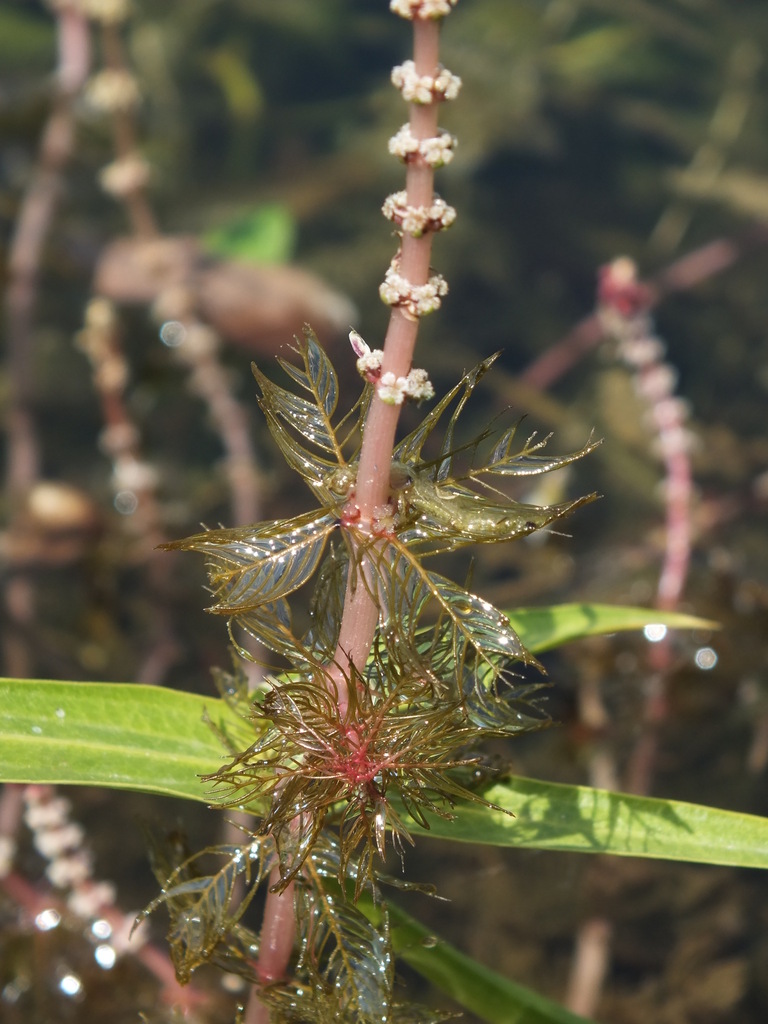
Schmidt Dávid, Inaturalist.org
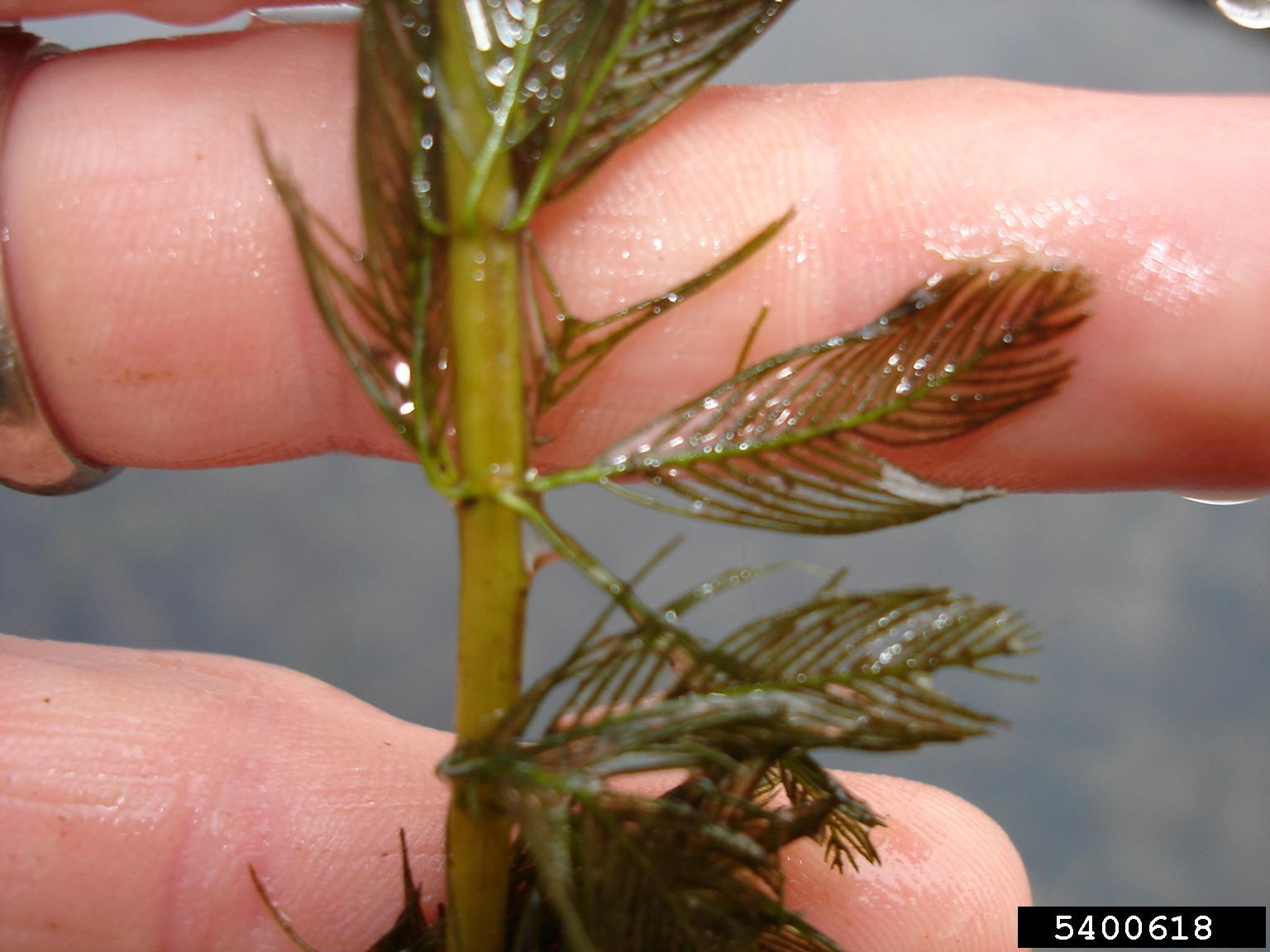
Graves Lovell, Alabama Department of Conservation and Natural Resources, Bugwood.org
Fun Facts
Eurasian watermilfoil provides cover for bass and freshwater crustaceans. Many people fish for bass in infected waters. Other animals have little use for this weed, as they usually don’t eat it, and it removes their usual habitats.[7]
Graves Lovell, Alabama Department of Conservation and Natural Resources, Bugwood.org
Graves Lovell, Alabama Department of Conservation and Natural Resources, Bugwood.org
Fun Facts
Although this weed spreads mainly through vegetative structures such as stems, roots, and rhizomes, it expends considerable energy on flowering and seed production. The production of these seeds does not seem to contribute greatly to new populations, so it is theorized that seeding was once important to their spread. [2]
Graves Lovell, Alabama Department of Conservation and Natural Resources, Bugwood.org
Graves Lovell, Alabama Department of Conservation and Natural Resources, Bugwood.org
Fun Facts
Many states have fees for not cleaning boats or equipment of plant debris to prevent the spread of aquatic weeds. Because of how easily Eurasian watermilfoil spreads and how difficult it is to get rid of, most efforts to manage this weed go to prevention and early detection. [5,7]
Dayma, Inaturalist.org
Exner Tamás, Inaturalist.org
Leslie J. Mehrhoff, University of Connecticut, Bugwood.org
Rob Routledge, Sault College, Bugwood.org