

Curlyleaf Pondweed
Potamogeton crispus
Class C
Widespread in the state. Management decisions for these species should be determined at the local level, based on feasibility of control and level of infestation.
Riparian Threat
This plant is known to invade riparian areas or otherwise damage the health and abundance of our water resources.
Native Plants
This weed threatens local populations of native flora and other desireable plant species.
Local Ecosystems
This plant is detrimental to native ecosystems, negatively impacting the quality of forage for wildlife and reducing biodiversity in plant communities.
QUICK FACTS
- Curlyleaf pondweed is an aquatic perennial that can grow in any body of freshwater. It grows entirely underwater and has olive-green to reddish-brown, wavy leaves that die back in summer.
- This weed affects the germination of native plants and can impact habitats and recreational activities. It is considered native in Eurasia, Australia, and Africa. Curlyleaf pondweed has several health benefits and can be used as a colorant or food additive.
- Curlyleaf pondweed spreads easily by rhizomes and turions, which are vegetative growths that can separate from the plant and become dormant until the next growing season or ideal conditions. Most of its spread can be attributed to human equipment, like boats and fishing nets, not being cleaned after use.
1. Overview
Curlyleaf pondweed is an early‑rising invader that brings ecological downfall wherever it lands. With its distinctly ruffled leaves and habit of forming dense underwater mats, it outcompetes native vegetation, reduces water clarity, and complicates riparian processes long before summer even begins.
Curlyleaf pondweed affects riparian areas and grows beneath the water surface, with only its flowers growing above water. It was first recorded in New Mexico in 1945. This weed spreads mainly by rhizomes and turions, which can travel long distances through water. Curlyleaf pondweed was likely accidentally introduced into New Mexico and competes with native aquatic species. [5]
History of Curlyleaf Pondweed
Potamogeton crispus is native to Eurasia, Australia, and Africa. It is widespread in its native range and plays a vital role in the function of aquatic ecosystems. It is unclear exactly how curlyleaf pondweed reached North America, but it may have been intentionally introduced for its benefits to European aquatic ecosystems or accidentally during the transport of goods. The first verified finding of this weed in the U.S. was in 1841 in Philadelphia. It was mostly confined to the Northeastern states before 1900, but by 1950, it had spread to most of the U.S., with the first verified finding of curlyleaf pondweed in New Mexico being in 1945. [1,3,4]
This weed mainly spreads by vegetative means, such as rhizomes and turions, but it also seeds, which may affect its population spread and provide a pathway for accidental transport to North America. It is found in freshwater riparian areas like rivers, streams, and lakes. Curlyleaf pondweed was likely spread by migrating waterfowl or intentional planting for wildlife habitat. [1,5]
2. ID Guide
What does it look like?
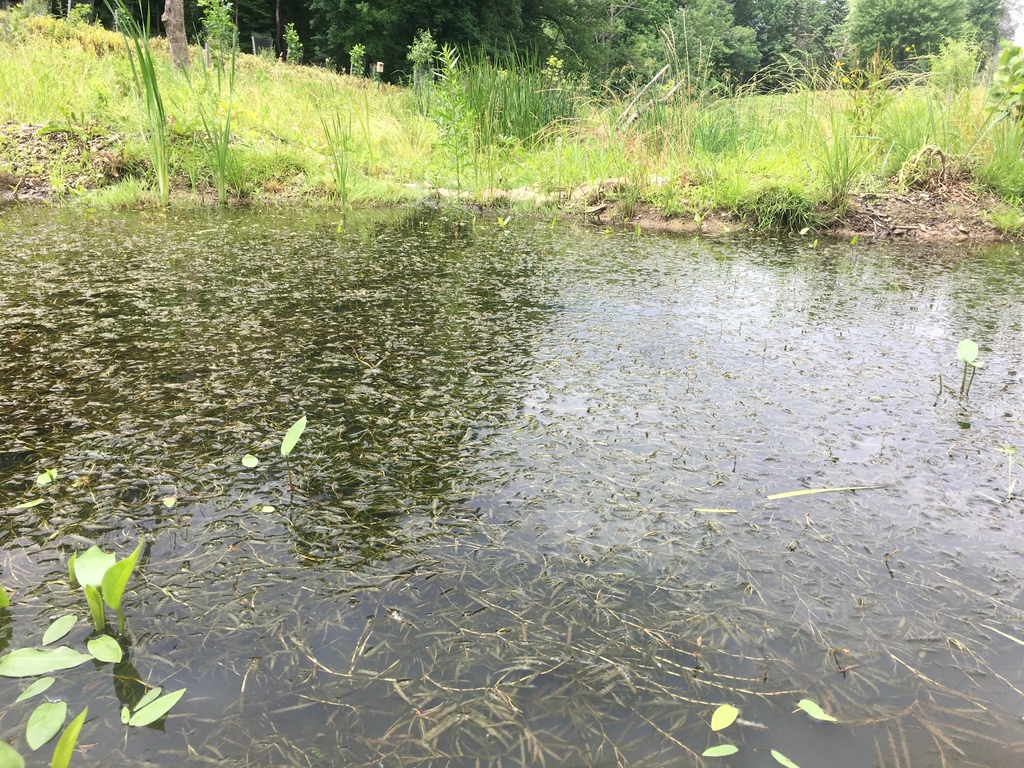
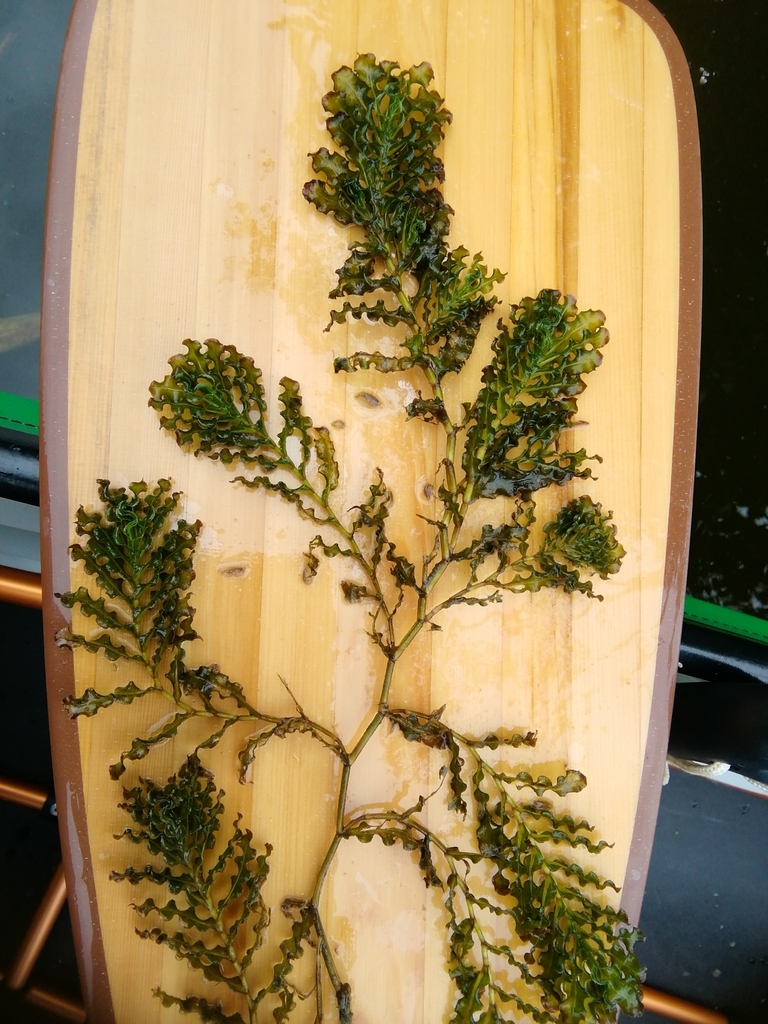
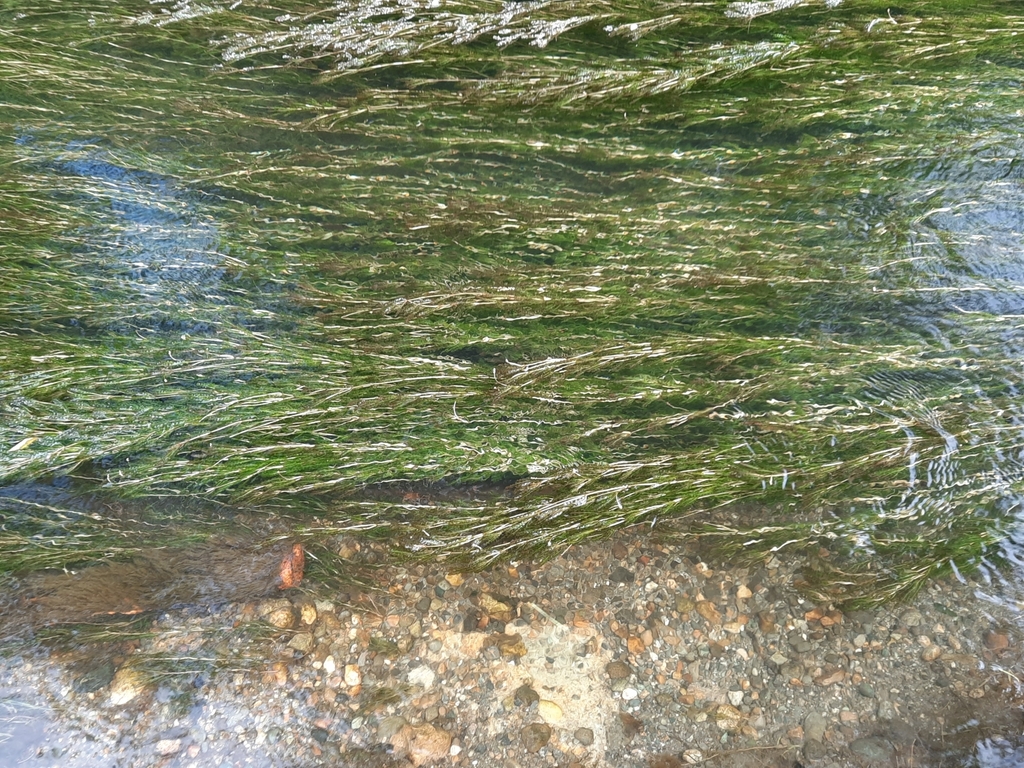
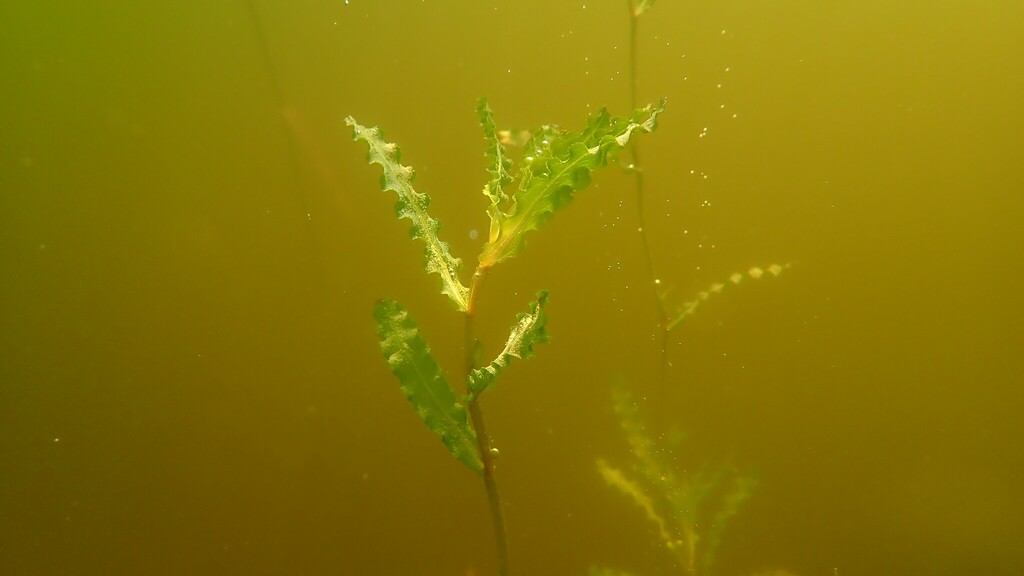
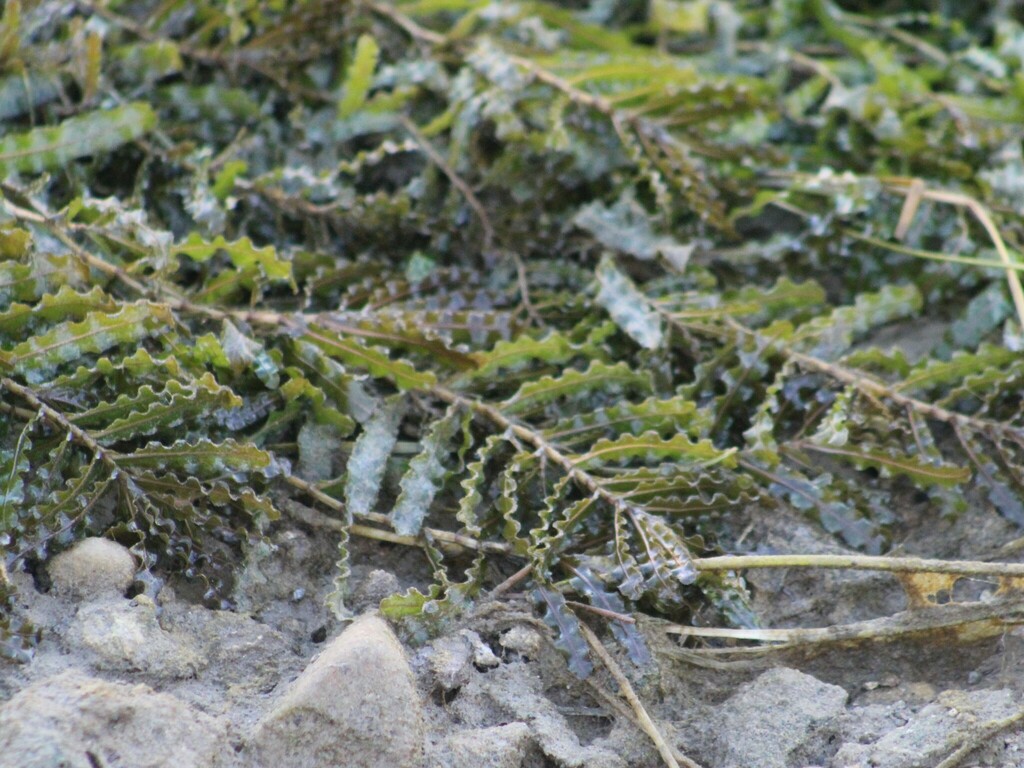
Curlyleaf pondweed grows in water like rivers, streams, and lakes. Its leaves are alternate, wavy, and oblong, ranging from olive green to reddish-brown. The plant spreads through its rhizomes and buds called turions. It has a winter cover with smaller, slightly darker leaves that begin to grow in fall, then die back in early spring or late winter, and regrow new leaves shortly after. Spring leaves usually die back by midsummer. Underwater, its stem is about 3 feet tall and is branched. This plant can look similar to other pondweeds, but can be identified with its unique leaves. Curlyleaf pondweed leaves are wavy, similar to lasagna noodles, and the margins are finely serrated. Additionally, curlyleaf pondweed grows mainly in the winter or early spring, whereas many other pondweeds do not. [1,5]
Having trouble identifying a weed?
Contact your local conservation district or county extension agent.
Key Features
- Plant: Curlyleaf pondweed grows entirely underwater besides its flower. It has olive-green to reddish-brown leaves with wavy, serrated edges. The plant germinates in fall and has winter foliage that disintegrates in spring, grows larger leaves in spring, and dies back by the end of summer. Stems are branched and flattened, growing around 3 feet long. [2,3]
- Roots: Roots have slender rhizomes that can be pale yellow or reddish. Rhizomes have several fibrous roots that create thick mats. [5,7]
- Leaves: Leaves are oblong, alternate, wavy, and have serrated edges. Leaves can range in size from 0.5-4 inches long and 0.25-0.5 inch wide. Young leaves may be more flattened, but still have serrated margins. Their color can be olive green to reddish-brown. [2,6]
- Flowers: Flowers of curlyleaf pondweed grow above water, are small, and have four petal-like lobes in 0.5-1 inch long spikes on a stem about 3 inches above water. [6]
- Seeds: Seeds are brown achenes and have 3 ridges. They are 1/8-1/4 inch long and have a very small beak. However, seeds have only a 0.0001% germination rate. The plant mainly produces turions, which are 0.5-1-inch-long, bur-like buds on the stem. [1,2,6]
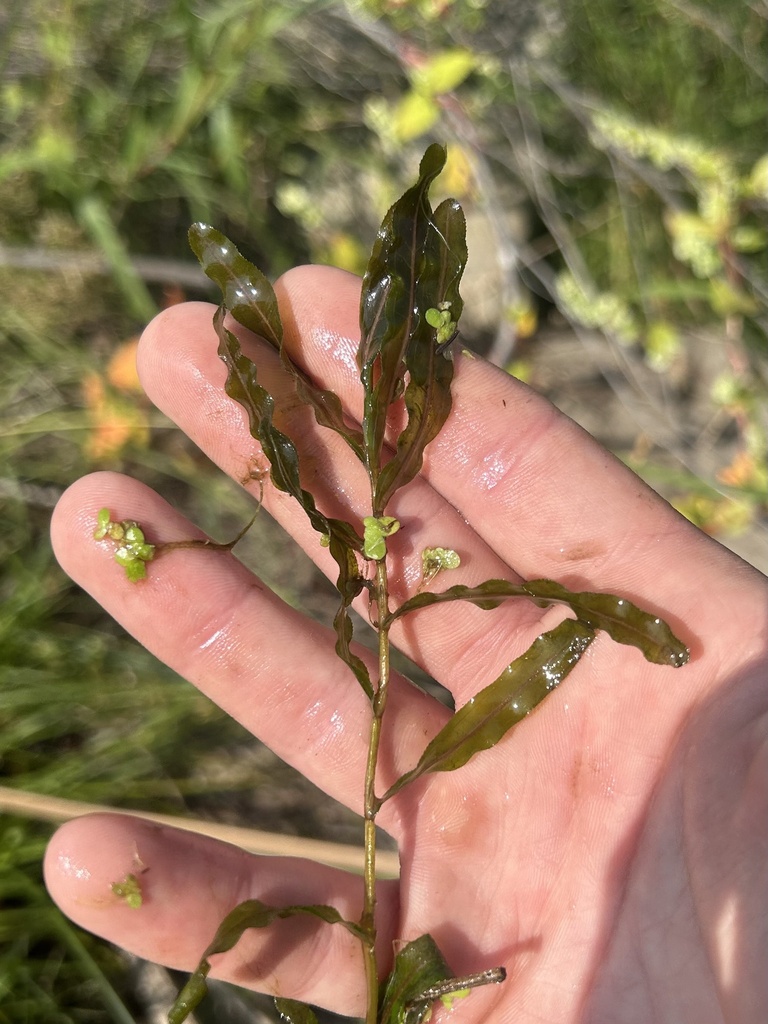
Caden Carlson, Inaturalist.org
Flowers of curlyleaf pondweed grow above water, are small, and have four petal-like lobes.
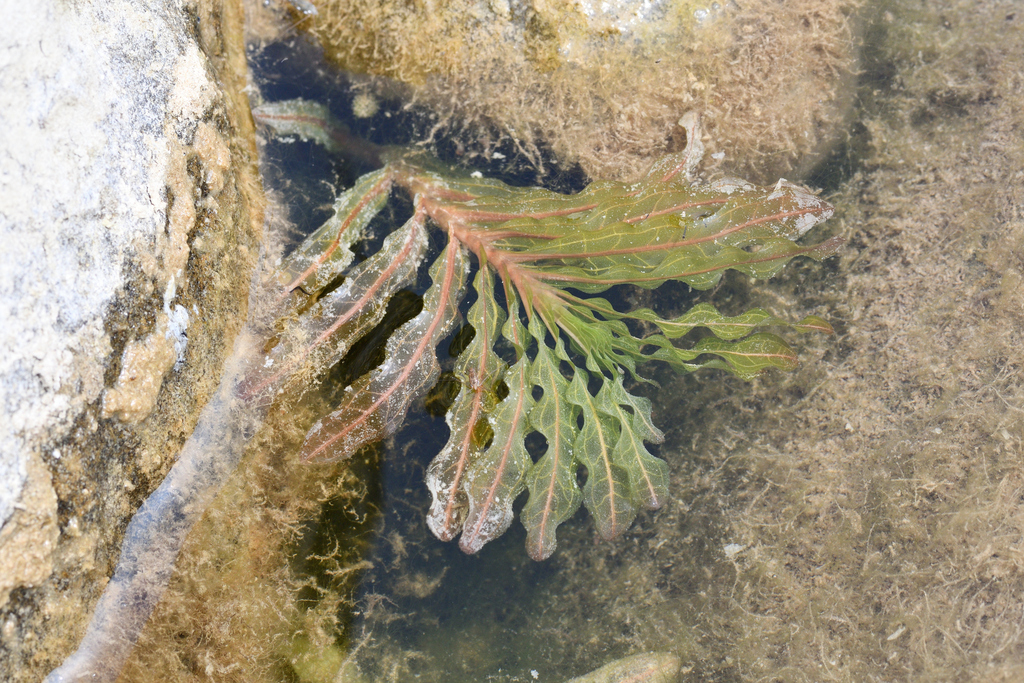
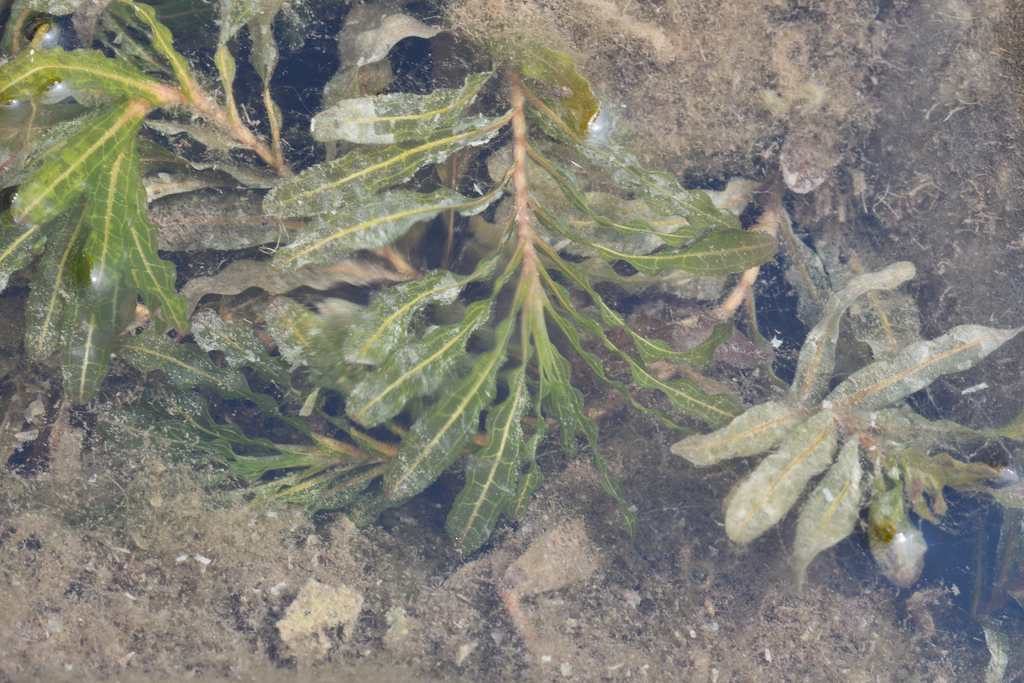
艸目伊, Inaturalist.org
The plant germinates in fall and has winter foliage that disintegrates in spring.
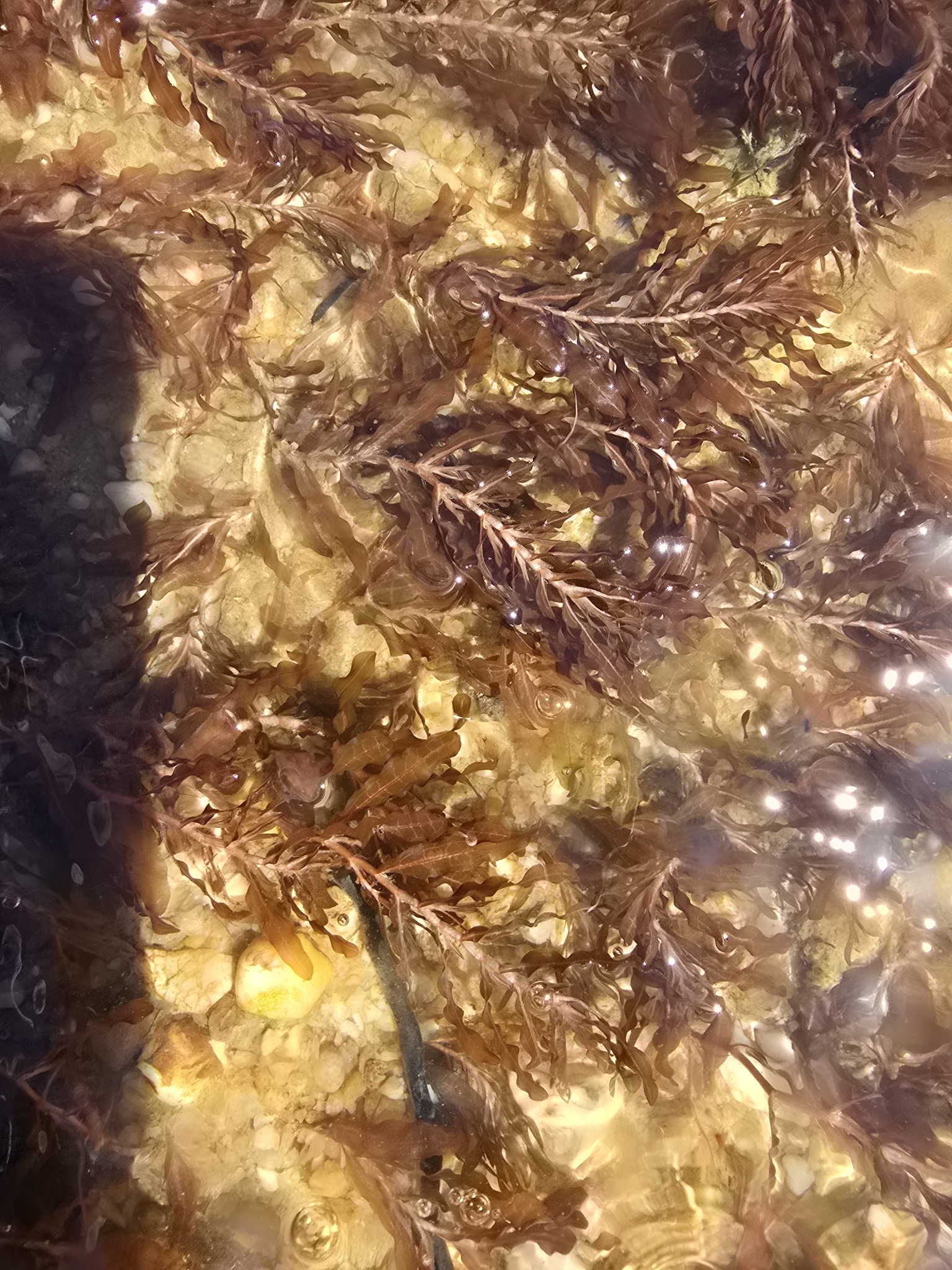
Josh, inaturalist.org
The plant grows larger leaves in spring, and dies back by the end of summer.
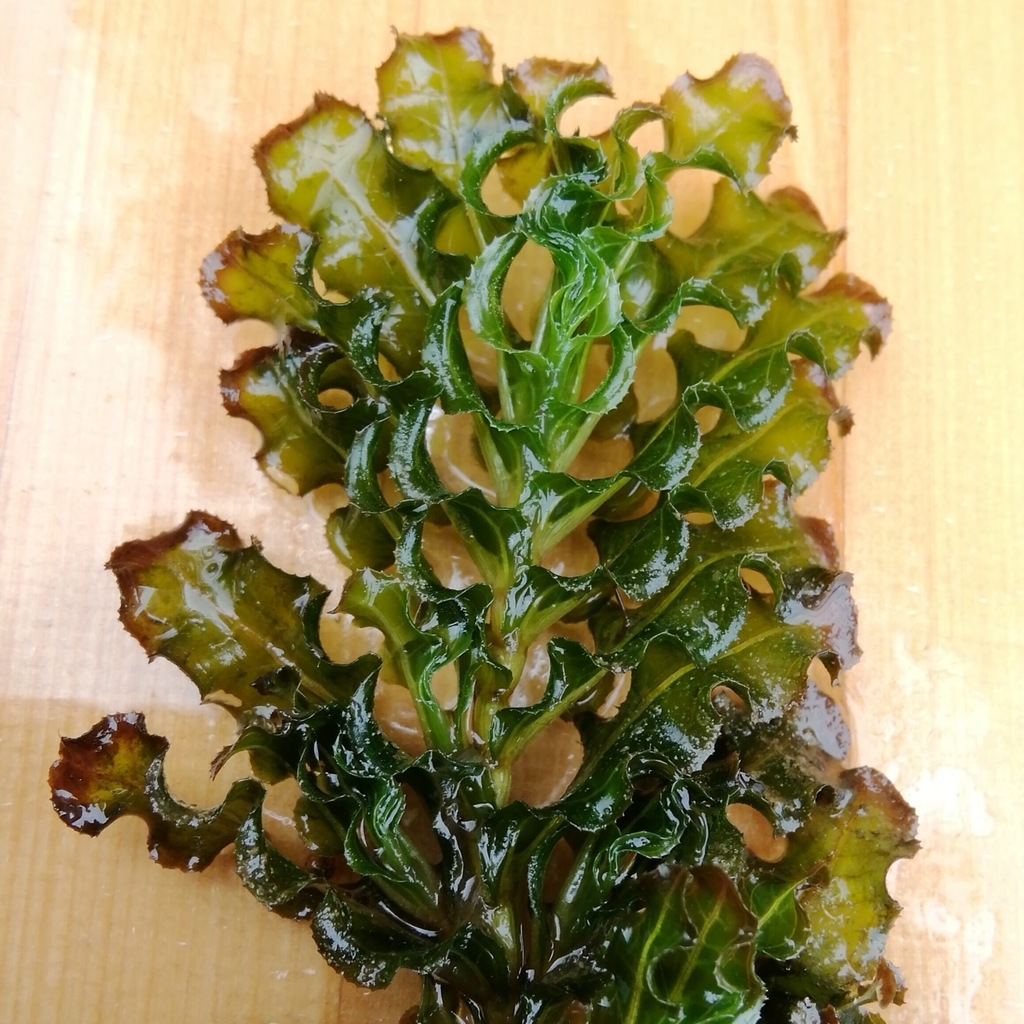
Jakob Fahr, Inaturalist.org
Leaves are oblong, alternate, wavy, and have serrated edges. Young leaves may be more flattened, but still have serrated margins.
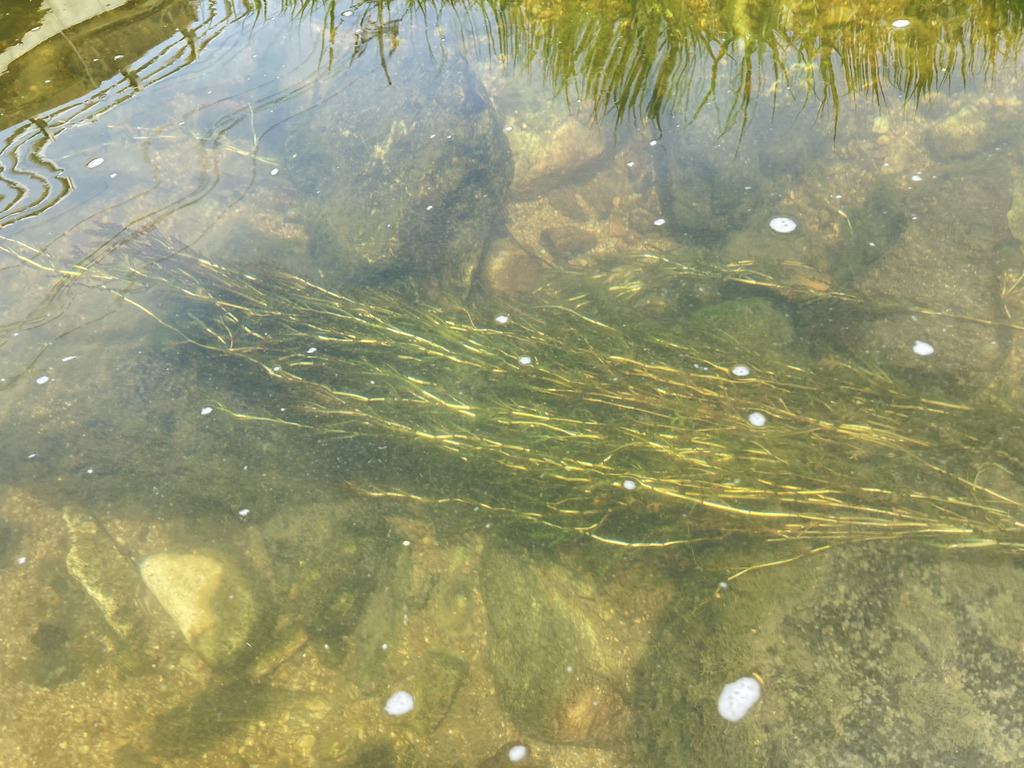
Sangyun Kim, Inaturalist.org
Stems are branched and flattened, growing around 3 feet long.
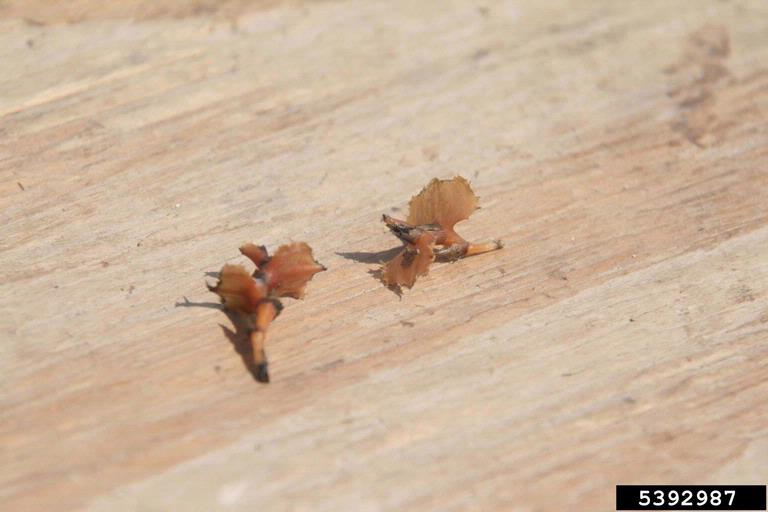
Chris Evans, University of Illinois, Bugwood.org
Seeds are brown achenes and have 3 ridges. It is 1/8-1/4inch long and have a very small beak.
3. Infestation Basics
“Profuse growth of P. crispus impeded water flow in irrigation canals and severely restricts water-based recreation.”
– P. M. Catling and I. Dobson, 1985
Where does it grow, and how does it spread?
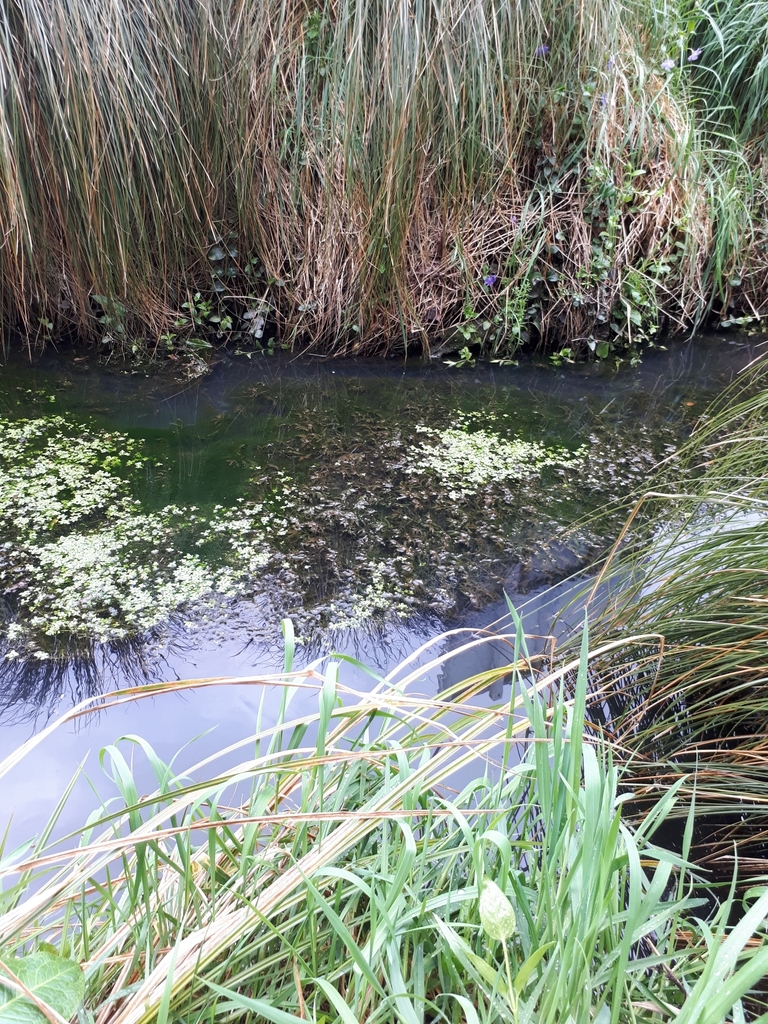
Curlyleaf pondweed only grows in water, so it can be found in rivers, lakes, ponds, or streams. Most curlyleaf pondweed spreads by intentional planting or aquatic animals migrating, carrying parts of the plant, although water can carry it as well. [5]
Curlyleaf pondweed can grow in any body of freshwater, but usually grows best in calm waters. This plant grows similarly to a winter annual: it germinates in fall, has small winter leaves, develops larger leaves in spring, and then starts to die back in the summer. It can survive temperatures from -27 ° to 86° Fahrenheit. It usually grows in waters 3-10 feet deep, but has been seen in waters as deep as 23 feet. [1]
This weed is an aquatic perennial that mostly grows in winter and is dormant in hot summer months. Curlyleaf pondweed typically germinates in fall and grows throughout winter (even under thick ice). In spring, its winter leaves usually disintegrate, and new leaves are grown that usually die after flowering in May. This plant mainly reproduces asexually either through its turions or rhizomes. [1,5]
Because this plant grows mainly in cold months, it prevents other plants from germinating. While it does produce seeds, it mainly spreads via rhizomes or turions. Rhizomes are roots that spread horizontally and sprout new vegetation a few feet away from the parent plant. Turions are vegetative buds that form along the stem. A single turion can result in over 20,000 additional turions the next growing season. Turions have an extremely high germination rate and can spread easily through moving waters. [1,3]
Key takeaway: Curlyleaf pondweed can grow in any body of water, especially if waters are calm or cool. While its seeds have very low germination rates, turions and rhizomes help this plant spread.
Why is it so invasive?
Curlyleaf pondweed grows very quickly before other plants have an opportunity to germinate. Additionally, it can form thick surface mats that affect recreational activities and habitats. [1,3]
This weed spreads mainly through its rhizomes and turions. One turion can produce over 20,000 new turions by the next growing season. Turions can spread through water movement, migrating animals, and human activities such as boating or fishing. Turions are viable for up to 2 years and can become dormant, possibly remaining viable for longer. While this weed can only grow in water, it typically emerges before other plants have a chance to germinate, preventing other species from establishing. [1,4]
Curlyleaf pondweed creates dense mats that limit growth of native plants and impede water flow. Weed negatively affects the environment by depleting nutrients, which can affect fisheries and future growth of native plants. Additionally, curlyleaf pondweed impedes recreational activities such as boating, swimming, and fishing. [4,8]
Key takeaway: This weed can spread to any body of water through turions that are viable for 2 years or longer. Its fast-growing, dense mats prohibit growth of native plants and often affect water flow, nutrient availability, and recreational use.
Common risk factors for invasion
- Human activity: Curlyleaf pondweed thrives in areas where the soil has been disturbed. These disturbances create openings in the soil that allow the plant to become established in the first place. Additionally, the movement of soil, boats, and equipment can inadvertently introduce the weed to new areas.
- Riparian Areas: Turions and roots are easily carried by streams and may be subsequently deposited into new bodies of water. Curlyleaf pondweed only grows in freshwater bodies of water.
Impacts
Ecosystem Health
Once established, curlyleaf pondweed displaces native plants, resulting in a notable loss of floral and faunal biodiversity. This can significantly reduce nutrient availability to animals like fish and ducks and affect diversity in an area. While many animals use it for cover in cool months, it dies back in summer, leaving areas bare, as few plants can germinate and grow during this period. Additionally, curlyleaf pondweed forms thick mats that limit sunlight and water flow, preventing the growth of native plants. [1,8]
4. Management Strategies
Curlyleaf pondweed is best managed by preventing its spread into new bodies of water. Since this plant can only grow in water, it is best to clean equipment, such as boats and fishing gear, after use in potentially infected areas to avoid infecting new areas. Check equipment for stems or leaves and dispose of them away from water. If infection occurs, removing the entire plant and disposing of it in spring or early summer can prevent the spread of turions, but usually does not kill the roots, and the plant can resprout. Physical removal over many years can eradicate it. Smothering infected areas with bottom barriers can also be effective. Chemical methods may be effective in early spring, but are difficult and can take years to fully kill plants. [1,4]
DO’s
- Clean equipment after recreational activities to prevent spread into new areas.
- Disturb soils or remove native vegetation, as this allows plants to take over.
- Continue to rake infected areas and dispose of plant material appropriately for several years to lessen impact and allow other plants to grow.
DON’Ts
- Allow it to become widespread, as it is easiest to manage this plant in small infestations.
- Leave plant remains near water, as the plant can grow from rhizomes or turions in any water.
- Intentionally plant. While this plant is beneficial in its native habitat, it depletes nutrients, prevents native vegetation from establishing, and limits water flow.
** The following information is provided courtesy of the UC Weed Research and Information Center. nmweeds.taosswcd-nm.gov does not endorse the use of any particular product, brand, or application thereof. **
Non‑chemical control of curlyleaf pondweed often relies on physical removal, shading the pond bottom, or biological grazing. Primarily using methods that reduce light, nutrients, or biomass.
Mechanical (pulling, cutting, disking) |
Repeated mechanical harvesting can help reduce stem densities, but escaped stem fragments can develop into new plants. Removing and destroying stem fragments from recreational equipment such as boat propellers, docking lines, and fishing gear can help prevent spread. Several types of “bottom barriers’ are available and are used to cover and smother specific infested areas. Bottom barriers are best installed in spring before plants produce large biomass and exceed 20 inches tall. In canals, backhoes and telescoop devices can be used to remove infestations, but these operations usually remove sediment as well. |
Dewatering (draining) canals or lakeshores in mid-summer may suppress subsequent growth, but plants can easily resprout from rhizomes if bottom sediments remain moist and cool. Winter drawdown alone will not impact the growth of sago pondweed since it produces vegetative propagules (tubers) protected within the sediment.
The (sterile) triploid grass carp (white amur) is a relatively nonselective herbivorous fish that will consume most pondweed species, including curlyleaf pondweed. The fish do not selectively feed on “non-native” plants, so careful monitoring of feeding impacts is necessary.
- CHEMICAL
- Branched Chain Aminoacid Inhibitors
- Pigment Synthesis Inhibitors
- Contact Photosynthetic Inhibitors
- General Cell Toxicants
- Non-Herbicidal Chemicals
The following specific use information is based on published papers and reports by researchers and land managers. Other trade names may be available, and other compounds also are labeled for this weed. Directions for use may vary between brands; see label before use. Herbicides are listed by mode of action and then alphabetically. The order of herbicide listing is not reflective of the order of efficacy or preference.
|
Penoxsulam Galleon
|
Rate: For in-water applications: 25 to 75 ppb; may be repeated but not to exceed 150 ppb in an annual season. For dewatered (drawdown) applications: 5.6 to11.2 oz product/acre (1.4 to 2.8 oz a.i./acre) to canal or shorelines where plants grow Timing: Apply to water in early spring to early summer (rapid growth). For drawdown treatments, apply during mid to late winter before refilling. Remarks: Penoxsulam is a slow-acting herbicide and may take 4 to 6 weeks to achieve control. For drawdown applications, use 20 to 100 gal/acre of spray solution to wet the sediment. |
|
Imazamox Clearcast |
Rate: For in-water applications: 50 to 100 ppb. For dewatered (drawdown) applications: 64 oz product/acre (8 oz a.e./acre); first flush of water in canals must NOT be used for irrigation Timing: Apply to water in early spring to early summer (rapid growth). Dewatered applications should be made in late winter at least 14 days before water will be reintroduced. Remarks: Use an approved surfactant. |
|
Fluridone Sonar |
Rate: For in-water applications: 5 to 10 ppb; exposures must be maintained for 5 to 7 weeks for optimal control. For dewatered (drawdown) applications to dry canals or shorelines: 4 lb product (Sonar)/acre (2 lb a.e./acre), applied in 30 to 100 gal water/acre Timing: Apply to water in early spring to early summer. Dewatered applications should be made from fall to late winter, optimally when there is no standing water. Remarks: Fluridone is a slow-acting systemic herbicide that affects young, rapidly growing plants. Lower rates can be used if applied during early spring growth and when water movement is not likely to dilute or move the herbicide. |
|
Diquat Reward |
Rate: For in-water applications: 0.1 to 0.25 ppm Timing: Apply to water in late spring to early summer. Diquat is a fast-acting contact herbicide that can be effective in mid- to late-summer, but if biomass is large, only a portion of the infested sites should be treated to minimize effects of reduced dissolved oxygen. Remarks: Diquat is quickly bound to, and becomes inactivated on, suspended clay particles, and it should not be used in moderately or highly turbid water. |
|
Flumioxazin Clipper
|
Rate: For in-water applications: 100 to 400 ppb Timing: Apply to water in early spring to early summer during rapid growth. Remarks: Flumioxazin is rapidly degraded and is inactive if pH exceeds 8.5. Use only if pH will not exceed 8.5. It is best to apply in the early morning when pH is low.
|
|
Acrolein Magnacide H |
Rate: For in-water applications: 1 to 15 ppm. Rate is variable and depends on target weeds, temperature, and flow rates Timing: Apply to water in late spring to fall. No more than 8 applications are allowed per year. Remarks: Acrolein is a very fast-acting, nonselective contact herbicide and algaecide. It is a “Restricted Use” pesticide but can be used in some irrigation canals under specific conditions, with proper permits, and may only be applied by qualified, trained applicators. Symptoms of efficacy may appear in less than an hour and include discoloration of leaves and loss of turgidity. |
|
Endothall
|
Rate: For in-water applications: 1 to 3 ppm; exposures must be maintained for 24 to 48 hours or more for optimal control. The duration of contact depends on the concentration achieved (see label for specific rate and duration of exposure). Timing: Apply to water in early spring to early summer. Endothall can be used in mid-summer, but partial treatments are recommended if biomass is large to prevent large reduction in dissolved oxygen. Remarks: Endothall is a selective, contact herbicide. It affects young, rapidly growing plants and mature plants. Lower rates can be used if applied during early spring growth and when water movement is not likely to dilute or move the herbicide. Needs at least 4 hours of exposure time. Can mix with 0.5 ppm of copper (Cleargate) to also give good control. In moving water, an additional ‘bump’ treatment may be needed 3 to 4 miles from the main site of application to maintain a high enough concentration.
|
|
Dyes or colorants: Aquashade |
Although technically not herbicides, dyes and colorants control submerged aquatic plants by absorbing light in the water column and reducing photosynthesis. Applications should be made in early spring and repeated to maintain the concentration recommended on the label. Colorants are not as effective on well-established plants in mid- to late summer. |
6. References
Citations
[1] A. Mikulyuk and M. Nault, “Potamogeton crispus (curlyleaf pondweed),” CABI Compendium, Apr. 2008, doi: https://doi.org/10.1079/cabicompendium.43664
[2] “Curlyleaf Pondweed Potamogeton crispus,” Washington State Noxious Weed Control Board, 2025. Available: https://www.nwcb.wa.gov/weeds/curlyleaf-pondweed
[3] B. R. Bolduan, G. C. Van Eeckhout, H. W. Quade, and J. E. Gannon, “Potamogeton crispus– The Other Invader,” Lake and Reservoir Management, vol. 10, no. 2, pp. 113–125, Dec. 1994, doi: https://doi.org/10.1080/07438149409354182
[4] H. Parkinson, J. Mangold, and C. McLane, “Biology, Ecology and Management of Curlyleaf Pondweed (Potamogeton crispus),” 2016. Available: https://www.montana.edu/extension/invasiveplants/documents/publications/extension_publications/Curlyleaf_pondweed.pdf
[5] “Curly Leaved Pondweed (Potamogeton crispus),” 2018. Available: https://www.fws.gov/sites/default/files/documents/Ecological-Risk-Screening-Summary-Curly-Leaved-Pondweed.pdf
[6] “Curly-leaf pondweed | (Potamogeton crispus),” Wisconsin Department of Natural Resources. Available: https://dnr.wisconsin.gov/topic/Invasives/fact/CurlyLeafPondweed
[7] L. Beck and J. Wanston, Noxious and Troublesome Weeds of New Mexico. New Mexico State University, 2020, pp. 138–139. Available: https://pubs.nmsu.edu/_circulars/CR698.pdf. [Accessed: Jul. 31, 2025]
[8] P. M. Catling and I. Dobson, “THE BIOLOGY OF CANADIAN WEEDS. 69. Potamogeton crispus L.,” Canadian Journal of Plant Science, vol. 65, no. 3, pp. 655–668, Jul. 1985, doi: https://doi.org/10.4141/cjps85-088
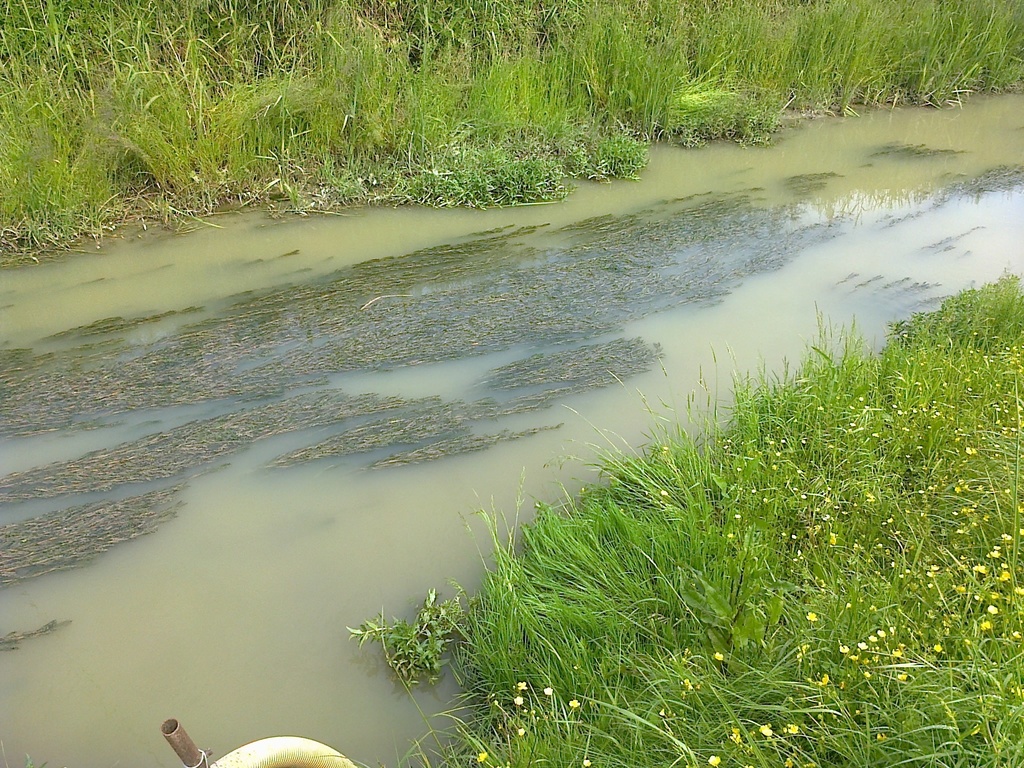
CarlaCorazza, Inaturalist.org
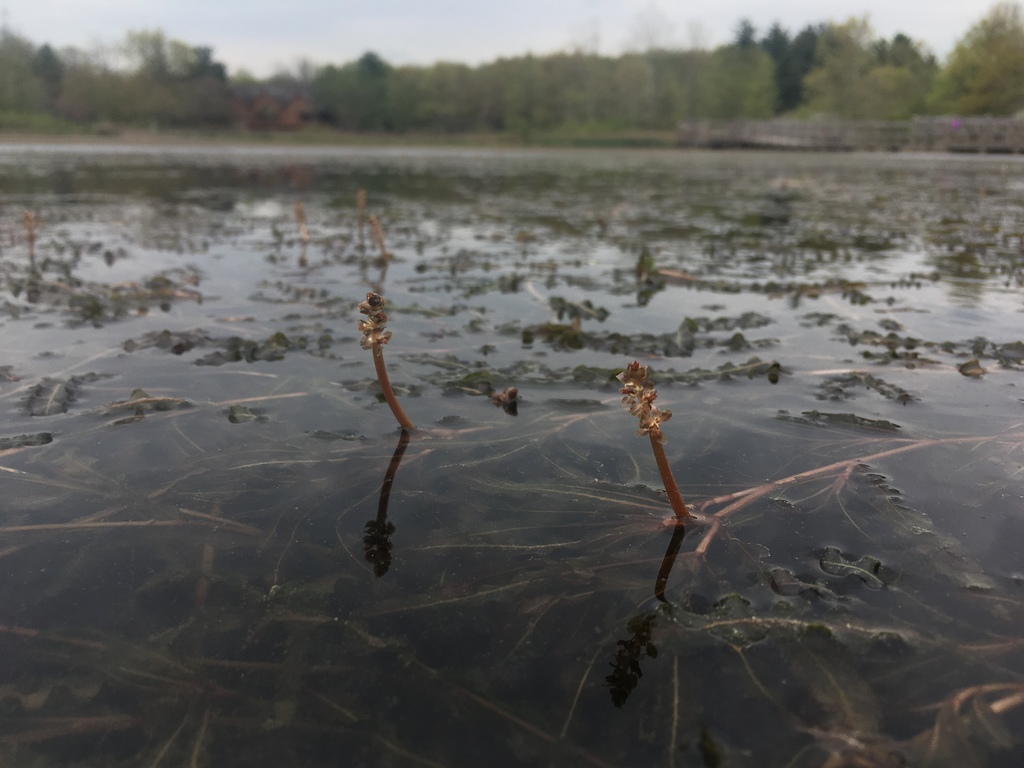
Mark Warman, Inaturalist.org
Fun Facts
Most efforts at preventing the spread of curlyleaf pondweed are focused on public education because of how easily it spreads. Informing the public of how to properly clean water equipment and the effects it has on the environment has been shown to be effective at preventing new bodies of water from being infected. [1,3]
Mark Warman, Inaturalist.org
Mark Warman, Inaturalist.org
Fun Facts
Curlyleaf pondweed is a good source of carotenoids, which are used in cosmetics and medicine for anti-oxidation, immune regulation, tumor-slowing properties, and as a colorant. These carotenoids can be used as food additives as well. [1]
Jakob Fahr, Inaturalist.org
cheerwine, Inaturalist.org
Fun Facts
Potamogeton crispus has been used to treat industrial aqueous waste and can eliminate the need for chemical treatment. This weed also helps in self-purification of water bodies, decreasing electrical conductivity and increasing pH. Because of the weed’s pollution tolerance, it is being studied for use in restoration and revegetation in extremely impacted sites. [1,8]
艸目伊, Inaturalist.org
Nicola Crockford, Inaturalist.org
jamesjarrett00, Inaturalist.org