

Giant Reed
Arundo donax
Class C
Widespread in the state. Management decisions for these species should be determined at the local level, based on feasibility of control and level of infestation.
Purchasable
Despite being classified as a noxious weed, this plant is still widely sold in stores! Keep an eye out, and remember that it is illegal to plant and transport noxious weeds in the state of New Mexico.
Fire Hazard
This plant is documented to negatively impact fire regimes in our region. Its presence can increase the frequency and/or severity of fires.
Riparian Threat
This plant is known to invade riparian areas or otherwise damage the health and abundance of our water resources.
QUICK FACTS
- Giant reed is a tall perennial cane grass that can reach up to 30 feet. It has hollow stems up to 1.6 inches in diameter. Leaves are alternate, pale green to blue-green and over a foot long.
- Native to Eastern Asia, this plant is considered beneficial in its native range and can be used in several different ways. However, outside its native range, it grows aggressively, creating flood and fire hazards that alter ecosystems and habitats.
- Giant reed only reproduces asexually outside of its native range, but spreads quickly and easily through rhizomes and plant fragments. This plant can grow up to 4 inches per day and creates dense monocultures that native plants cannot penetrate.
1. Overview
One of the world’s most invasive species.
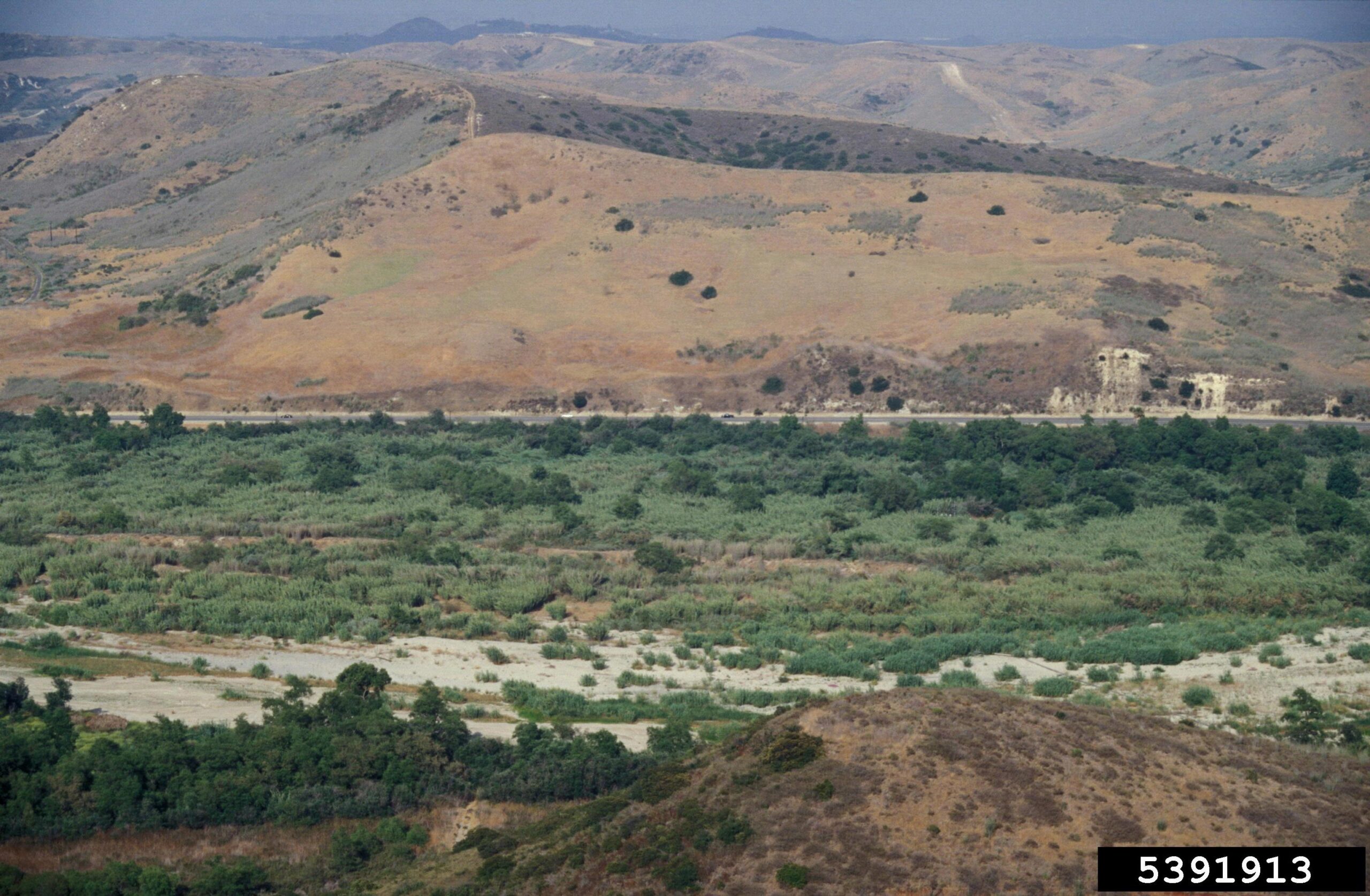
Giant reed is present in most warm climates worldwide and is considered invasive outside its native range. It establishes itself in moist places like ditches, streams, and riverbanks and grows best in areas where the water table is near the soil surface with abundant moisture and sunlight. This weed primarily invades southern New Mexico at elevations of 4000-4500 feet and occurs in floodplains, arroyos, and the Rio Grande River. [2,4]
History of Giant Reed
Giant reed is believed to be native to Eastern Asia and was introduced to the rest of Asia, the Middle East, and the Mediterranean region in prehistory. It was later exported by French and Spanish colonialists to Europe and dispersed into subtropical and warm temperate areas, which later spread it to several other regions across the world. It is often used for erosion control, thatching for buildings, instruments, basket making, fishing rods, and medicinal purposes. It may have been introduced to North America intentionally by Spanish settlers in the 1500s, but was also intentionally planted in California in the 1800s for erosion control and windbreaks. [2,4]
Most of this weed’s spread can be attributed to humans intentionally planting it in new areas. It is considered one of the world’s 100 most invasive alien species. Giant reed grows very quickly and spreads by rhizome and culm fragments, and its spread is only limited by cold temperatures. [4]
2. ID Guide
What does it look like?
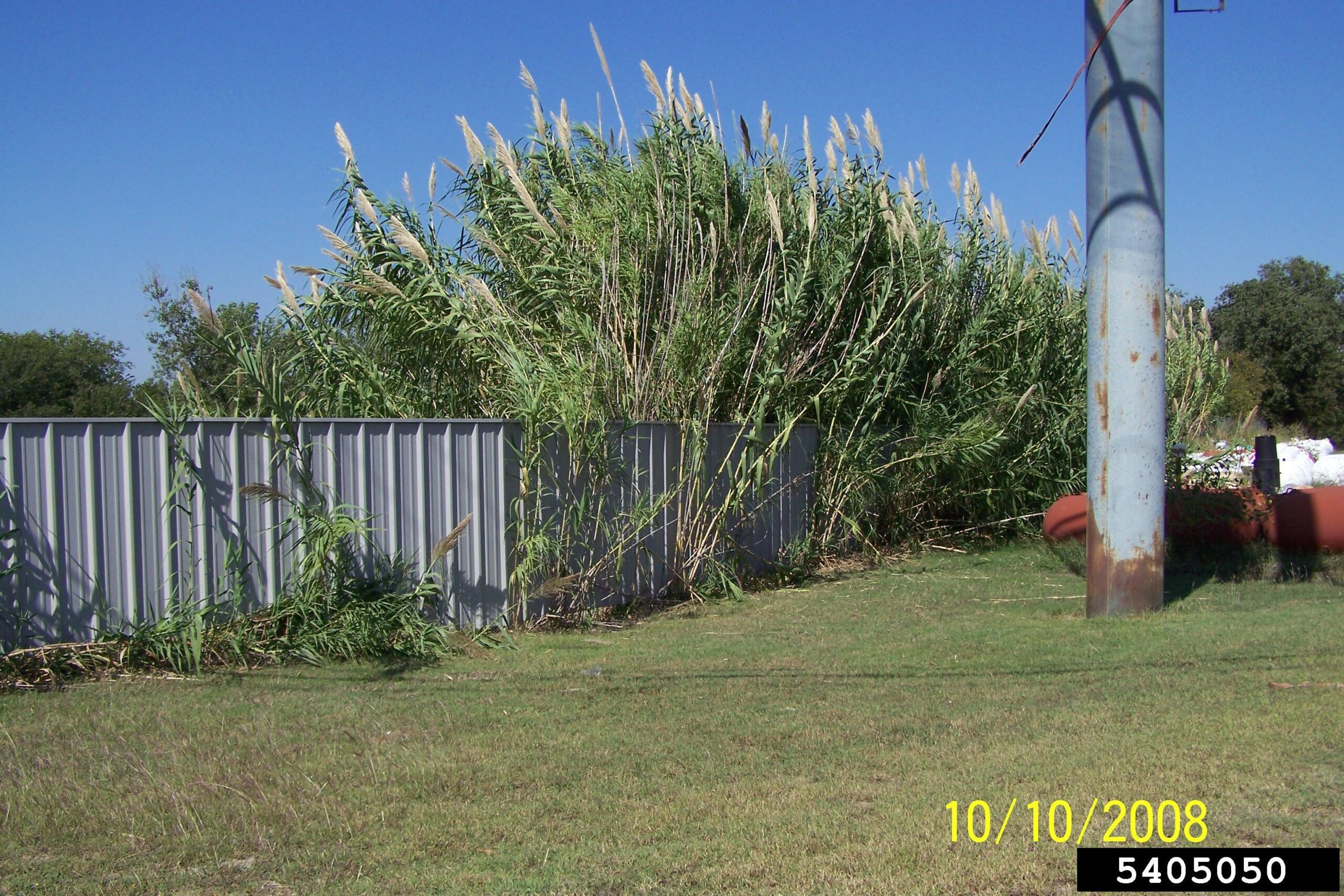
Giant reed is a tall perennial cane grass found in riparian areas with abundant moisture. Its stems can grow up to 30 feet tall, are bamboo-like, and have large alternating leaves over 1 foot long. Leaves are blue-green to lime green and have sharp margins. This plant can be confused with common reed or immature bamboo. Some distinguishing characteristics from common reed are its height, as common reed only grows up to 14 feet tall, while giant reed grows up to 30 feet tall. It can be distinguished from bamboo by stem thickness, as giant reed stems can reach up to 1.6 inches in diameter, whereas bamboo is typically thicker. [2,5]
Having trouble identifying a weed?
Contact your local conservation district or county extension agent.
Key Features
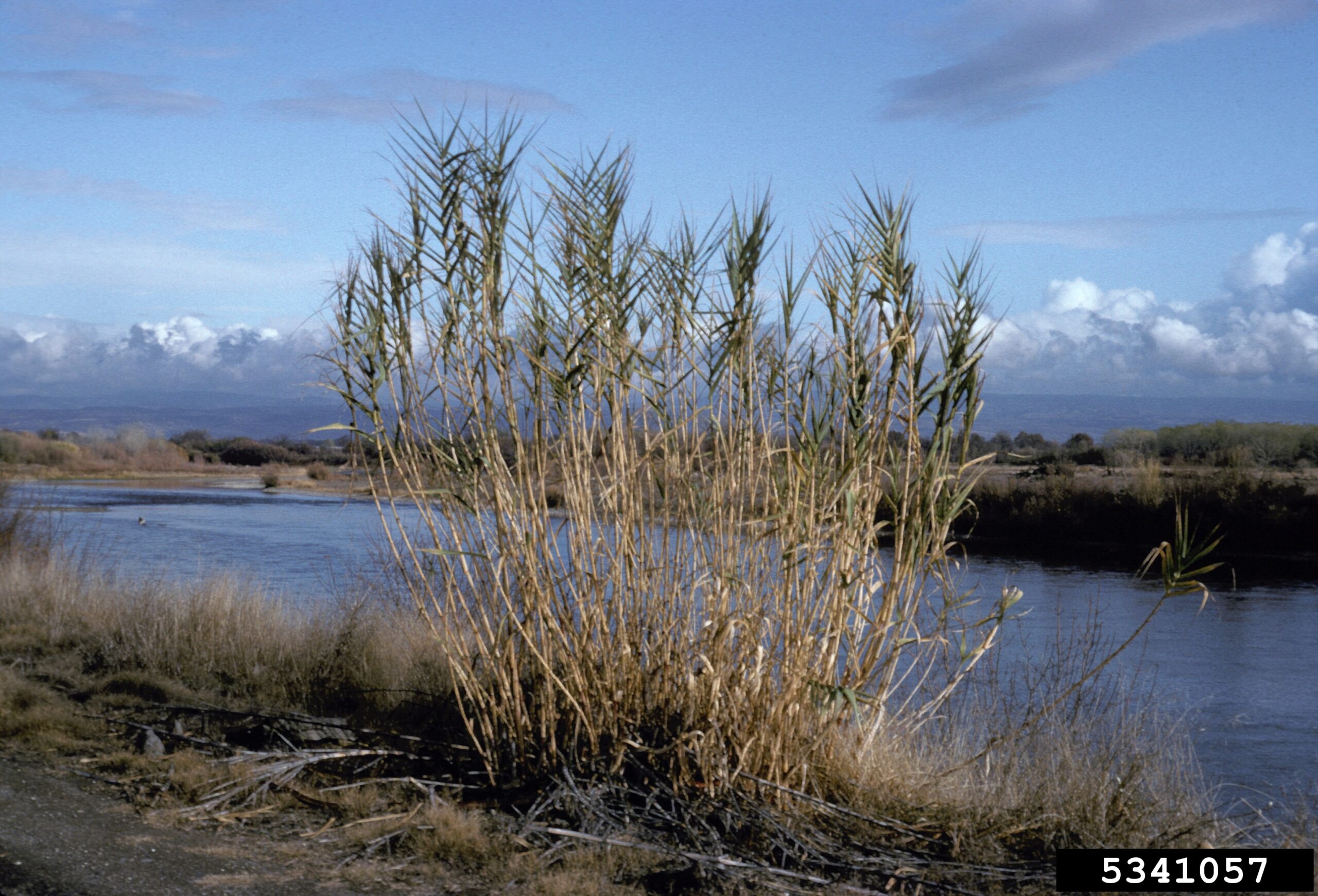
- Plant: Giant reed is a large perennial grass with bamboo-like stems that can grow 6 to 30 feet in height. These stems are hollow and grow very densely together. Culms are 0.4 to 1.6 inches in diameter and often branch in the second year. Leaves are alternate, flat, sharp-edged, and wrap around the stem. Flowers are a long, dense plume at the top of a plant that is purplish in color and up to 36 inches long. [1,5]
- Roots: Roots are thick, knotty rhizomes that spread extensively and create mats over 3 feet thick. Creeping rhizomes can be about half an inch thick and are very tough. [1,5]
- Leaves: Leaves are arranged alternately. They can be pale green to blue-green, 2-3 inches wide at the base, and over a foot long. Leaves are flat, sharp-edged, and taper to a fine point. They wrap around the stem and have long wavy hairs along the margins. [1,5]
- Flowers: Large plumes at the ends of stems and branches. They can appear from June to September, are purplish-red and turn silvery as they age. [5]
- Seeds: Seeds are not viable outside of their native range. The plant is only known to produce seeds from stem fragments and rhizomes in North America. Fruits are single-seeded, dried fruits that are light brown and 3-4 mm long. [1,5]
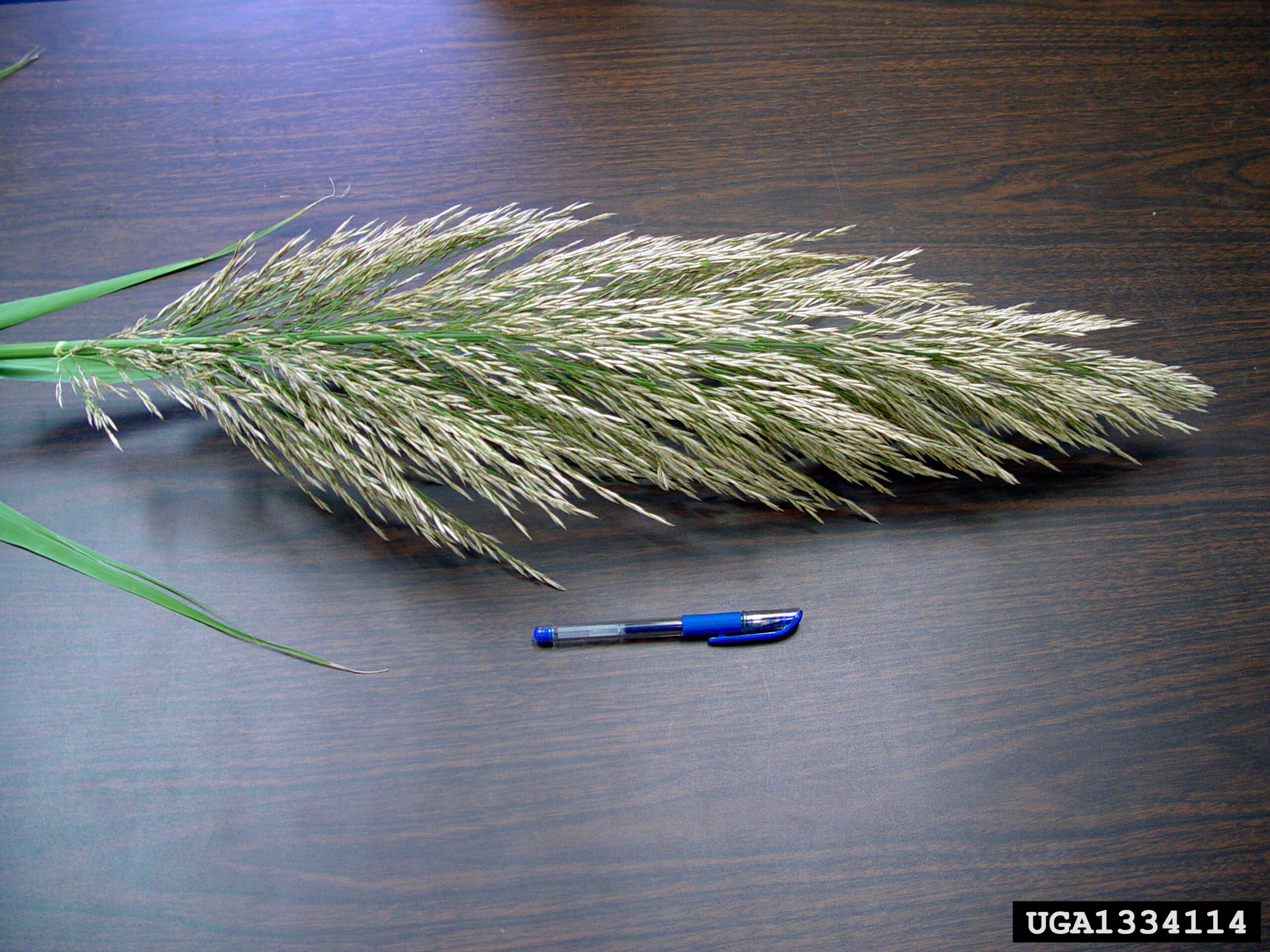
Chris Evans, University of Illinois, Bugwood.org
Large plumes can appear from June to September, are purplish-red and turn silvery as they age.
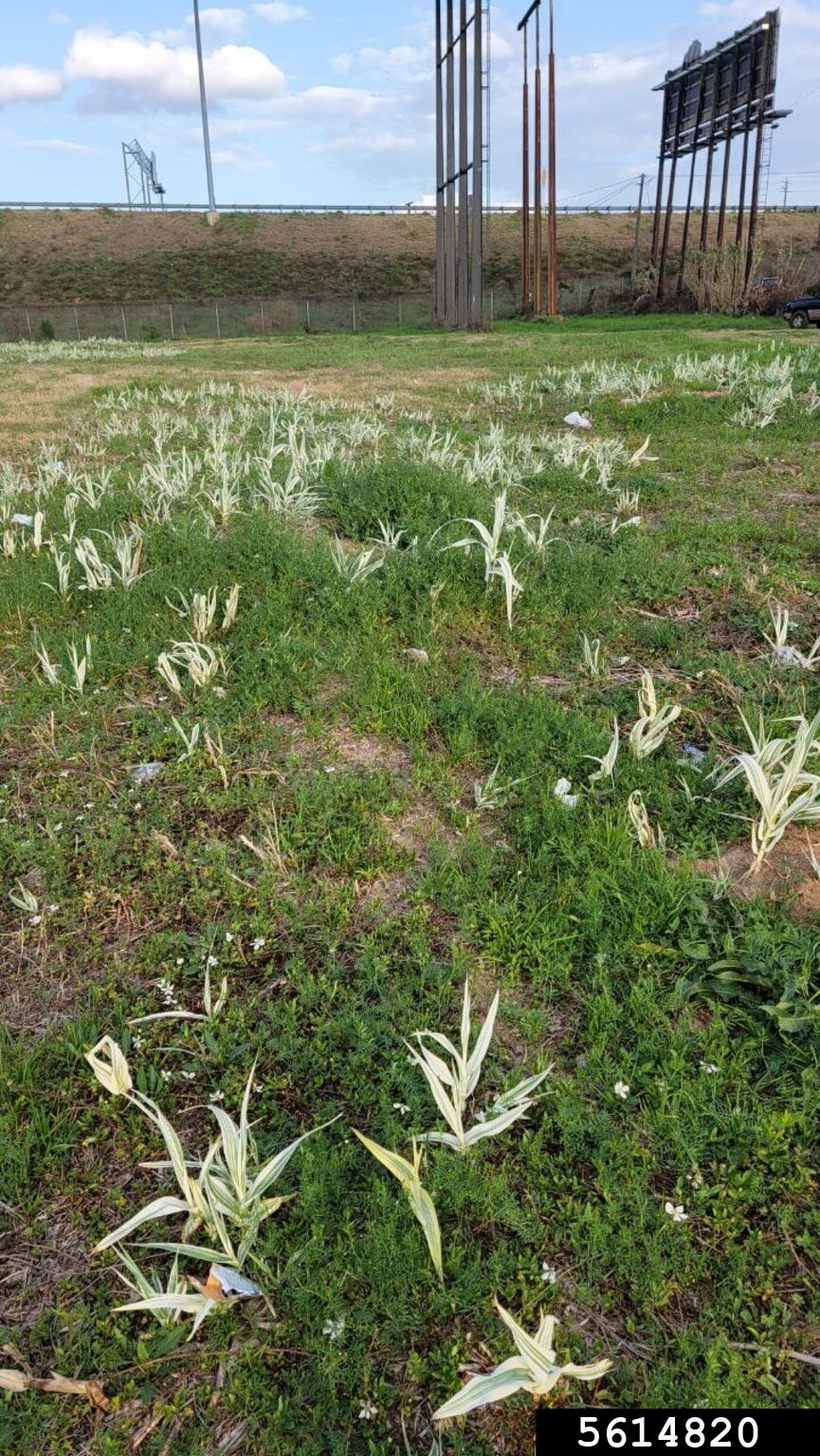
Rebekah D. Wallace, University of Georgia, Bugwood.org
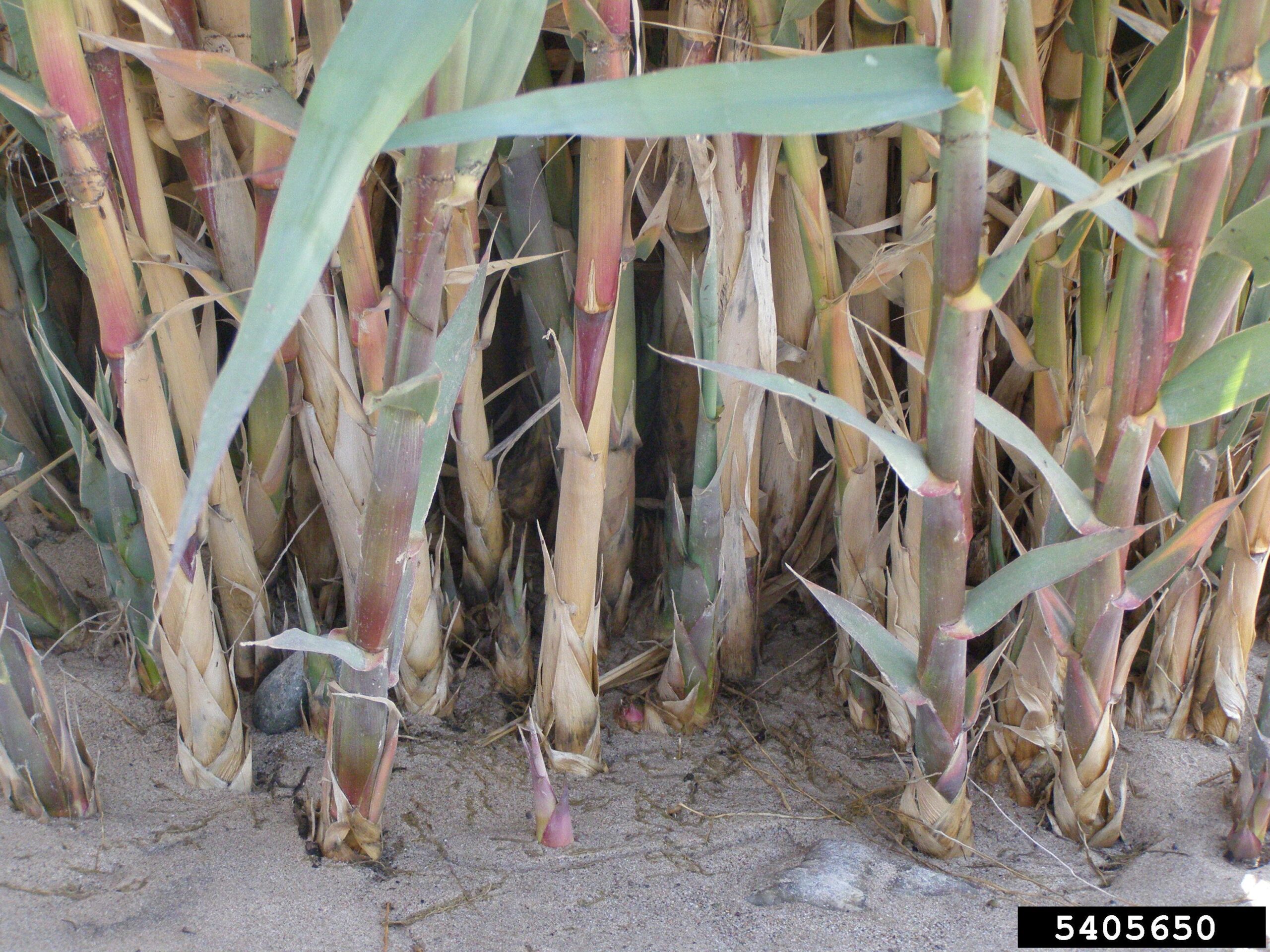
New shoots can arise in almost any season, but are most common in spring.
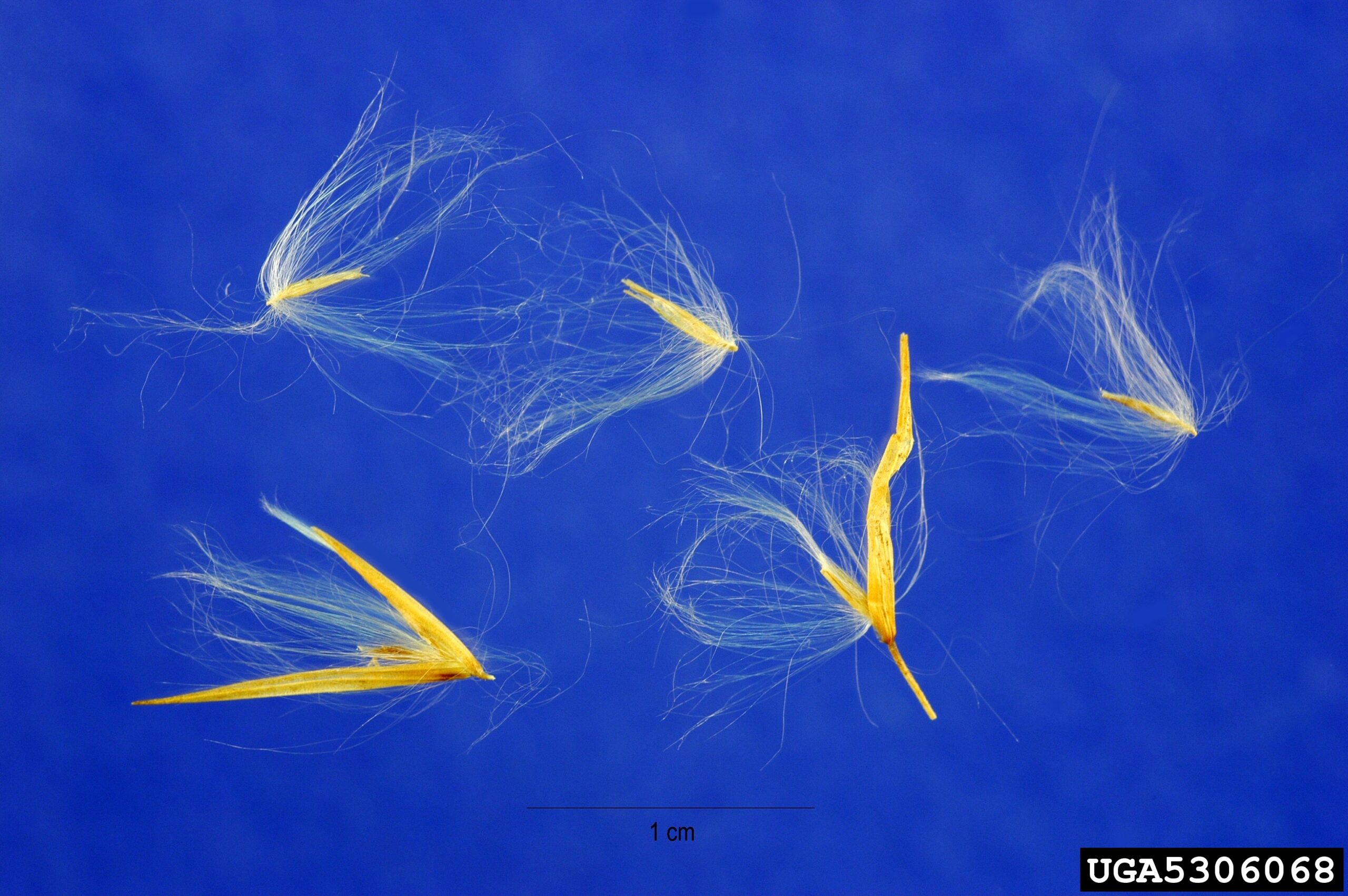
Steve Hurst, USDA NRCS PLANTS Database, Bugwood.org
Seeds are not viable outside of their native range.
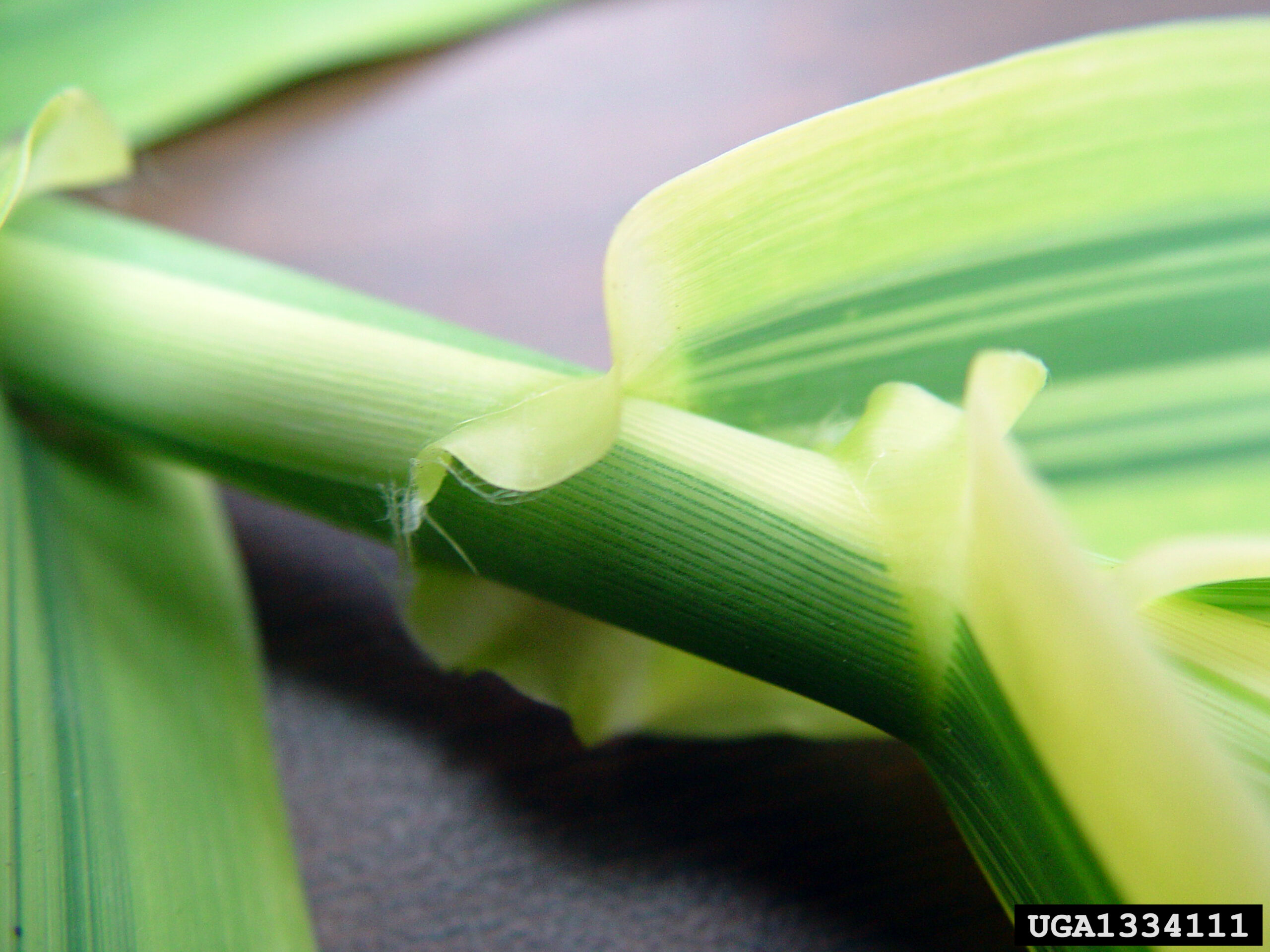
Chris Evans, University of Illinois, Bugwood.org
Leaves can be pale green to blue-green, 2-3 inches wide at the base, and over a foot long.
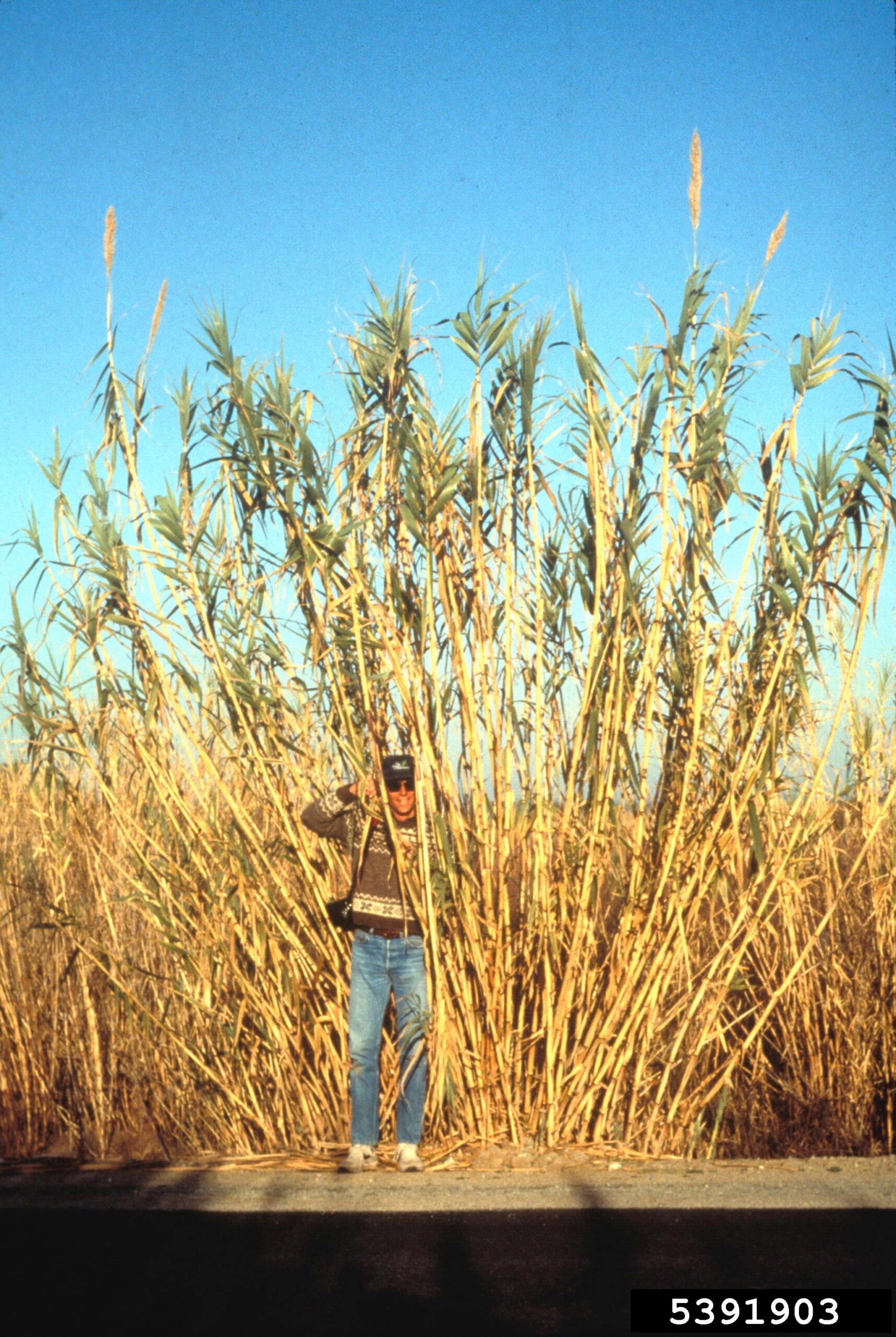
John M. Randall, The Nature Conservancy, Bugwood.org
Giant reed is a large perennial grass with bamboo-like stems that can grow 6 to 30 feet in height.
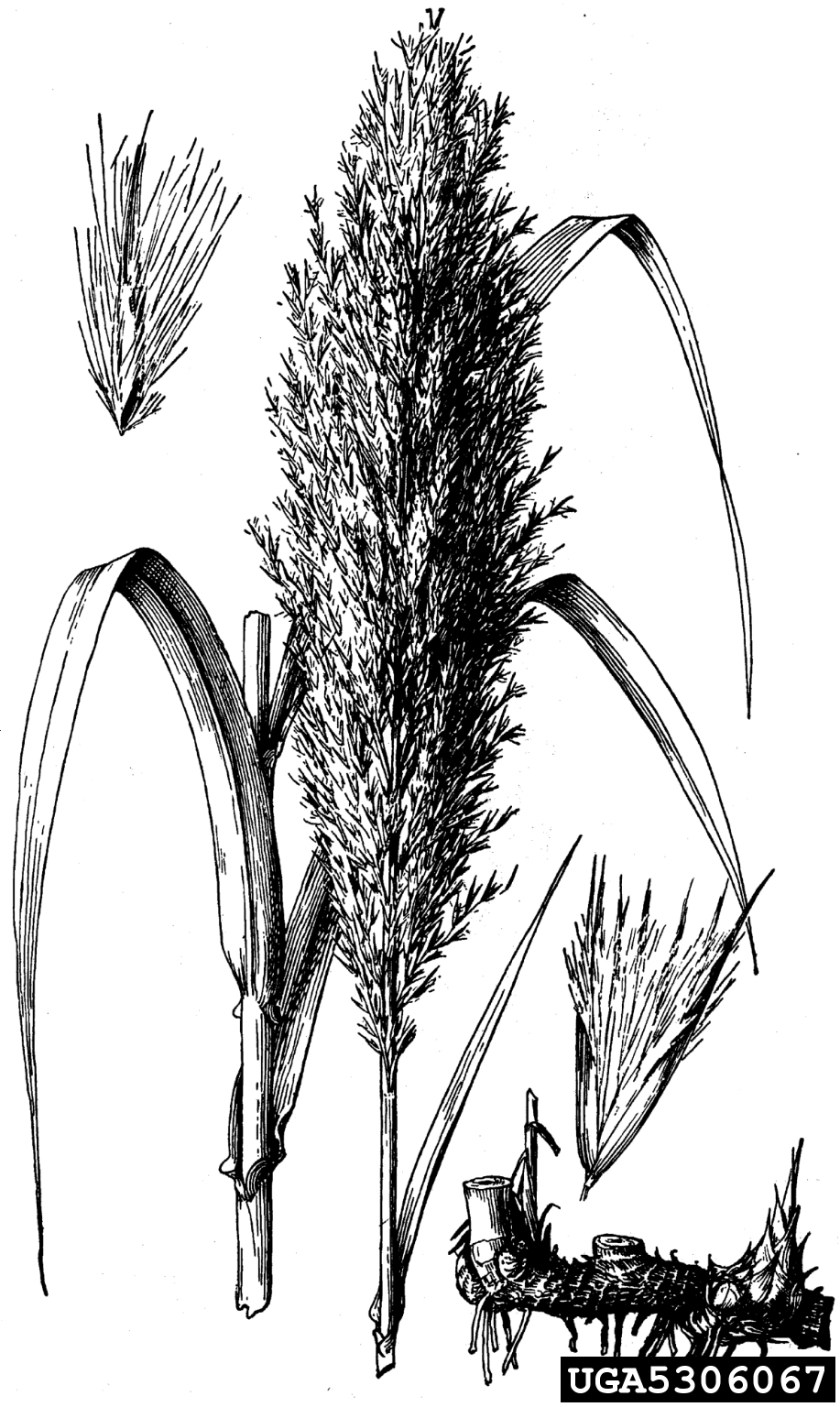
USDA NRCS PLANTS Database , USDA NRCS PLANTS Database, Bugwood.org
Roots are thick, knotty rhizomes that spread extensively and create mats over 3 feet thick.
3. Infestation Basics
“Arundo donax tends to form large, continuous root masses, making it impossible for native species to grow and increasing the risk of wildfire”
-C. Miguez et al, 2022
Impacts
Where and how does it grow, and how does it spread?
Giant reed grows in riparian areas with lots of sun, like floodplains, ditches, and roadsides. It grows very quickly, especially in disturbed areas. It mainly reproduces via rhizomes and stem fragments. [4]
Giant reed is most invasive in warmer freshwater areas. In New Mexico, it grows in riparian areas like floodplains, plains, and arroyos. Areas with cottonwood, willows, rabbitbrush, or Russian olive are at greater risk of invasion. In North America, this weed does not produce viable seeds and only reproduces by stem fragments and rhizomes. [2]
Giant reed is a perennial cane grass that reproduces via stem fragments and rhizomes. New shoots can arise in almost any season, but are most common in spring, and it can flower between June and September. The diameter of young stems is similar to that of mature plants, but stem walls are thinner. The plant usually does not die back, but culms fade and become dormant in cold conditions. With ample water, giant reeds can grow up to 2.3 feet per week (4 inches per day). New branches often grow in spring as well. The plant grows in dense monocultures that outcompete other vegetation. [2,3]
Giant reed does not produce viable seeds in the U.S. and spreads mainly through stem fragments and rhizomes. The weed can establish itself from small stem fragments in any area with moisture availability. Plant fragments can be carried by water and human or animal activity. Rhizomes create large root masses that can cover several acres. Very little is known about its seed production, as it happens very infrequently. [3]
Key takeaway: Giant reed usually invades disturbed riparian areas but can outcompete native vegetation and grow in several locations where moisture is available. The plant grows clumps of thick stems and has thick root mats that are difficult to remove.
Why is it so invasive?
Giant reed grows very quickly and can grow through all seasons. It creates thick mats of roots over 3 feet deep, and stems grow close together, creating a dense monoculture that other plants struggle to compete with. [2]
Although this weed does not produce seeds, it can spread by rhizomes and stem fragments. Its stems are thick, difficult to cut, and grow densely together. Roots can cover several acres of riparian areas, are rhizomatous, and create thick mats about 3 feet thick. Additionally, the plant can grow up to 4 inches per day. This plant can grow through several seasons, and only becomes dormant in extremely cold months. Although the plant usually does not spread long distances, small stem or root fragments may introduce giant reed into new areas. [3]
Giant reed’s ability to grow quickly almost any time of the year makes it very competitive with native vegetation. This weed requires lots of water and often takes it from other plants, altering habitats. Additionally, its thick stems and knotty root system make it difficult to manage once introduced into an area. [2,3]
Key takeaway: This weed grows extremely fast and easily outcompetes any riparian vegetation. It uses a lot of water, alters soil, and is difficult to get rid of.
Common risk factors for invasion
- Disturbed Soils: Giant reed loves to invade disturbed soil. This disruption weakens existing vegetation and allows the weed to become established. Additionally, the movement of soil, agricultural products, and equipment can inadvertently introduce the weed to new areas. Minimizing unnecessary soil disturbance can help reduce the risk of invasion.
- Moisture Availability: While giant reed has adapted to a wide range of soil and water conditions, it requires adequate moisture to establish and spread, making irrigated lands and areas with consistent rainfall particularly vulnerable.
- Riparian Areas: Stem fragments and roots are easily carried by streams and may be subsequently deposited on river terraces. Being near streams or rivers allows the weed’s roots to reach the water table easily.
- Proximity to burned areas: Giant reed can survive burning and fire treatment through its extensive root system. Burning also disturbs other vegetation and creates openings for weeds to invade.
Economic
This weed will become a monoculture through aggressive vegetative growth. It is not very palatable to most livestock (except sheep and goats), but they occasionally eat it during the cold months when the weed is dry. The cost of removal can be $10,000/ ha, and plants can easily reinvade if not done properly. Additionally, giant reeds often redirect water, forcing floodwaters into new channels and causing erosion and infrastructure damage, thereby increasing repair costs. [6]
Ecosystem Health
Once established, giant reed displaces native plants, resulting in a notable loss of floral and faunal biodiversity. This can significantly reduce forage availability for game, particularly during the winter months, and may even alter migratory patterns. Giant reed reproduces quickly, which displaces native plants. Its stands do not provide shade, which warms the water and displaces fish and other riparian animals. The weed consumes three times as much water as native plants, altering water flows and increasing the risk of flooding and erosion in other areas, further disrupting ecosystems and habitats. [6]
Erosion
Giant reed significantly increases the risk of soil erosion by outcompeting and displacing native ground cover. While this plant can stop erosion in infected areas, they take up three times more water than native plants and alters water flow, which often results in flooding and erosion in downstream areas. [6]
Infrastructure Issues
Giant reed often redirects water, leading to flooding in unexpected areas. Flooding can damage homes, roads, bridges, and irrigation canals. [6]
Fire & Flood Hazard
Giant reed often alters water flow, causing flooding and erosion in new areas. This can be dangerous, as flooding can damage infrastructure. While riparian areas where the weed grows are not very susceptible to fires, giant reed is highly flammable and burns easily once it catches on fire. A large infestation can start a severe fire. Aside from killing off competing vegetation around it, these fires can also spread to neighboring ecosystems, paving the way for further weed infestations. [6]
4. Management Strategies
The best way to manage this weed is through preventive measures, such as avoiding unnecessary soil disturbance and cleaning equipment to prevent accidental introduction into new areas. If an infestation occurs, a combination of mechanical and chemical methods works best at managing giant reeds. Small infestations can be managed easily by digging out the entire plant and its roots and disposing of them, or by repeated cutting or mowing to deplete the plant’s energy reserves. Larger infestations can be managed with grazing, fire, and cutting only when combined with chemicals, due to its rhizomatous roots. Giant reed can grow from plant fragments and roots, so it is important to dispose of plants appropriately. [4]
DO’s
- Combine mechanical and chemical control methods to kill plants entirely and prevent regrowth.
- Attempt to remove as much of the roots as possible to prevent regrowth.
- Continuously cut new growth to drain the plant of energy reserves and prevent reinfestation.
DON’Ts
- Allow it to become widespread. It is easier to manage small or individual infestations.
- Spread plant fragments to new areas, as plants can easily form new stands from plant fragments.
- Disturb soils, as this disrupts native plants and allows weeds to grow.
** The following information is provided courtesy of the UC Weed Research and Information Center. nmweeds.taosswcd-nm.gov does not endorse the use of any particular product, brand, or application thereof. **
Non‑chemical management of giant reed focuses on repeated cutting to exhaust root reserves and manual removal of young shoots before they establish dense stands. Sustained disturbance paired with shading strategies or competitive vegetation can gradually suppress regrowth over time.
| Pulling, cutting, disking |
Minor infestations can be eradicated by manual methods, especially where sensitive native plants and wildlife might be damaged by other methods. Plants less than 6 ft in height and arising from a new stem or rhizome fragment can be hand-pulled. This may be most effective in loose soils and after rains have loosened the substrate. Giant reed can also be dug using hand tools, particularly when used in combination with cutting near the base of the plant. Chopping, cutting, or mowing can also be used to reduce giant reed infestations, although the fibrous nature of giant reed makes using these techniques difficult. These methods generally cause less soil disturbance compared to heavy equipment. However, they are nonselective and may damage other desirable species or open up new niches for weedy invasions. These methods usually require several cuttings before the underground parts exhaust their reserve food supply. The best timing for cutting is when the plants begin to flower, as this is when the reserve energy supply in the rhizomes is lowest. Using mechanized equipment to remove above-ground vegetation is a common non-chemical control method for giant reed. However, such equipment is also nonselective and can only be used on accessible terrain. Mechanical eradication of giant reed is extremely difficult, even with the use of a backhoe, as rhizomes buried under 3 to 10 ft of alluvium readily resprout. Regardless of the mechanical removal method employed, it is critical to remove the entire rhizome root mass. If any of the rhizome mass is left in the ground, it will resprout. In addition, stems and roots should be removed, chipped, or burned on site to prevent resprouting. |
Giant reed is not very palatable to cattle, but they will feed on it during the drier months. Sheep also have potential for the management of giant reed. However, sheep must be properly managed to prevent soil compaction problems, particularly in wet areas. The most successful grazers are goats, particularly Angora and Spanish goats.
A flamethrower or weed burner device can be used as a spot treatment to heat-girdle the stems at the base of giant reed plants. This technique is less costly than basal and stem herbicide treatments and is suitable for use during wet weather when the wildfire hazard is low. Its effectiveness is comparable to manual cutting.
Large infestations may be burned to remove standing mature plants. When burning is used alone, it will not prevent resprouting from the rhizomes. Burning is best followed by herbicide treatment of resprouting plants.
Little is known about the effects of various pathogens and insects on the growth and reproduction of Arundo donax. Many more years will be required before this species or any other potential biological control agents are identified and released.
The following specific use information is based on published papers and reports by researchers and land managers. Other trade names may be available, and other compounds also are labeled for this weed. Directions for use may vary between brands; see label before use. Herbicides are listed by mode of action and then alphabetically. The order of herbicide listing is not reflective of the order of efficacy or preference.
|
Glyphosate Roundup, Accord XRT II, Rodeo, Aquamaster, and others |
Rate: Broadcast foliar treatment: 2 to 4 qt product (Roundup ProMax)/acre (2.25 to 4.5 lb a.e./acre) or 2 to 4 qt product (Rodeo or Aquamaster)/acre (2 to 4 lb a.e./acre) around aquatic sites. Spot treatment: 2% v/v solution. However, the Rodeo product label allows up to an 8% v/v solution, depending on the equipment being used. Timing: Postemergence. Mid-summer to fall application after flowering and before dormancy is the best timing to kill plants and protect injury on many natives. Follow-up application in subsequent spring to control germinating seedlings may be necessary. Remarks: Glyphosate is considered the best option for control in pure stands. Two to three years of treatment are necessary. Herbicide treatment can be used after repeated mowing to reduce the necessity for spring treatment to kill seedlings. Dense stands of giant reed (> 80% canopy cover) are most efficiently treated by aerial application, usually by helicopter. Helicopter application can treat at least 124 acres per day. Undiluted glyphosate can be applied as a cut-stump treatment with a paintbrush within 1 to 2 minutes after stem cutting. Results have shown that glyphosate used in a cut-stem treatment, regardless of time of application (May, July, or September), provided excellent control with no resprouting. Another method of treatment includes cutting or burning plants followed by foliar treatment of glyphosate to cane regrowth to about 6 to 8 ft in height. |
|
Imazapyr Habitat |
Rate: 1 to 2 qt product/acre (0.5 to 1 lb a.e./acre) Timing: Postemergence fall application timing is most effective, similar to glyphosate. Remarks: Imazapyr has soil residual activity and may impact restoration efforts. |
|
Imazapyr + glyphosate |
Rate: 1 pt imazapyr (Habitat) + 1 qt glyphosate product/ acre (0.25 + 1 lb a.e./acre, respectively) Timing: Postemergence fall application timing is most effective. Remarks: The combination of the two herbicides prevents the synthesis of six amino acids, as each herbicide inhibits three amino acids. This combination is thought to provide better control at lower rates of each herbicide; thus, it is more affordable compared to imazapyr alone.
|
5. Citations
[1] Washington State Noxious Weed Control Board, “Giant Reed,” Wa.gov. Available: https://www.nwcb.wa.gov/weeds/giant-reed. Accessed: Aug. 06, 2025
[2] J. McWilliams, “Arundo donax- Fire Effects Information System,” U.S.D.A, Forest Service, Rocky Mountain Research Station, Fire Sciences Laboratory, 2004. Available: https://www.fs.usda.gov/database/feis/plants/graminoid/arudon/all.html
[3] California Invasive Plant Council, “IPCW Plant Report- Arundo donax,” California Invasive Plant Council, Oct. 16, 2017. Available: https://www.cal-ipc.org/resources/library/publications/ipcw/report8/
[4] J. Velez-Gavilan, “Arundo donax (giant reed),” CABI Compendium, Jun. 2024, doi: https://doi.org/10.1079/cabicompendium.1940
[5] Wisconsin Department of Natural Resources, “Giant reed | (Arundo donax),” Wisconsin.gov. Available: https://dnr.wisconsin.gov/topic/Invasives/fact/GiantReed. Accessed: Aug. 06, 2025
[6] U.S. Fish and Wildlife Service, “Giant reed (Arundo donax),” Nov. 2017. Available: https://www.fws.gov/sites/default/files/documents/Ecological-Risk-Screening-Summary-Giant-reed.pdf
[7] C. Míguez, Á. Cancela, Á. Sánchez, and X. Álvarez, “Possibilities for Exploitation of Invasive Species, Arundo donax L., as a Source of Phenol Compounds,” Waste and Biomass Valorization, vol. 13, no. 10, pp. 4253–4265, May 2022, doi: https://doi.org/10.1007/s12649-022-01764-3. Available: https://link.springer.com/content/pdf/10.1007/s12649-022-01764-3.pdf. Accessed: May 06, 2025
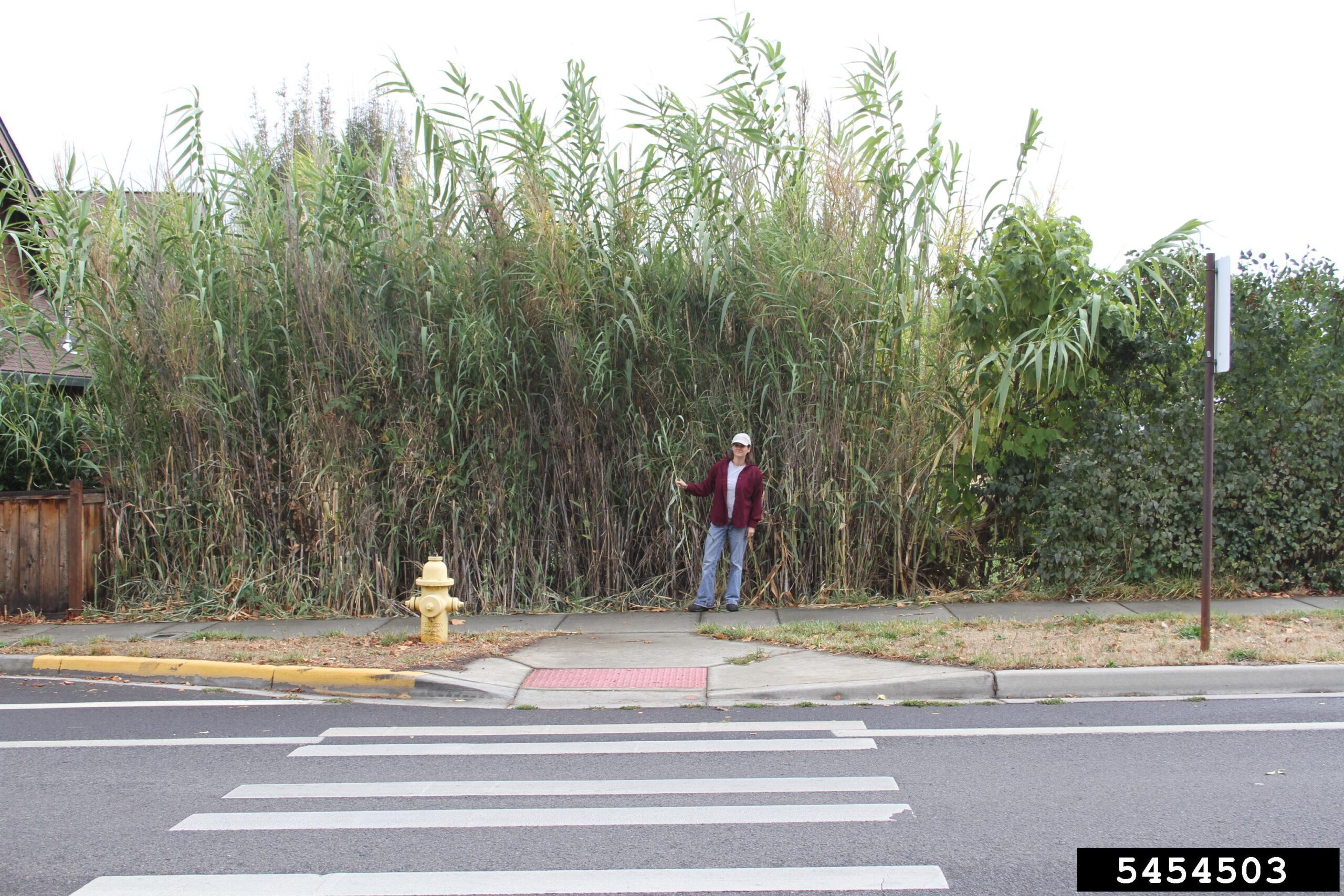
Eric Coombs, Oregon Department of Agriculture, Bugwood.org
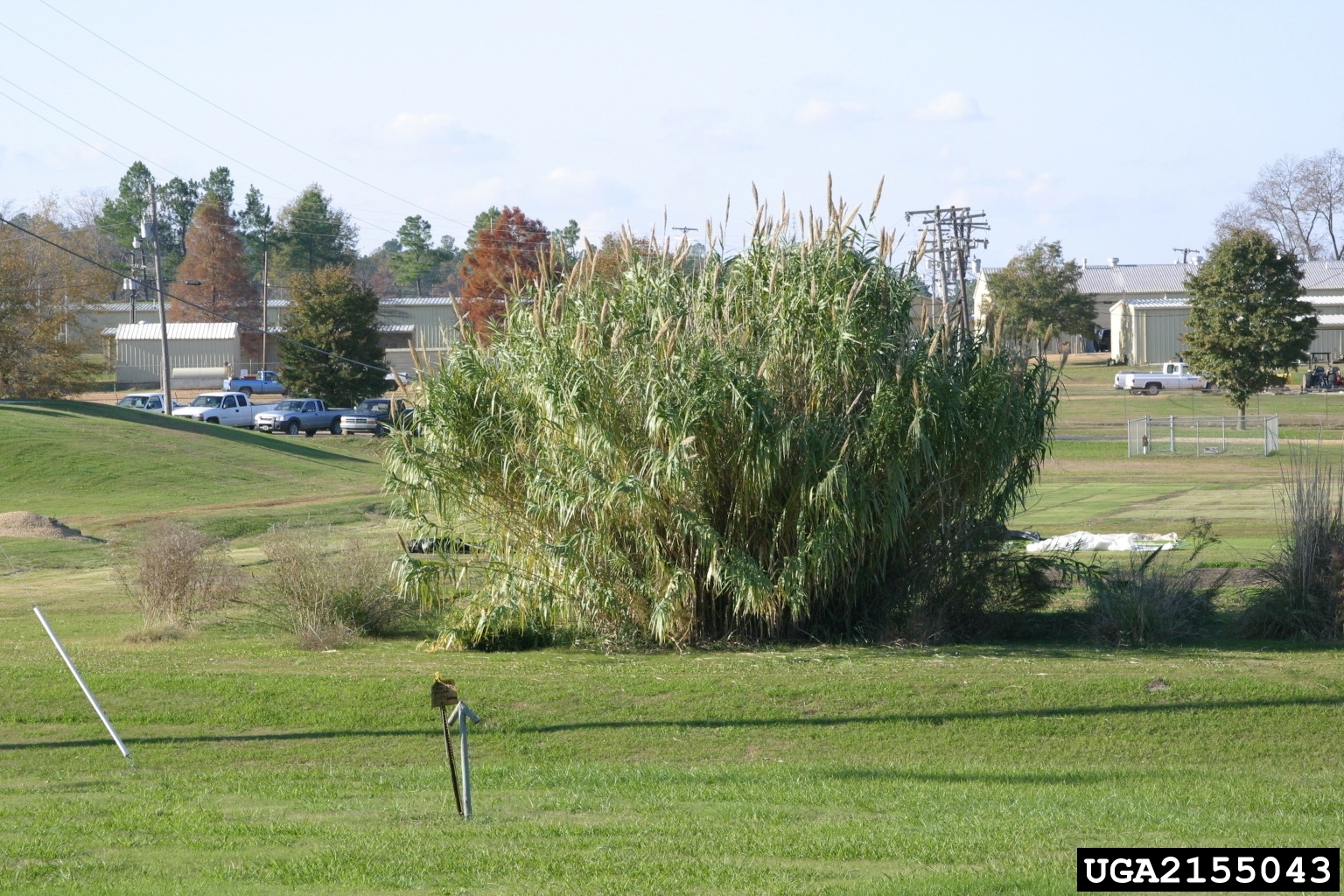
John D. Byrd, Mississippi State University, Bugwood.org
Fun Facts
Giant reed has historically been used in various locations to make and build items such as instruments, canes, paper, baskets, and fishing rods. Additionally, it was used to line underground storage, wrap mummies, and build roofs. Giant reed can also be used medicinally to treat dropsy, headaches, and to raise blood pressure. Rhizomes and young plants can also be used to make bread, but are usually combined with cereal flours. [4]
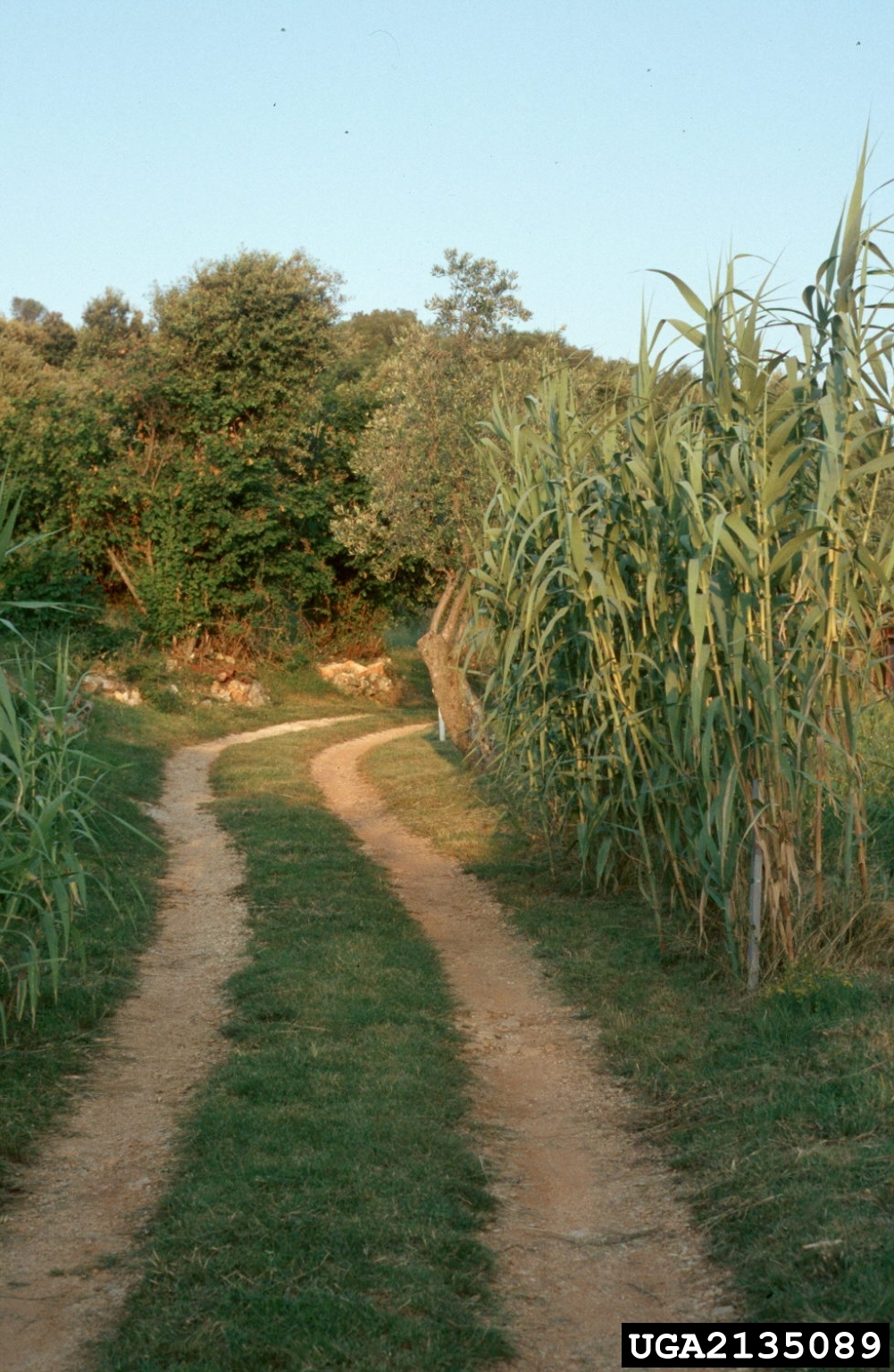
Barbara Tokarska-Guzik, University of Silesia, Bugwood.org
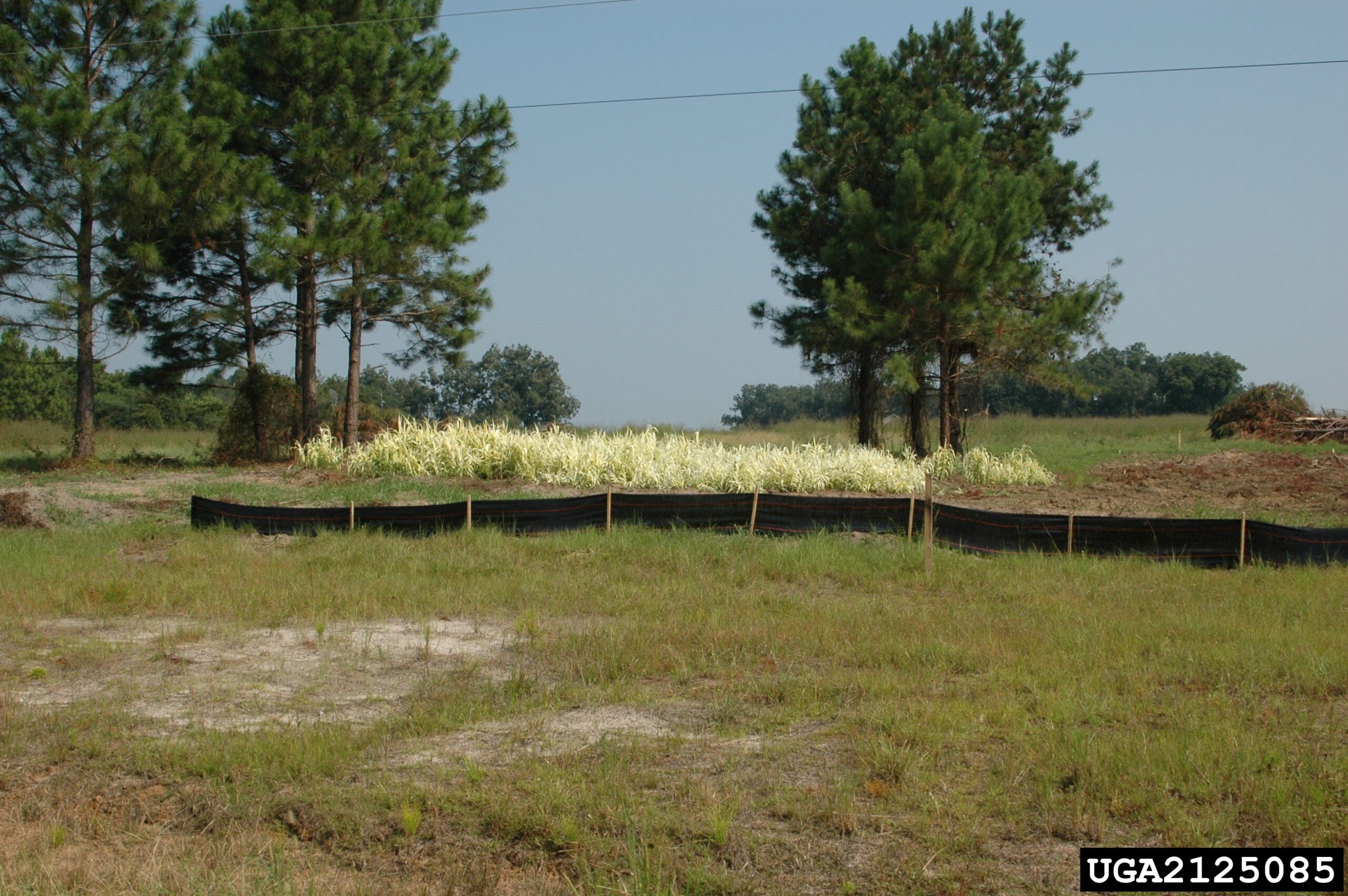
Chris Evans, University of Illinois, Bugwood.org
Fun Facts
In its native range, giant reed is very effective at erosional control in wet soils and was initially planted in California for this purpose. Giant reed requires 3 times as much water as native plants and often disrupts water flow, increasing flooding and erosion. [6]
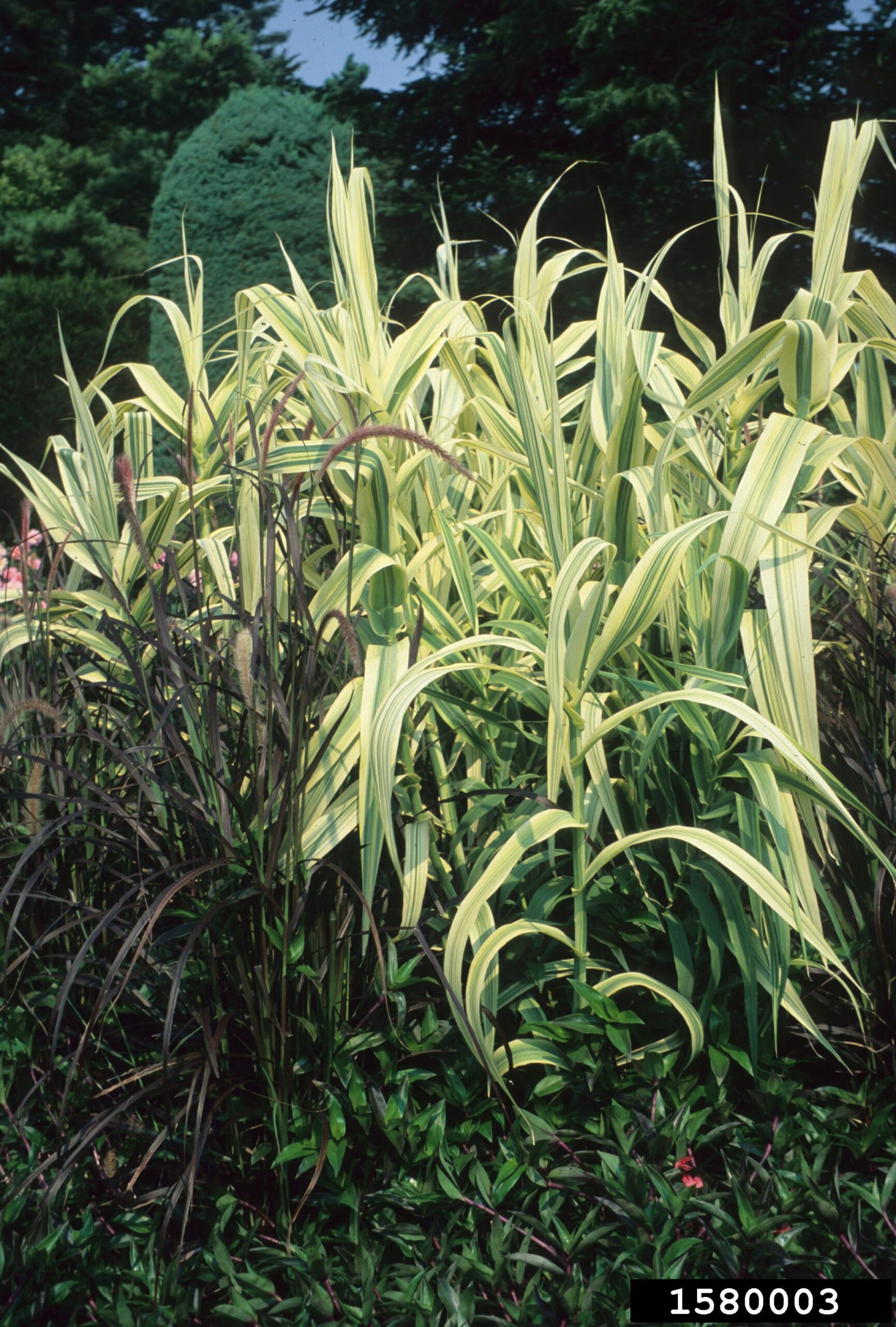
John Ruter, University of Georgia, Bugwood.org
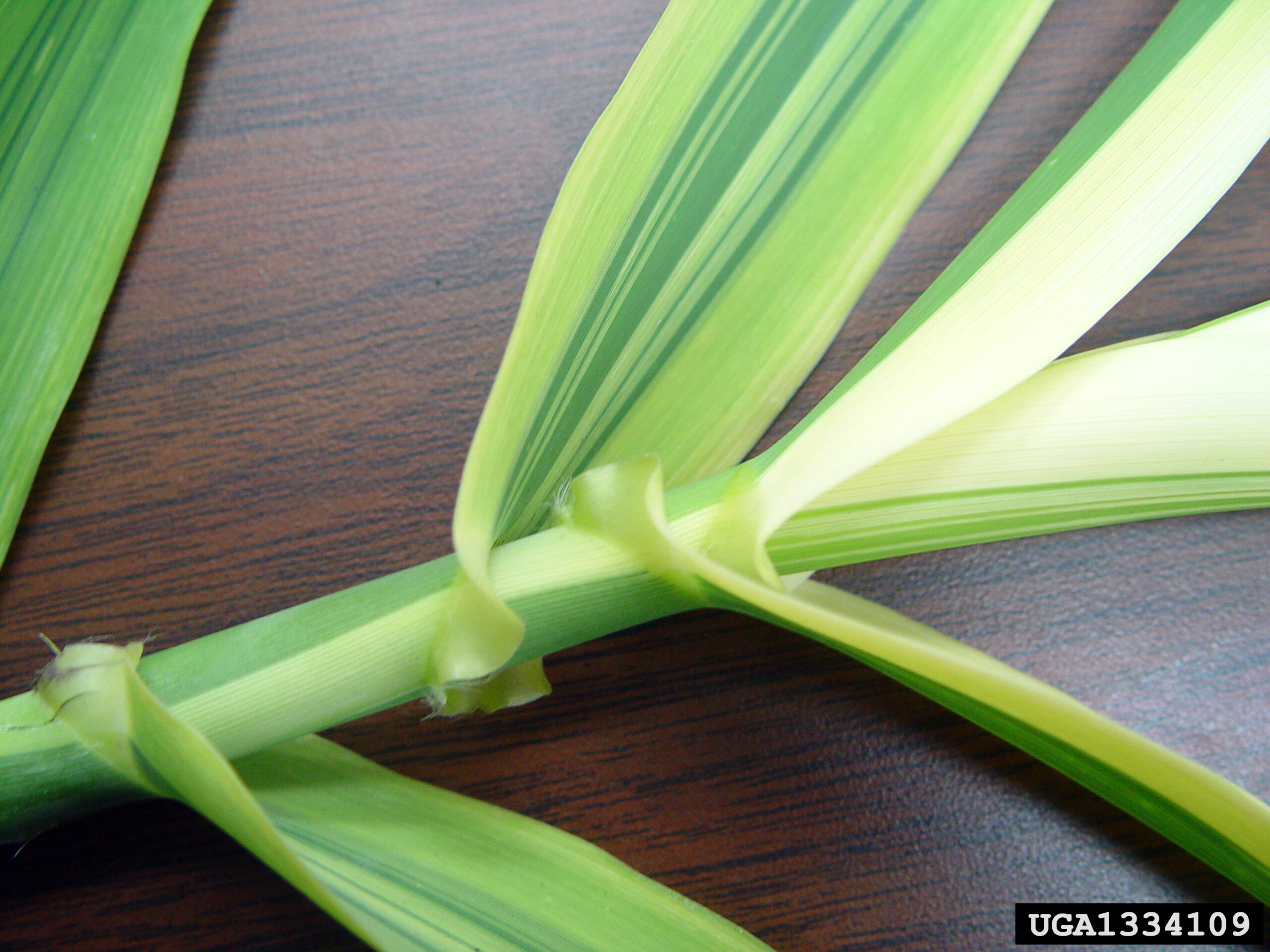
Chris Evans, University of Illinois, Bugwood.org
Fun Facts
Because of its near-worldwide invasive status, there are several studies on possible ways to use this plant sustainably, including for biofuel production. Other studies focus on developing new medications and recycling plants to produce paper. [7]
Bonnie Million, Bureau of Land Management, Bugwood.org
Karan A. Rawlins, University of Georgia, Bugwood.org
John M. Randall, The Nature Conservancy, Bugwood.org
John M. Randall, The Nature Conservancy, Bugwood.org
John M. Randall, The Nature Conservancy, Bugwood.org
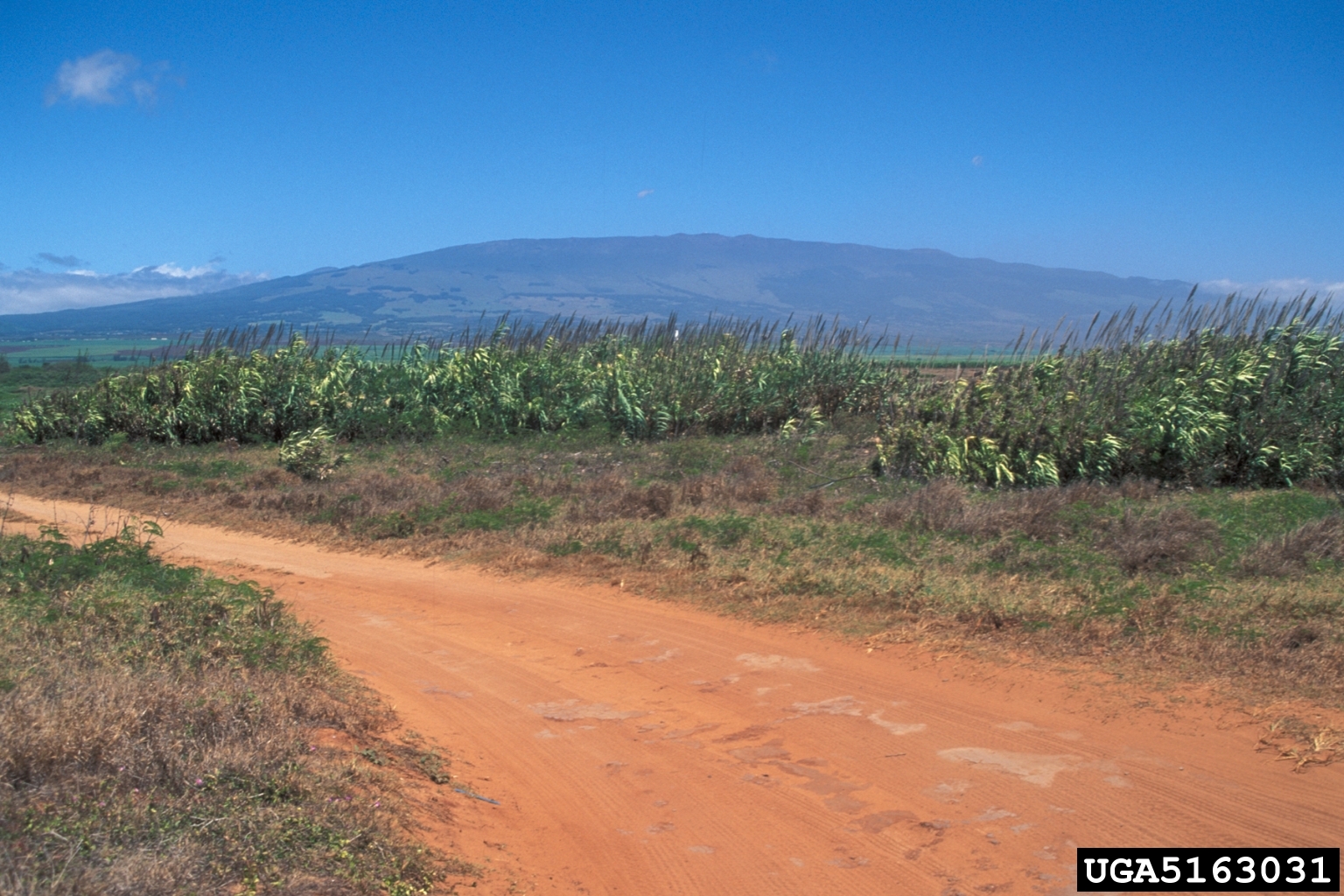
Forest and Kim Starr, Starr Environmental, Bugwood.org